
Fettuccine Alfredo
Fettuccine Alfredo consists of fettuccine pasta coated in a creamy sauce made from butter, heavy cream, and Parmesan cheese, emphasizing emulsification.
Contents (5 sections)▾
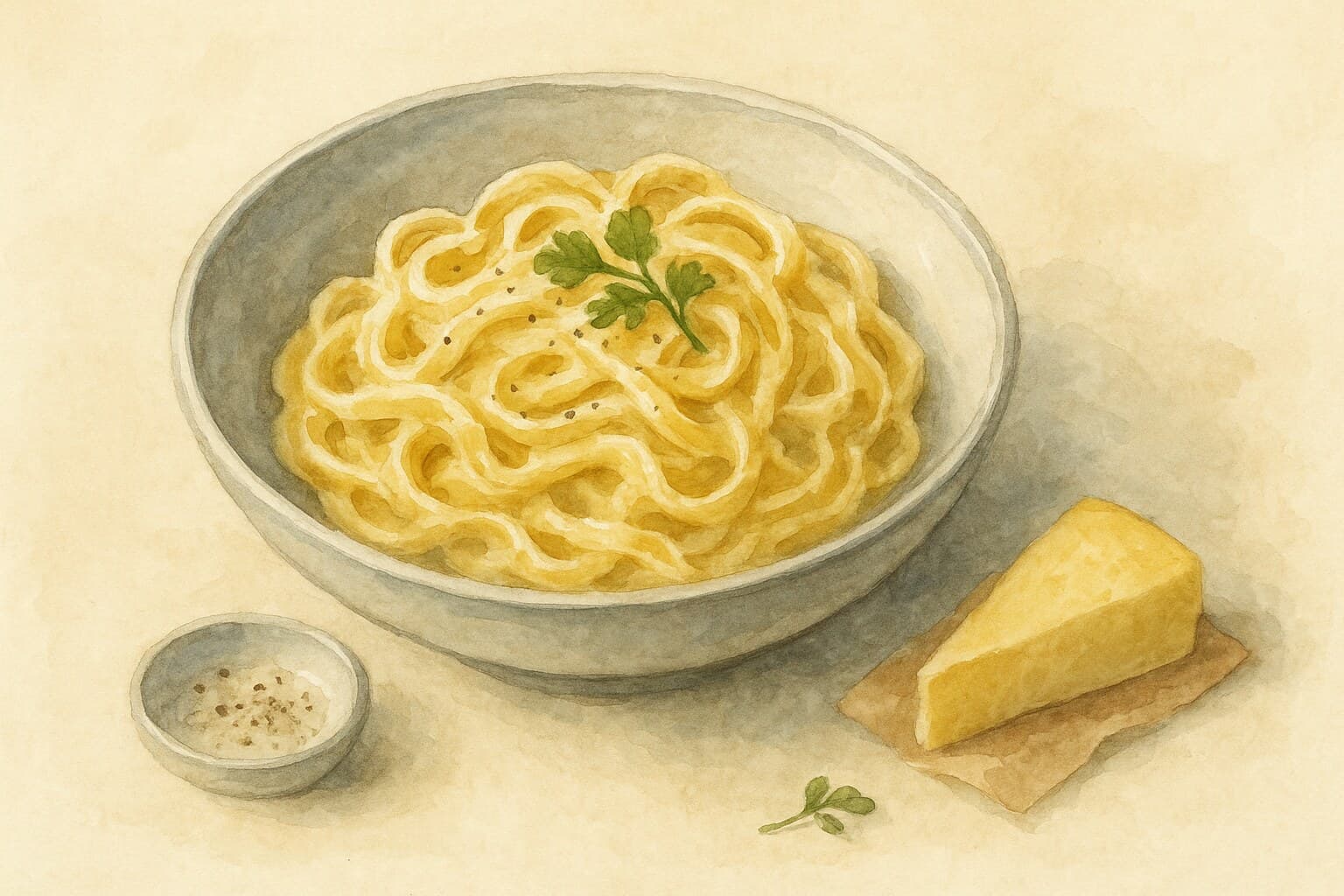
Ingredients
- 200 g fettuccine pasta
- 100 g unsalted butter
- 200 ml heavy cream
- 100 g freshly grated Parmesan cheese
- Salt to taste
- Freshly ground black pepper to taste
- Chopped parsley for garnish (optional)
Steps
Bring a large pot of salted water to a boil. Add the fettuccine and cook according to package instructions until al dente, about 8-10 minutes.
In a separate large skillet, melt the butter over medium heat. Add heavy cream and simmer for about 3-4 minutes, stirring occasionally.
Once the cream and butter are well combined and slightly thickened, stir in the grated Parmesan cheese until melted and smooth.
Drain the fettuccine, reserving a cup of pasta water. Add the fettuccine to the skillet with the sauce, tossing to coat. If the sauce is too thick, add reserved pasta water gradually until desired consistency is reached.
Season with salt and freshly ground black pepper to taste. Serve immediately, garnished with chopped parsley if desired.
Tools you'll want
- · Microplane Premium Classic Zester (46020)
Why this works
Fettuccine Alfredo is a prime example of how simple ingredients can come together to create an incredibly rich and satisfying dish. The combination of butter and heavy cream forms the base of the sauce, providing a velvety texture that clings beautifully to the pasta. The key to achieving that luxurious mouthfeel lies in the careful balance of the sauce's ingredients: if it seems too thick, you can rescue it by adding a bit of reserved pasta water, which contains starch that helps to emulsify (bind the fat and water into one smooth, glossy sauce instead of letting them separate) the sauce. Additionally, using freshly grated Parmesan ensures that the cheese melts smoothly into the sauce without clumping, enhancing both flavor and richness. The seasoning of salt and pepper brings out the umami notes of the cheese, making each bite savory and satisfying. This technique is fundamental in Italian cooking, where the harmony between simplicity and quality ingredients results in a comforting meal.
Common mistakes
Adding cheese to a sauce that's too hot, so it seizes into rubbery clumps.
Target: Stir in the Parmesan off the heat or over very low heat, with the sauce hot but not boiling.
Why it matters: Parmesan's proteins tighten and squeeze out their fat when overheated, breaking the emulsion (the smooth suspension of melted fat and cheese in the liquid that gives the sauce its body) into a greasy puddle with stringy lumps. Gentle warmth lets the cheese melt and blend instead.
What to do: Pull the pan off the burner, let it settle for a few seconds, then add the cheese in handfuls while tossing constantly. Return to low heat only if it needs help melting.
Using pre-grated or coarsely grated cheese.
Target: Block Parmesan, finely grated just before cooking.
Why it matters: Bagged pre-grated cheese is coated with anti-caking starch (a powdery dusting that stops shreds sticking together) that resists melting and turns the sauce grainy; coarse shreds melt unevenly and clump. Fine, fresh gratings disperse fast and smooth.
What to do: Grate from a block on the fine side of a grater. Have it ready before the pasta is drained — Alfredo waits for no one.
Tossing the pasta dry instead of using its starchy water.
Target: Reserve a cup of pasta water; add it a splash at a time as you toss.
Why it matters: The cloudy cooking water carries dissolved starch that thickens and binds the fat and water into one glossy sauce — it's the emulsifier (the bridge that holds fat and water together so they don't separate) that makes the coating cling. Without it the sauce stays thin or splits.
What to do: Always scoop out water before draining. Add the hot pasta and a splash of its water to the sauce, then toss hard until it turns creamy and coats each strand.
Letting it sit before serving so it congeals.
Target: Plate and eat within a minute or two of finishing the toss.
Why it matters: A butter-and-cheese emulsion is held together by heat and motion; as it cools it tightens, the fat firms, and a glossy sauce becomes a stiff, oily paste. This dish is built to be eaten immediately.
What to do: Have warm bowls and diners ready before you toss. If it stiffens, loosen with a splash of hot pasta water and toss again.
What to look for
- The melted cheese: smooth and incorporated, no stringy lumps or oily pools — this means the cheese went in gently enough to blend rather than seize.
- The sauce body: glossy and creamy, thick enough to coat a spoon yet still flowing — the starchy water and fat have emulsified into one velvety sauce.
- The coating: each strand of fettuccine slicked and clinging, with no watery liquid pooling in the bowl — properly bound sauce hugs the pasta instead of sliding off.
- The motion in the pan: the sauce ripples and flows as one when you toss, not separating into fat and liquid — a sign the emulsion is intact and the heat is right.
A note on history
Fettuccine Alfredo was created by Roman restaurateur Alfredo di Lelio (1882–1959), who devised it around 1907–08 — reportedly to tempt his pregnant wife's lost appetite — using only fresh fettuccine, excellent butter, and aged Parmigiano-Reggiano, with no cream at all (Wikipedia). He opened his restaurant "Alfredo" in Rome in 1914, and the dish became famous abroad after he served it to American film stars Mary Pickford and Douglas Fairbanks around 1920, who carried the recipe back to the United States (Gambero Rosso). The cream-based version familiar in North America is a later adaptation; the Roman original relies on the emulsion of butter, cheese, and starchy pasta water alone (Memorie di Angelina).
Get the essays in your inbox — free
Weekly notes on flavor, fermentation, and food history — the writing behind the Atlas of Flavor. No spam; unsubscribe anytime.