
Fennel Stock
Fennel stock is a vegetable broth made by simmering fennel fronds, bulbs, and aromatics in water to extract flavor for plant-based dishes.
Contents (5 sections)▾
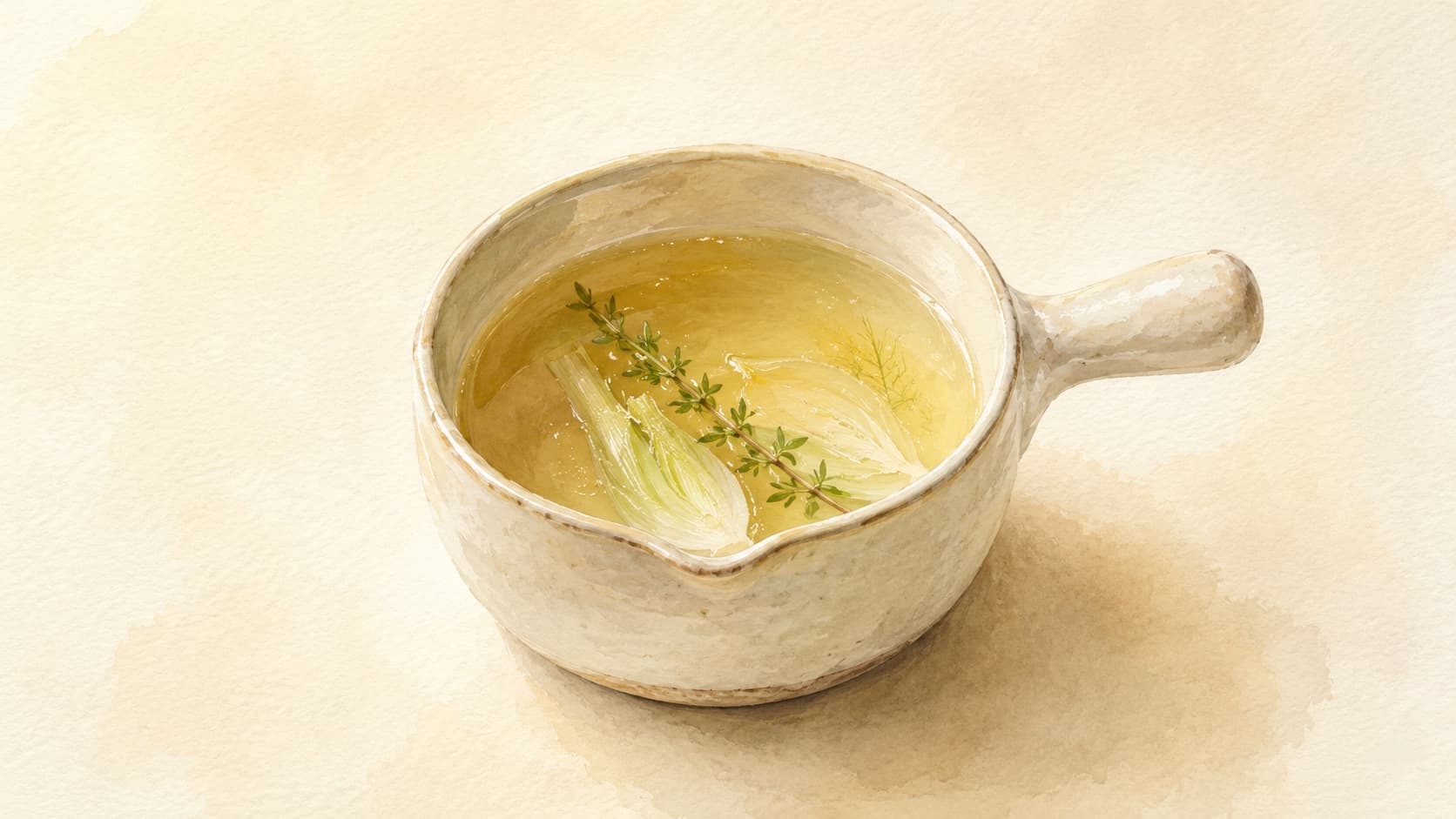
Ingredients
- 2 medium fennel bulbs, chopped
- 1 large onion, chopped
- 2 carrots, chopped
- 3 celery stalks, chopped
- 3 cloves garlic, smashed
- 10 sprigs fresh parsley
- 1 bay leaf
- 1 tsp black peppercorns
- 2 liters water
- Salt to taste
Steps
In a large pot, combine chopped fennel, onion, carrots, celery, garlic, parsley, bay leaf, and peppercorns.
Add 2 liters of water to the pot and bring to a boil over high heat (approximately 10 minutes).
Once boiling, reduce the heat to low and simmer uncovered for 30 minutes to extract flavors.
After simmering for 30 minutes, strain the stock through a fine mesh sieve, discarding solids.
Season the stock with salt to taste, approximately 1 teaspoon, and let it cool for 15 minutes before storing.
Why this works
The combination of fennel, onion, carrots, and celery creates a robust aromatic base known as mirepoix, which is fundamental in French cooking. Fennel's anise-like flavor adds a unique depth to the stock, enhancing any dish it accompanies. Simmering the ingredients for exactly 30 minutes allows the flavors to meld without becoming overly concentrated or bitter. If the stock seems too weak after this time, simply simmer it for an additional 15-30 minutes, ensuring a richer taste. Conversely, if it becomes too salty after seasoning with approximately 1 teaspoon of salt, you can dilute it with a bit of water or unsalted stock to balance the flavor. This method yields a versatile stock that serves as a base for soups, sauces, and risottos, making it an essential component in plant-based cooking. The precise timing and ingredient ratios ensure consistent results.
Common mistakes
Boiling hard instead of simmering.
Target: A gentle simmer (small bubbles, the surface barely moving — not a rolling, churning boil) for the full extraction time.
Why it matters: A vegetable stock is a clean extraction: you want the water to slowly pull aromatic compounds out of the fennel and mirepoix (the classic onion-carrot-celery base). A hard boil agitates the vegetables, can drive off delicate aromatics as steam, and tends to pull out harsher, more bitter notes. A quiet simmer gives a sweeter, cleaner-tasting stock.
What to do: Bring it just to a boil, then immediately drop the heat to a bare simmer and hold it there.
Over-extracting until it turns bitter.
Target: A short cook — roughly 30 minutes is enough for a vegetable stock.
Why it matters: Unlike meat or bone stock, vegetables give up their flavor quickly and then start giving up bitterness instead. Fennel and the other aromatics have released their best flavor well within half an hour; simmering for hours (as you might with bones) only concentrates harsh, vegetal-bitter compounds and dulls the fresh anise note. More time is actively worse here.
What to do: Taste at 30 minutes. If you want it stronger, reduce it gently after straining rather than simmering the vegetables longer.
Salting the stock heavily up front.
Target: Light seasoning, or none, until you know how the stock will be used.
Why it matters: Stock is a base, not a finished dish. Whatever you cook with it later — a risotto, a soup, a sauce — will be seasoned again, and many of those dishes reduce the liquid, concentrating any salt already in it. Salt hard now and a reduced sauce later can turn inedibly salty. Seasoning lightly keeps the stock flexible.
What to do: Add little or no salt while making it; salt the final dish instead.
Leaving the strained stock to cool slowly at room temperature.
Target: Cool the stock quickly, then refrigerate, and use it within a few days.
Why it matters: A pot of warm stock sitting out is an ideal environment for bacteria, which multiply fastest in the warm "danger zone" between roughly 5°C and 60°C (40°F–140°F). The faster you bring it down through that range and into the fridge, the safer it keeps. This is a vegetable stock with no preservatives, so it is a short-keeping ingredient, not a pantry staple.
What to do: Strain, then cool quickly — set the pot in a sink of ice water and stir, or divide into shallow containers so it chills faster. Refrigerate once cooled and use within about 3–4 days, or freeze for longer storage.
What to look for
- The pot while it cooks: a lazy simmer with just a few bubbles, not a rolling boil. If it is churning, turn it down — a vigorous boil is the main cause of a cloudy, harsher stock.
- The aroma at around 30 minutes: sweet, clearly anise-scented from the fennel, and vegetal in a fresh way. Once you start smelling a flat, overcooked-cabbage edge, the stock has gone past its best and should come off the heat.
- The strained liquid: clear to lightly golden, not muddy. Straining through a fine mesh and not pressing hard on the solids keeps it clean; mashing the vegetables through pushes in cloudy sediment.
- The cooled stock before storing: brought down to cool quickly, not left steaming on the counter. Rapid cooling into the fridge is the cue that matters most for keeping it safe.
A note on history
Fennel stock sits within the broad French tradition of aromatic cooking liquids. A vegetable stock is conventionally built on a mirepoix of onion, carrot, and celery, with additions such as leek, garlic, mushroom, and fennel layered in, and leaning heavily on one vegetable like fennel gives a more pronounced flavor (The Culinary Pro). Its close relative is court-bouillon — French for "short broth" — a light, aromatic vegetable-and-water (sometimes wine or acid) liquid used for poaching, with roots in medieval French cookery and codified within the classic French system from the eighteenth century onward (Wikipedia: Court-bouillon).
Get the essays in your inbox — free
Weekly notes on flavor, fermentation, and food history — the writing behind the Atlas of Flavor. No spam; unsubscribe anytime.