
Fennel and Orange Salad
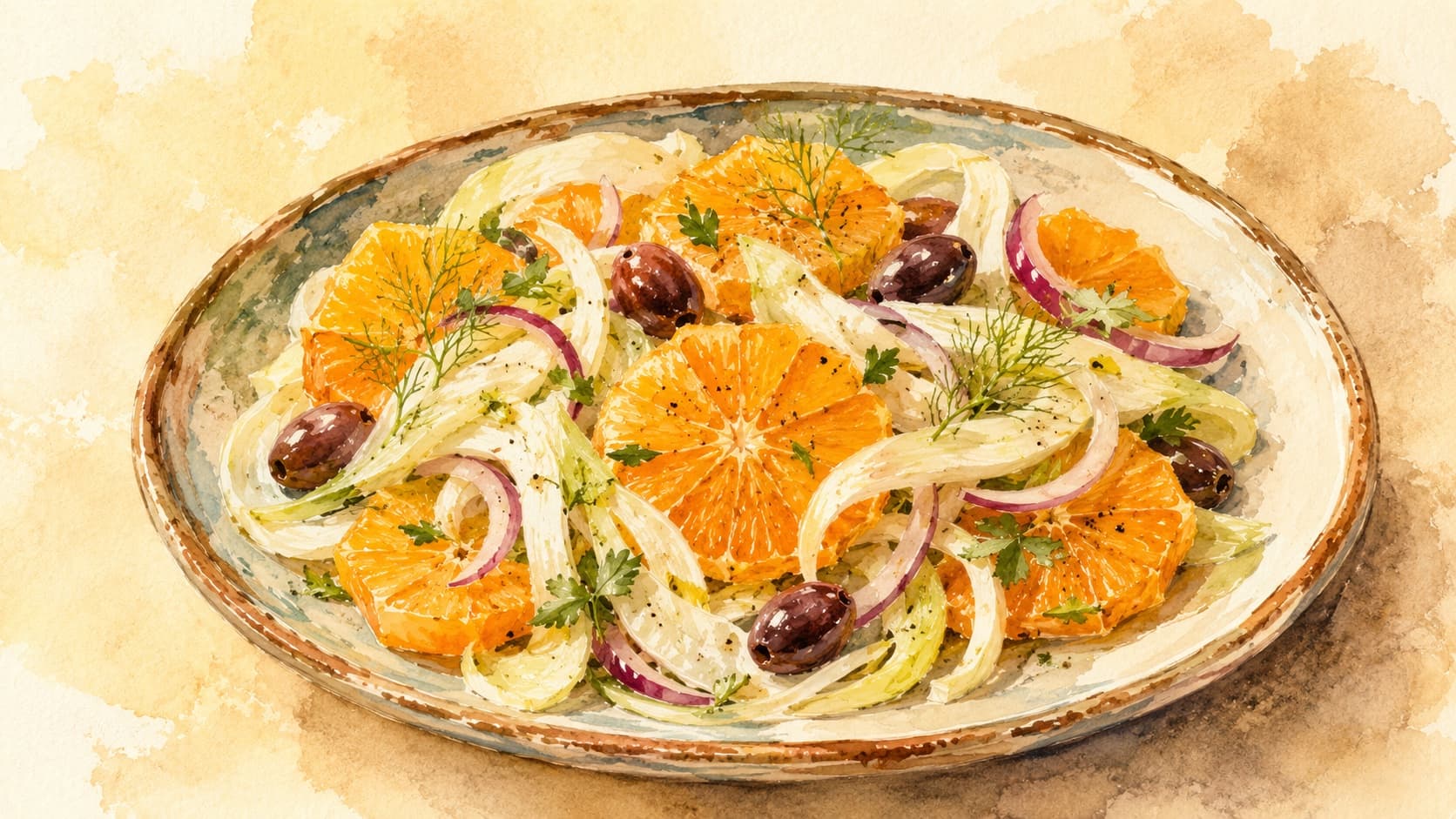
Fennel and Orange Salad features thinly sliced fennel and orange segments, combined to contrast crispness and sweetness in a refreshing main dish.
Contents (5 sections)▾
Ingredients
- 2 medium fennel bulbs, thinly sliced
- 2 large oranges, segmented
- 1 small red onion, thinly sliced
- 3 tbsp olive oil
- 1 tbsp red wine vinegar
- Salt, to taste
- Black pepper, to taste
- Fresh mint leaves, for garnish
Steps
1. In a large mixing bowl, combine the thinly sliced fennel, orange segments, and red onion. This creates a base for the salad.
2. In a separate small bowl, whisk together 45 ml of olive oil, 15 ml of red wine vinegar, 1 teaspoon of salt, and 1/2 teaspoon of black pepper. This vinaigrette will enhance the flavors of the salad.
3. Drizzle the vinaigrette over the fennel and orange mixture, gently tossing to combine for about 1 minute. This ensures the salad is evenly dressed.
4. Let the salad sit for 5 minutes at room temperature before serving. This resting time allows the flavors to meld together.
5. Garnish with fresh mint leaves just before serving for an aromatic finish.
Why this works
This Fennel and Orange Salad is a celebration of textures and flavors, marrying the crispness of fennel (a crunchy pale-green bulb vegetable with a mild licorice-like aroma) with the sweetness and acidity of oranges. The thinly sliced fennel introduces a crunchy element that contrasts beautifully with the juicy, succulent orange segments (the individual citrus pieces with the membrane cut away, leaving just the bare flesh). The red onion adds a sharp bite, while the olive oil and red wine vinegar dressing provides a rich and tangy coating that binds the elements together. Allowing the salad to sit for 5 minutes at room temperature before serving is crucial; it lets the flavors develop and the fennel soften slightly, enhancing the overall taste. If the salad seems too acidic after dressing, you can add a touch more olive oil to balance it out, creating a richer mouthfeel. This dish is ideal for winter when citrus is at its peak, making it a refreshing choice that brightens up any meal. The precision in measurements ensures consistent results, allowing you to recreate this delightful dish with ease.
Common mistakes
Slicing the fennel too thick.
Target: Fennel shaved (sliced paper-thin so it eats crisp and delicate, not stringy) across the bulb.
Why it matters: Raw fennel has tough lengthwise fibers. Cut thick, those fibers stay long and chewy and the bulb tastes coarse; shaved thin and across the grain, the same fennel turns into crisp, almost translucent ribbons that carry the dressing. The texture of this salad lives or dies on how thin the fennel is.
What to do: Halve the bulb, set the flat side down, and slice across as thinly as you can with a sharp knife or a mandoline (a flat slicer with an adjustable blade — mind your fingers and use the guard).
Leaving bitter white pith on the orange.
Target: Oranges peeled down to the flesh, with all the white pith (the spongy layer between skin and fruit) removed.
Why it matters: The pith is where most of an orange's bitterness lives. Leave it on and every segment carries a sour-bitter edge that fights the sweetness you want; cut it away and the fruit reads as clean, bright, and sweet against the anise (gentle licorice-like aroma) of the fennel. This is the single biggest flavor lever in the dish.
What to do: Slice off the top and bottom, stand the orange up, and cut down the sides following the curve to take off skin and pith together. Then slice or segment.
Skipping the soak for the raw onion.
Target: Thin-sliced red onion soaked in cold water for 10–15 minutes, then drained.
Why it matters: Raw onion's harsh bite comes from sulfur compounds that are water-soluble (they dissolve into the soaking water and rinse away). A cold soak mellows the onion so it adds color and gentle sharpness without overpowering the delicate fennel and orange. Unsoaked, a few aggressive slices can dominate the whole bowl.
What to do: Soak the sliced onion in cold water (ice water works best), drain well, and pat dry before adding.
Dressing it and letting it sit too long.
Target: Toss with the vinaigrette shortly before serving; a few minutes' rest is plenty.
Why it matters: Salt and acid in the dressing draw water out of the fennel and orange over time, so a salad dressed far ahead goes limp and watery and the bright flavors dull. A short rest lets the flavors marry while the fennel still snaps. This is a fresh, raw salad — it is at its best soon after assembly.
What to do: Combine the components, dress just before the table, and serve while the fennel is still crisp.
What to look for
- The shaved fennel: thin enough to be slightly translucent and to curl a little. If the slices stand up stiff and opaque, they are too thick and will eat stringy — slice thinner.
- The peeled orange: glistening flesh with no white showing. Any white pith clinging to the segments is bitterness you can still cut away before it reaches the bowl.
- The soaked onion: crisp, milder-smelling, and brighter in color after draining. The harsh raw-onion fumes should be noticeably gone; that is the sulfur compounds rinsed away.
- The finished salad: fennel still crisp and the oranges holding their shape, lightly coated rather than swimming. A pool of liquid in the bowl means it sat dressed too long.
A note on history
The pairing of fennel and orange is most associated with Sicily, where insalata di finocchi e arance is a classic winter dish built on the island's citrus harvest (Coley Cooks; Wikipedia: Sicilian orange salad). Its sweet-and-sour character is often traced to the period of Arab rule in Sicily, which introduced both citrus and a taste for combining sweet fruit with savory elements (Sicilians Creative in the Kitchen). It is traditionally eaten as an antipasto or side during the winter months when oranges are at their peak (Wikipedia: Sicilian orange salad).
Get the essays in your inbox — free
Weekly notes on flavor, fermentation, and food history — the writing behind the Atlas of Flavor. No spam; unsubscribe anytime.