
Fattoush
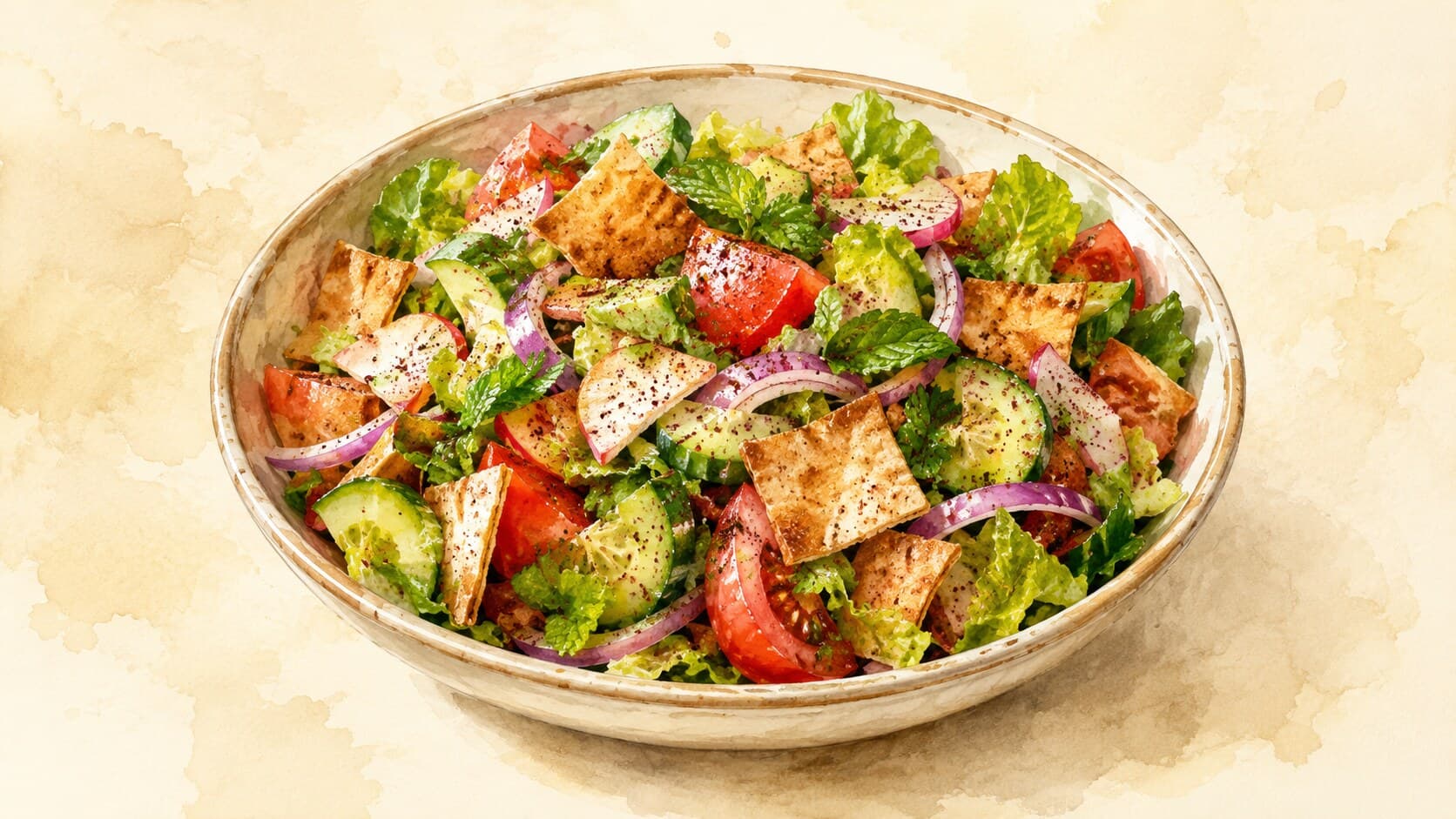
Fattoush is a Middle Eastern salad made with toasted pita, mixed greens, and a dressing of pomegranate and sumac.
Contents (5 sections)▾
Ingredients
- 150 g Lebanese pita bread
- 30 ml olive oil
- 2 medium tomatoes, diced
- 1 cucumber, diced
- 1 red radish, thinly sliced
- 1 bell pepper, diced
- 100 g parsley, chopped
- 30 g mint leaves, chopped
- 50 g pomegranate seeds
- 15 g sumac
- 30 ml pomegranate molasses
- 30 ml lemon juice
- salt to taste
Steps
Preheat the oven to 180°C (350°F). Cut the pita bread into triangles and toss with olive oil, then bake for 10-12 minutes until golden and crisp.
In a large bowl, combine the diced tomatoes, cucumber, radish, bell pepper, parsley, and mint. Stir gently to mix.
In a small bowl, whisk together pomegranate molasses, lemon juice, sumac, and salt to create the dressing.
Add the toasted pita to the salad mixture and drizzle the dressing over the top. Toss gently to combine everything without crushing the pita.
Garnish with pomegranate seeds and serve immediately for the best texture.
Why this works
Fattoush (a Levantine bread salad that uses toasted pita as a crunchy "crouton") salad is a delightful combination of fresh vegetables and crunchy toasted pita, enhanced by the tangy pomegranate-sumac dressing. The sumac adds a unique lemony flavor that brightens the dish, while the pomegranate molasses (a thick, dark, sweet-tart syrup made from reduced pomegranate juice) provides a rich sweetness, creating a perfect balance. To achieve the ideal texture, toasting the pita until golden ensures it remains crisp when mixed in with the salad. If the pita seems too soft after adding it to the salad, consider toasting it for a few more minutes until it regains its crunch. This dish is best served fresh; if made ahead, store the dressing separately to prevent the pita from becoming soggy.
Common mistakes
Dressing the pita too early.
Target: Add the toasted pita and dressing within a minute or two of serving — not before.
Why it matters: A crisp piece of toasted pita is a network of dried starch. The moment it meets the acid and oil in the dressing, capillary action (liquid wicking into the dry pores the way water climbs into a paper towel) pulls moisture in and the crunch collapses into a sodden chew. The whole point of fattoush is the contrast between crisp bread and wet vegetables, so a soggy crouton erases the dish.
What to do: Keep the toasted pita in a separate bowl. Combine vegetables, dressing, and pita at the table, toss once, and eat.
Not salting the cucumber and tomato.
Target: A light pinch of salt on the diced cucumber and tomato a few minutes before dressing, then a quick drain of the liquid they shed.
Why it matters: Salt draws water out of watery vegetables by osmosis (water moving across the cell membranes toward the saltier outside). If you skip this, that same water leaks into the salad later, diluting the dressing and speeding up the sogginess. Drawing it out first keeps the dressing sharp and the bread crisper for longer.
What to do: Salt, wait five minutes, tip off the pooled liquid, then dress.
Bland, raw-tasting sumac.
Target: Sumac (a tart, brick-red dried berry, ground to a powder) stirred into the dressing and given a minute to bloom, plus a final pinch over the top.
Why it matters: Sumac carries fattoush's signature lemony tartness, but its flavor is locked in dried particles. Whisked into the oil-and-acid dressing it hydrates and releases that flavor; sprinkled dry at the very end it also gives a fresh, fruity edge. Skipping it, or only dusting it raw, leaves the salad tasting flat and one-dimensionally sour from the lemon alone.
What to do: Mix most of the sumac into the dressing; save a pinch to scatter on top just before serving.
Stale or under-toasted pita.
Target: Pita baked to fully golden and audibly crisp, ideally from day-old bread.
Why it matters: Fattoush was invented to use up stale flatbread, and there is a reason — slightly dried bread toasts crisper because it has less internal moisture to drive off. Fresh, soft pita that is only warmed through stays leathery and never gives the brittle snap the salad depends on. Pale, soft "toast" is the most common cause of a disappointing fattoush.
What to do: Use day-old pita if you have it, toss it well with oil so it crisps evenly, and bake until it snaps cleanly when you break a piece.
What to look for
- The toasted pita: deep gold, blistered, and brittle enough to snap. If a piece bends instead of breaking, it needs a few more minutes in the oven — limp pita will only get limper once dressed.
- The salted vegetables before dressing: a small pool of liquid in the bowl you can tip away. That pooled water is the moisture you want gone before, not after, the dressing goes on.
- The dressing: glossy and slightly thickened, with the sumac no longer sitting as dry specks. Once the sumac has hydrated into the oil and acid, the dressing clings to the leaves instead of sliding off.
- The finished salad: herbs still bright green and the pita still crisp at the first bite. Fattoush is a salad you assemble and eat, not one that improves on standing.
A note on history
Fattoush belongs to the Levantine family of fattah dishes — its name comes from the Arabic fatta, "to crumble" or "break into pieces" — and began as a thrifty way for farmers in the Levant (especially northern Lebanon) to use up stale flatbread alongside whatever greens and vegetables were on hand (The Mediterranean Dish; The Daily Meal). Often called a "peasant salad," it spread through the eastern Mediterranean during the Ottoman period, with the crumbled bread fried or toasted in olive oil before being tossed with the vegetables (Vidar Bergum, A Kitchen in Istanbul).
Get the essays in your inbox — free
Weekly notes on flavor, fermentation, and food history — the writing behind the Atlas of Flavor. No spam; unsubscribe anytime.