
Fatteh Djaj
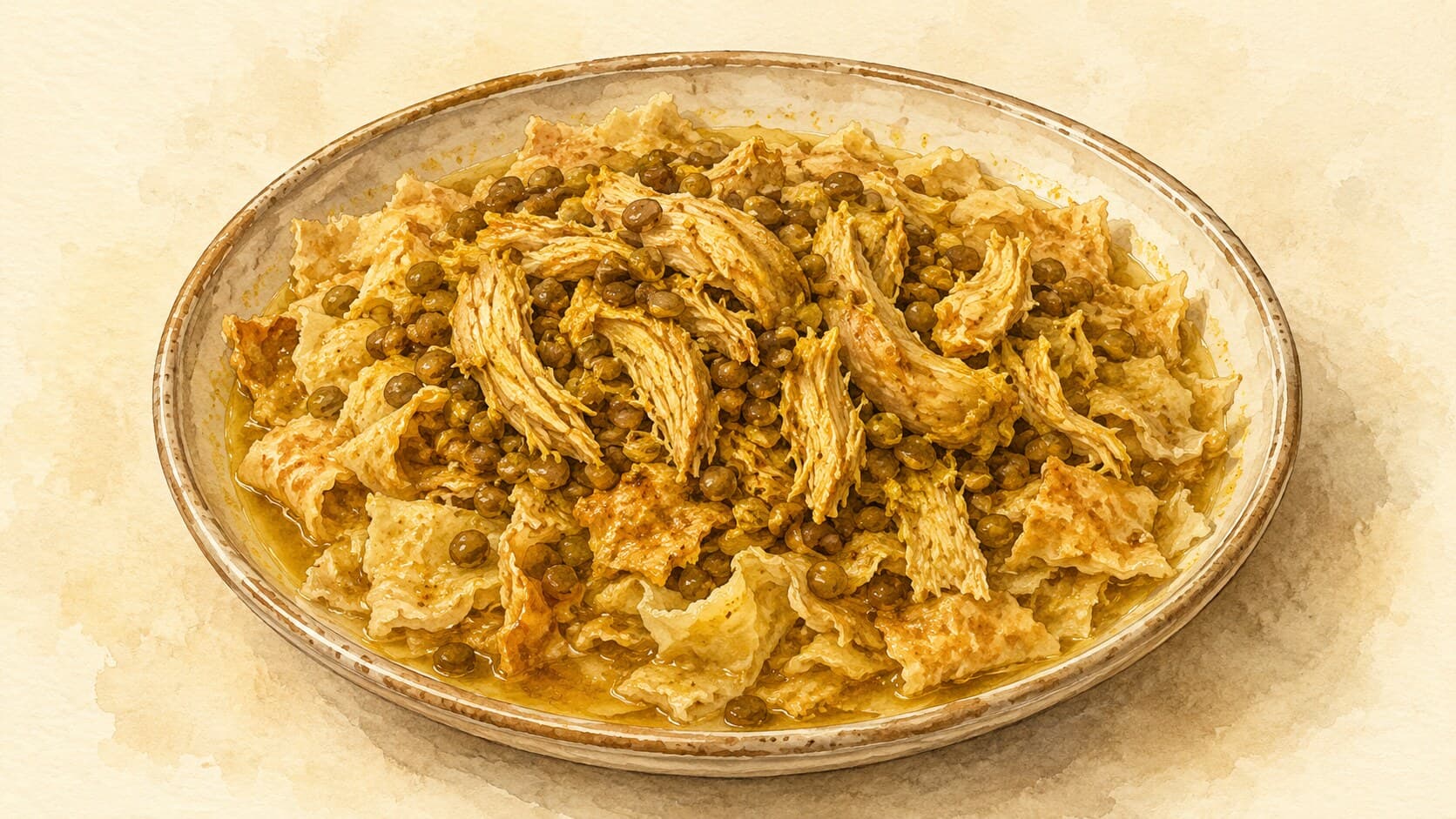
Fatteh Djaj is a flavorful Levantine layered dish featuring tender spiced chicken over crispy pita, chickpeas, and a creamy tahini-yogurt sauce.
Contents (5 sections)▾
Ingredients
- 500 g chicken thighs, boneless and skinless
- 2 tbsp olive oil
- 1 medium onion, finely chopped
- 4 cloves garlic, minced
- 1 tsp ground cumin
- 1 tsp ground coriander
- 1/2 tsp ground cinnamon
- 1/2 tsp paprika
- Salt to taste
- Black pepper to taste
- 300 g pita bread, cut into triangles
- 400 g canned chickpeas, drained and rinsed
- 200 g yogurt
- 50 g tahini
- 1 tbsp lemon juice
- 50 g pine nuts, toasted
- Fresh parsley, for garnish
Steps
Heat olive oil in a large pan over medium heat, then sauté the chopped onion for about 5 minutes until translucent, which enhances the dish's base flavor.
Add minced garlic and sauté for an additional minute, until fragrant; this step is crucial as it builds depth in the overall flavor profile.
Stir in the chicken thighs, cumin, coriander, cinnamon, paprika, salt, and pepper. Cook for about 7-10 minutes, until chicken is browned on all sides.
Add 250 ml of water to the pan, cover, and simmer on low heat for 15-20 minutes until the chicken is tender and fully cooked. Cook until the thickest part reaches 74 °C / 165 °F on an instant-read thermometer — colour, juices and time are guides, not the safety test.
While chicken is cooking, heat oil in a separate pan and fry pita triangles until golden and crispy, about 3-5 minutes. Drain on paper towels to remove excess oil.
In a bowl, whisk together yogurt, tahini, and lemon juice until smooth. This mixture stabilizes the yogurt sauce and prevents it from splitting during cooking.
Once the chicken is cooked, shred it into bite-sized pieces using two forks and combine with the chickpeas in the pan, stirring to mix well.
To assemble, layer the crispy pita at the bottom of a wide platter, followed by the chicken and chickpea mixture, and finally drizzle the tahini-yogurt sauce generously on top.
Finish with toasted pine nuts and a sprinkle of fresh parsley for garnish before serving. This adds a lovely texture and flavor contrast.
Why this works
Fatteh Djaj (a Levantine layered dish — "fatteh" means broken-up bread, "djaj" means chicken) is a layered dish that combines the textures of crispy pita, tender chicken, and creamy sauce, creating a delightful harmony on the palate. The key technique is the careful seasoning of the chicken, which ensures that every bite is flavorful. The simmering process also helps break down the chicken fibers, making it incredibly tender. If the tahini-yogurt sauce seems too thick, you can adjust its consistency by adding a bit of water or additional lemon juice. This keeps the sauce creamy and enhances its brightness. The frying of the pita is essential, as it adds a satisfying crunch that contrasts beautifully with the other elements. Proper layering is important; the crispy pita base should be able to soak up the juices from the chicken without becoming overly soggy, maintaining its integrity until served. When garnished with pine nuts, this dish provides a wonderful nutty flavor that ties all the components together and offers a visual appeal.
Common mistakes
Serving chicken that is not fully cooked.
Target: Simmer the chicken thighs until cooked through to a safe internal 74°C / 165°F and the meat shreds easily with no pink at the center.
Why it matters: Chicken must reach a safe internal temperature to be safe to eat — surface browning alone does not do it. Thighs are forgiving (their connective tissue and fat keep them juicy past doneness), so there is no reason to undercook; the braise both cooks them through and makes them tender enough to shred.
What to do: Brown the thighs, then simmer covered until they pull apart easily; if unsure, check the thickest piece with an instant-read thermometer before shredding.
Pouring the yogurt sauce over heat, or making it without tahini.
Target: Whisk the yogurt with tahini and lemon until smooth, and spoon it on at the end over the warm (not boiling-hot) assembled dish — never simmer it.
Why it matters: Plain yogurt curdles when heated — its proteins clump and the sauce splits into grainy curds and watery whey. The tahini (sesame-seed paste) here is doing real work: its fat and fiber buffer the proteins and keep the sauce smooth, which is why the recipe whisks them together. Even so, direct heat will break it, so it goes on as a cool finishing layer.
What to do: Make the sauce off the heat, keep it off the heat, and ladle it over the assembled fatteh just before serving. Thin with a little water or extra lemon if it is too thick.
Soggy pita.
Target: Fry or toast the pita until deeply golden and crisp, drain it, and assemble at the last moment.
Why it matters: The crunch of the bread against the soft chicken, creamy sauce, and tender chickpeas is the entire point of a fatteh (the name itself means "crushed" or "crumbled" bread). Pita that is pale, greasy, or layered too early goes limp as it absorbs juices, collapsing the dish's defining contrast.
What to do: Get the pita properly crisp and golden, drain it on paper towels, and build the platter just before it goes to the table so the bread is still crunchy.
Bland chicken from rushed spicing.
Target: Toast the cumin, coriander, cinnamon, and paprika with the chicken and aromatics so they cook into the meat, not just sit on the surface.
Why it matters: Ground spices are fat-soluble and need a little heat and oil to release their aroma — added raw at the end, they taste dusty and flat. Cooking them with the onion and chicken "blooms" them (releases their aroma into the fat) and lets the flavor penetrate as the chicken simmers.
What to do: Add the spices with the chicken so they toast in the hot oil, then let the simmer carry that flavor through the meat. Taste the braising liquid and adjust salt before shredding.
What to look for
- The spiced chicken in the pan: the spices darken slightly and smell warm and fragrant as they hit the hot oil — that bloom is the difference between deep flavor and a dusty coating.
- The chicken when it's done: it pulls apart into clean shreds with two forks, with no pink and no resistance at the center — the sign it is both safe and tender.
- The tahini-yogurt sauce: smooth, pourable, and ivory-pale, with no graininess or separated liquid — if it looks split or stiff, whisk in a little water; if it is warm to the touch, let the dish cool a moment before saucing.
- The pita at assembly: deeply golden and audibly crisp, holding its shape under the chicken — and the finished platter eaten promptly, while the bread still gives a crunch against the creamy sauce.
A note on history
Fatteh takes its name from the Arabic root meaning to "tear" or "break apart" — fatteh means "crushed" or "crumbs," describing the broken flatbread at its base (Wikipedia, 196 Flavors). It is an Egyptian and Levantine dish popular across Egypt, Syria, Palestine, Lebanon, and Jordan, and was traditionally a thrifty way to use up stale bread, layering it with chickpeas, yogurt, and whatever else was on hand (Wikipedia). Some trace its lineage to the Abbasid era and even to Pharaonic Egypt; the chicken version, fatteh djaj, is one of many regional variations built on that same crushed-bread foundation.
Get the essays in your inbox — free
Weekly notes on flavor, fermentation, and food history — the writing behind the Atlas of Flavor. No spam; unsubscribe anytime.