
Fasolada
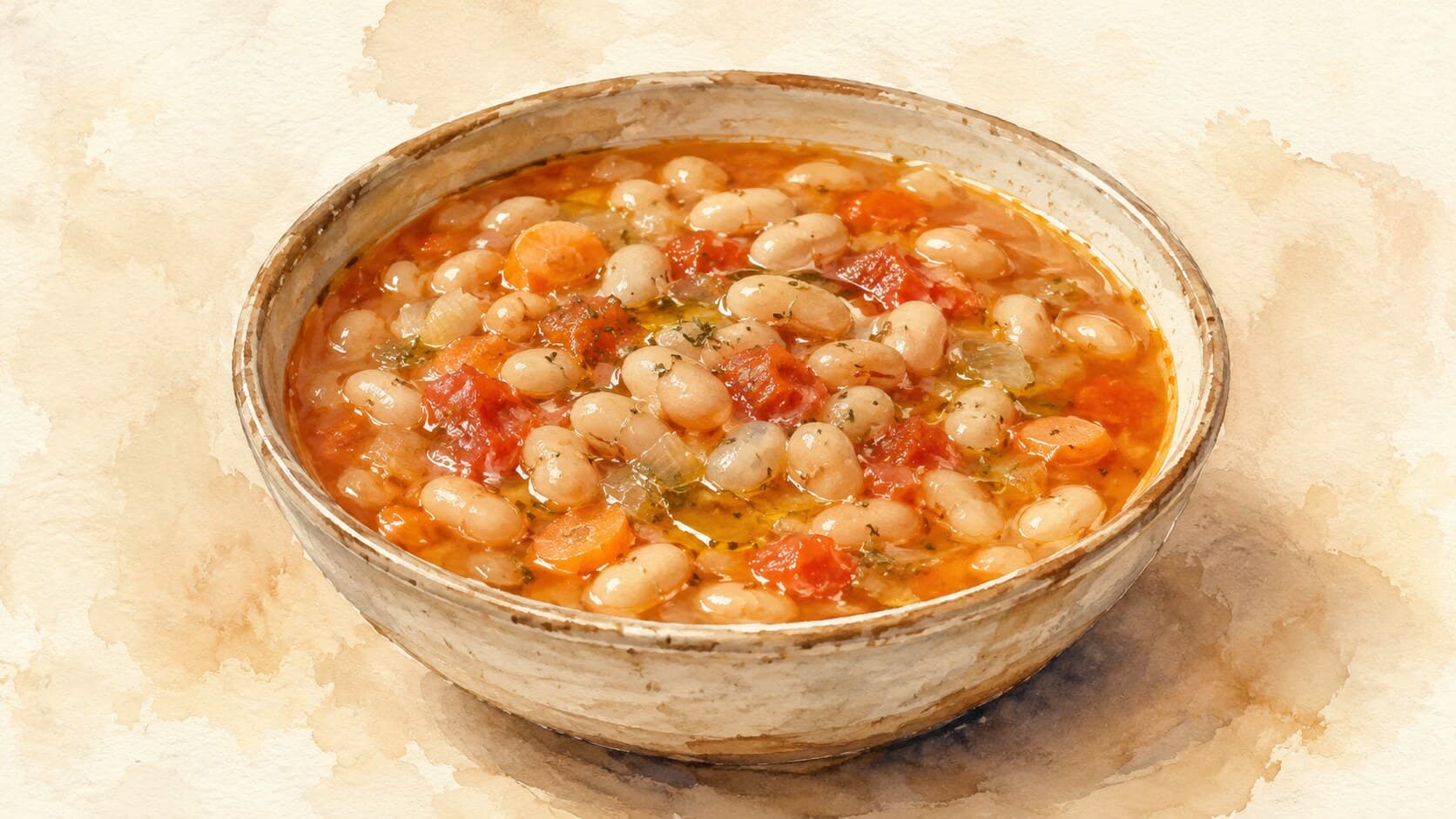
Fasolada is a Greek stew made with navy beans, tomatoes, and carrots, emphasizing bean-soaking, flavor layering, and simmering techniques.
Contents (5 sections)▾
Ingredients
- 250 g navy beans, soaked overnight
- 1 medium onion, diced
- 2 medium carrots, sliced
- 2 stalks celery, diced
- 4 cloves garlic, minced
- 400 g canned tomatoes, crushed
- 1 liter vegetable broth
- 60 ml olive oil
- 1 tsp dried oregano
- 1 tsp salt
- ½ tsp black pepper
- 2 tbsp fresh parsley, chopped (for garnish)
Steps
In a large pot, heat olive oil over medium heat. Sauté the onion, garlic, celery, and carrots for about 5 minutes until softened, enhancing the base flavor.
Add the soaked navy beans, crushed tomatoes, vegetable broth, oregano, salt, and pepper. Bring to a boil, then reduce heat to low and simmer for 20 minutes, allowing the flavors to meld.
Adjust seasoning to taste. If the soup seems too thick, add a bit more broth or water for the desired consistency.
Serve hot, garnished with fresh parsley for an added touch of freshness.
Why this works
Fasolada's rich flavor comes from the combination of sautéed vegetables and the slow simmering of navy beans with tomatoes and spices. The key technique here is building a flavor base through initial sautéing, which allows the onion and garlic to release their natural sweetness, while the vegetables soften to create a harmonious blend. The navy beans are a perfect protein source, and their creaminess enhances the stew's texture. If the soup becomes too thick during cooking, simply add more broth or water to reach the desired consistency. This adaptability allows the soup to remain enjoyable without losing its core flavors, ensuring a satisfying meal regardless of minor variations in ingredient amounts. Additionally, the parsley garnish brightens the dish and adds a fresh contrast to the rich stew.
Common mistakes
Cooking the beans hard in the acidic, salted broth from the start.
Target: Get the soaked navy beans to nearly tender before the acid and salt take full effect; if they resist, simmer longer and low until a bean crushes creamy, adding broth as needed.
Why it matters: Acid (from the tomatoes) and salt both slow a bean's softening — acid stiffens the pectin and cell walls (the "glue" and structure that hold the bean together), so beans simmered in a tomato-heavy, salted pot can stay stubbornly firm no matter how long they cook. Older, drier beans are worse. Giving them time to hydrate and soften is what turns the soup creamy.
What to do: Don't trust the clock — taste a bean. If it is still chalky inside, keep it at a low simmer with enough liquid until it yields, then adjust seasoning at the end.
Boiling instead of simmering.
Target: A gentle simmer — small bubbles, surface barely moving — once it comes up to a boil the first time.
Why it matters: A hard boil knocks the beans around and shears their skins, clouding the soup and breaking the beans before the centers are done. Fasolada's body should come from beans softening and releasing their starch slowly, not from shattered skins.
What to do: Bring to a boil once, then drop to low and let it tick over. The broth thickens on its own as bean starch dissolves into it.
Skimping on the olive oil.
Target: Use the full generous pour of olive oil — fasolada is built on it, not garnished with it.
Why it matters: In a vegan soup with no meat fat, olive oil is the carrier of flavor and the source of body and mouthfeel; it emulsifies (blends) into the starchy broth as it simmers, giving the soup its characteristic silkiness. Cut it back and the soup tastes thin and watery, however well-seasoned.
What to do: Use the oil called for to build the base, and consider a final raw drizzle at serving — a Greek habit that lifts the aroma.
Underseasoning the broth.
Target: Taste and correct salt and acid at the end; the broth should taste bright and savory on its own, not flat.
Why it matters: Beans and their cooking liquid are bland and starchy by nature and soak up seasoning, so a pot that tasted fine early often falls flat once the beans are done. Salt sharpens flavor and a squeeze of acidity (lemon, or the tomatoes' own) keeps a bean soup from tasting heavy.
What to do: Season at the end, after the beans are tender, and adjust in small increments until the broth tastes lively.
What to look for
- The sautéed vegetable base: the onion turned soft and translucent and the mix smelling sweet, not raw or sharp — this is the flavor foundation before any liquid goes in.
- A bean tested in your fingers: it crushes to a smooth, creamy interior with no hard chalky core — the only reliable sign the soup is ready, regardless of time elapsed.
- The broth as it finishes: lightly thickened and slightly cloudy, coating a spoon, as dissolved bean starch and olive oil give it body — thin, clear liquid means it needs more time or a few mashed beans.
- The final seasoning: the soup smells and tastes bright and lifted after the last salt and acid, with the parsley adding a fresh top note against the rich, earthy base.
A note on history
Fasolada is often called the national dish of Greece — a humble soup of dried white beans, olive oil, and vegetables that has been a staple of Greek home cooking and Orthodox fasting tables (Wikipedia, Secret Greek). Its roots reach back to antiquity, where beans were a dietary mainstay; the dish is linked to panspermia, a bean-and-grain offering of the ancient Pyanepsia festival honoring Apollo — the festival's name itself referring to a day of bean soup (The Gourmet Archaeologist). Through wars, hardship, and fasting periods, fasolada endured because it was cheap, filling, and nourishing.
Get the essays in your inbox — free
Weekly notes on flavor, fermentation, and food history — the writing behind the Atlas of Flavor. No spam; unsubscribe anytime.