
Enchiladas Verdes
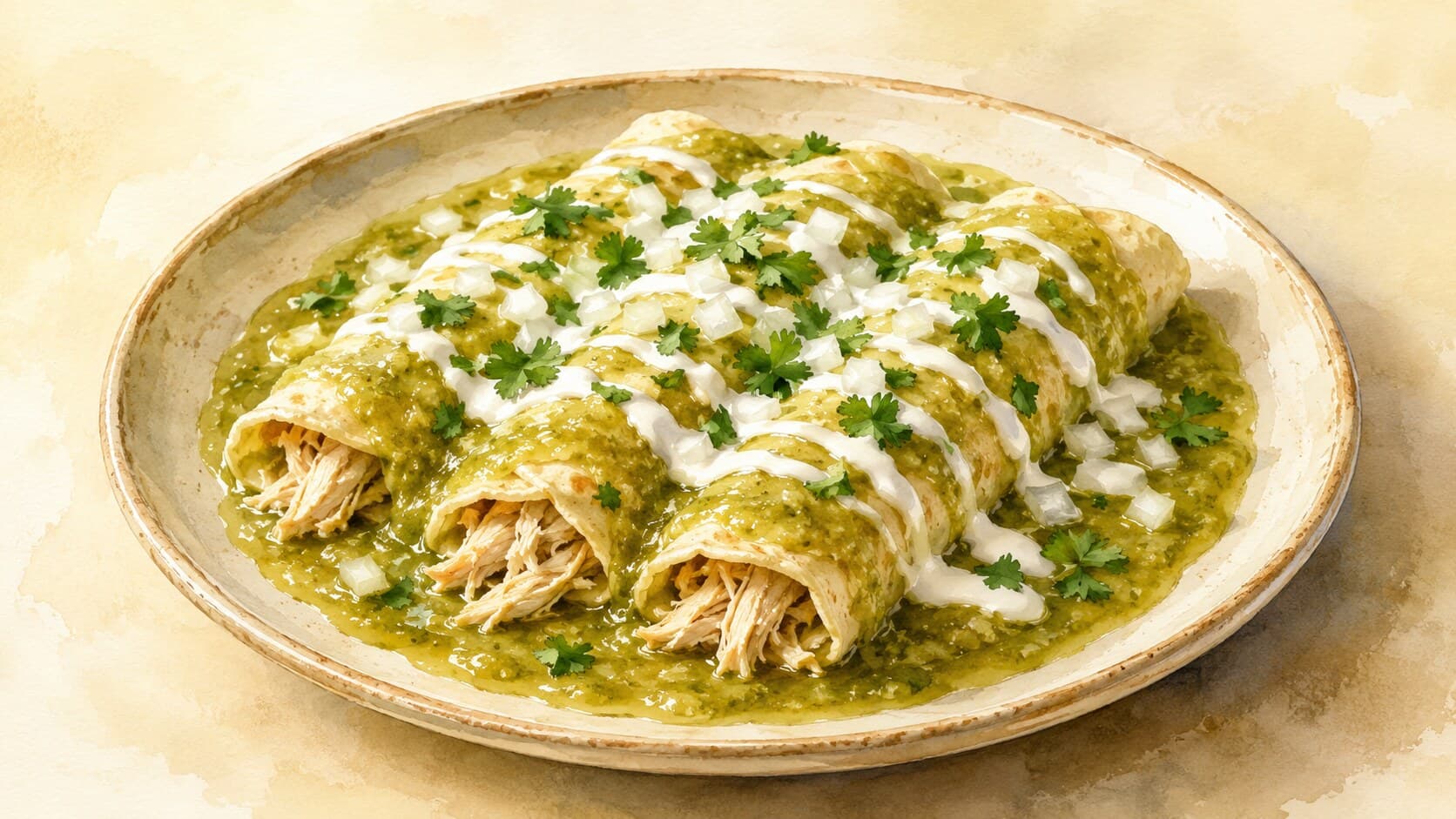
Enchiladas verdes consist of rolled tortillas filled with ingredients and covered in a tomatillo sauce, then baked until heated through.
Contents (5 sections)▾
Ingredients
- 12 corn tortillas
- 500 g tomatillos, husked and rinsed
- 1 small onion, chopped
- 2 cloves garlic, minced
- 1 jalapeño, seeded and chopped
- 1 cup vegetable broth
- 1 tsp salt
- 1 tbsp olive oil
- 200 g shredded chicken (cooked)
- 1 cup sour cream
- 1/4 cup fresh cilantro, chopped
- 1/2 cup crumbled queso fresco
- 1 tsp ground cumin
Steps
Preheat your oven to 180°C (350°F). This ensures that the enchiladas will bake evenly and heat through.
In a pot, combine tomatillos, onion, garlic, jalapeño, vegetable broth, and salt. Bring to a boil, then reduce heat and simmer for about 10 minutes until tomatillos are tender.
Blend the mixture until smooth, adjusting consistency with more broth if necessary. This creates a beautiful sauce that will coat the enchiladas.
In a skillet, heat olive oil over medium heat. Quickly warm each tortilla for about 30 seconds per side to make them pliable. This will prevent them from breaking while rolling.
Fill each tortilla with shredded chicken and a spoonful of tomatillo sauce, then roll them tightly and place them seam-side down in a baking dish.
Once all tortillas are rolled, pour the remaining tomatillo sauce over the top. Bake for 15 minutes until hot and bubbly.
Serve enchiladas topped with sour cream, cilantro, and crumbled queso fresco.
Why this works
The combination of tomatillos (small green husk-tomatoes that taste tart and citrusy), onion, and jalapeño creates a tangy and spicy sauce that is a perfect complement to the rich filling of shredded chicken. Cooking the tomatillos until tender helps to release their flavors, while blending them creates a smooth, pourable sauce. If the sauce seems too thick, simply add a bit more vegetable broth to achieve the desired consistency. Pre-warming the tortillas is crucial; if they are too cold, they may crack when you roll them. By baking the enchiladas, the flavors meld together beautifully, and the top gets a pleasant golden hue, ensuring a satisfying texture contrast. This dish is a great variation on traditional red enchiladas, adding a fresh twist with the vibrant green sauce, making it a perfect main course for any gathering.
Common mistakes
Rolling cold, straight-from-the-pack tortillas.
Target: Each tortilla warmed and softened — about 30 seconds a side in a little oil, or a few seconds on a dry hot pan — until it folds without resistance.
Why it matters: Corn tortillas are held together by a fragile starch-and-protein network. Cold, that network is stiff and brittle, so the tortilla cracks the moment you roll it. A brief warming relaxes it and makes it pliable, the way warm bread bends where cold bread snaps.
What to do: Warm them one at a time just before filling, and keep the stack wrapped in a clean towel so they stay soft.
Filling with undercooked chicken.
Target: Chicken fully cooked to 74°C / 165°F before it's shredded into the filling — opaque all through, no pink, juices clear.
Why it matters: The short 15-minute bake is meant to heat the assembled dish through and meld the sauce, not to cook raw poultry from the inside of a tightly rolled tortilla. Poultry that goes in underdone may not reach a safe temperature in that time.
What to do: Poach or roast the chicken until done, then shred it; the oven step only needs to warm an already-cooked filling.
A raw, harsh-tasting tomatillo sauce.
Target: Tomatillos simmered until they turn from bright to olive-green and go soft, then blended.
Why it matters: Raw tomatillos (the small green husk-tomatoes that give the sauce its name) are sharply acidic and taste green and metallic. Cooking softens their acid and develops a rounder, savoury flavour — this is the difference between a sauce that tastes finished and one that tastes raw.
What to do: Simmer until tender (about 10 minutes) before blending; if the blended sauce still bites, a brief cook in the pan settles it further.
Soggy, sauce-logged enchiladas.
Target: Tortillas lightly softened and sauced, then baked just until hot and bubbling — not left sitting fully submerged.
Why it matters: Corn tortillas absorb liquid quickly. Drowned in sauce and over-baked, they slump into mush and the rolls fall apart on the plate. The brief warming in oil also waterproofs them slightly, helping them hold.
What to do: Sauce them but don't flood them, bake only until heated through, and serve promptly while the texture still holds.
What to look for
- The tomatillos as they cook: they shift from bright kelly-green to a duller olive and soften, sometimes splitting. That colour change is the cue the acid has mellowed and they're ready to blend.
- A tortilla ready to roll: it drapes and folds without cracking, slightly glossy from the pan. If the edges still split, it needs a few more seconds of warming.
- The dish going into the oven: rolls seam-side down, snug together, evenly coated but not swimming in sauce. Seam-down keeps them from unrolling as they heat.
- Done and ready to serve: the sauce is bubbling at the edges and the tops are just set, still vivid green. Pull it before the sauce darkens or the tortillas collapse.
A note on history
The word enchilada comes from the Spanish enchilar, "to season with chili," and the dish's roots run deep into Mesoamerica — Bernal Díaz del Castillo described rolled, chili-seasoned tortillas served to the Spanish in 1519, a dish the Aztecs are said to have called chīllapīzzali, "chili flute" (Wikipedia: Enchilada). The green version leans on the tomatillo, a husk-tomato domesticated in Mexico long before European contact and known in Nahuatl as a kind of tomatl (Wikipedia: Tomatillo). Enchilada recipes appeared in one of the first published Mexican cookbooks, El cocinero mexicano, in 1831 (Wikipedia: Enchilada).
Get the essays in your inbox — free
Weekly notes on flavor, fermentation, and food history — the writing behind the Atlas of Flavor. No spam; unsubscribe anytime.