
Dungan Noodles
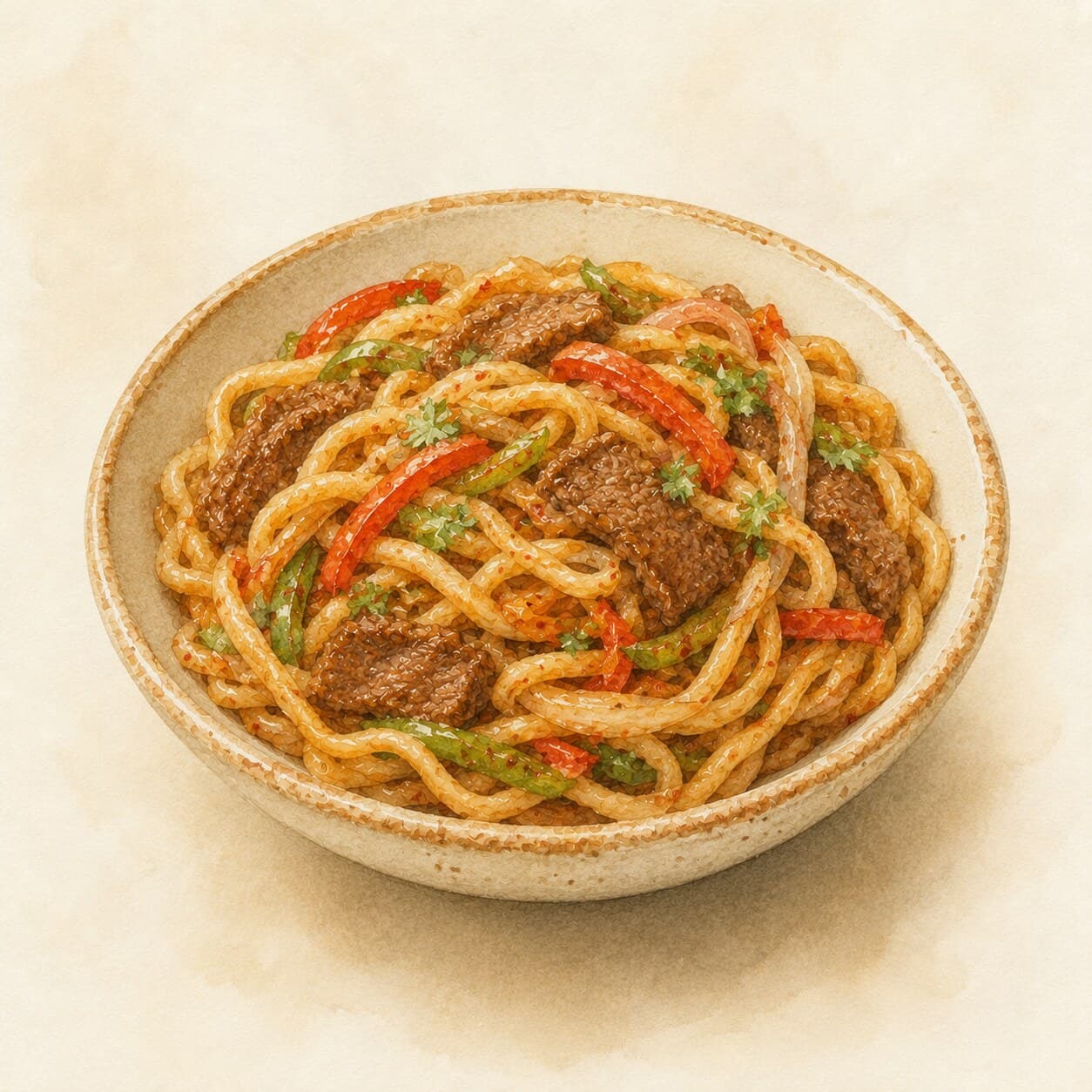
Savor the rich flavors of Dungan Noodles with hand-pulled wheat noodles topped with a spicy beef-and-pepper sauce.
Contents (5 sections)▾
Ingredients
- 500 g hand-pulled wheat noodles
- 300 g beef (flank or sirloin), thinly sliced
- 2 medium bell peppers, sliced
- 1 medium tomato, diced
- 3 tbsp chili oil
- 4 cloves garlic, minced
- 2 tbsp soy sauce
- 1 tsp salt
- 1 tsp black pepper
- 1 tbsp vegetable oil
Steps
In a large pot, bring water to a boil. Add the hand-pulled noodles and cook for 5-7 minutes until al dente. Drain and set aside.
In a large skillet or wok, heat vegetable oil over medium-high heat. Add minced garlic and sauté for about 30 seconds until fragrant.
Add the sliced beef to the skillet, cooking for 3-5 minutes until browned. Season with salt and black pepper.
Stir in the sliced bell peppers and diced tomato, cooking for an additional 3-4 minutes until the vegetables are tender.
Pour in the chili oil and soy sauce, mixing thoroughly to coat the beef and vegetables in the sauce. Cook for another 2 minutes.
Serve the spicy beef-and-pepper sauce over the hand-pulled noodles, ensuring an even distribution of sauce and toppings.
Why this works
The technique of hand-pulling noodles creates a chewy texture that perfectly complements the robust flavors of the spicy beef-and-pepper sauce. The quick cooking of the beef ensures it remains tender, while adding the bell peppers and tomatoes provides a fresh contrast. The chili oil introduces a depth of heat that enhances the overall flavor. If the noodles seem too sticky after cooking, rinse them briefly under cold water to separate and prevent clumping. This dish showcases the balance of spices and textures characteristic of Dungan cuisine, making it a delightful main course.
Common mistakes
Not resting the dough long enough before pulling it into noodles.
Target: After kneading, let the dough rest, covered, for at least 20–30 minutes (longer if it still resists stretching) before pulling.
Why it matters: Resting lets gluten (the elastic network of proteins that forms when wheat flour is worked with water) relax. Skip the rest and the dough springs back or tears the moment you try to stretch it into long strands, instead of yielding into thin, even noodles.
What to do: Knead, then cover the dough and let it sit; when you come back, do a quick stretch test on a small piece, and give it more resting time if it fights back.
Crowding the beef in the pan so it stews instead of browning.
Target: Add the sliced beef in a single layer with space around each piece, over medium-high heat.
Why it matters: A pan crammed with beef releases enough moisture that the meat simmers in its own liquid rather than searing, so it turns grey and flabby instead of developing browned, savory edges.
What to do: Cook the beef in two batches if your pan is small, and don't stir constantly — let each side sit undisturbed for a minute to color before turning.
Letting the garlic and chili oil scorch over too-high heat.
Target: Add minced garlic to hot (not smoking) oil and sauté briefly, just until fragrant, before it has a chance to darken past golden.
Why it matters: Garlic is mostly water and sugar in a small piece, so it goes from fragrant to bitter and acrid within seconds once it starts to burn, and that bitterness carries through the whole sauce.
What to do: Keep the garlic moving in the pan and pull it off the heat, or add the next ingredient, the moment it turns pale gold and smells nutty rather than sharp.
Overcooking the peppers and tomato until they collapse.
Target: Cook the bell peppers and tomato just until they soften and release their juice, a few minutes at most.
Why it matters: Part of this dish's appeal is the contrast between tender-crisp vegetables and the rich sauce; cooked past that point, the peppers turn limp and the tomato disintegrates into mush, losing the fresh bite and bright acidity that balances the chili oil.
What to do: Add the vegetables after the beef has already browned, and pull the pan off the heat as soon as they've softened but still hold their shape.
What to look for
- Beef strips that are evenly browned with no pink or red remaining, and juices that run clear rather than red when a piece is cut into. Thin slices cook through quickly, so check a thicker piece if you're unsure — it should show no raw color at the center.
- Noodles with a slight chew that pull apart into distinct strands rather than clumping together. Gummy, stuck-together noodles usually mean they sat too long after draining without a rinse or a toss in a little oil.
- Bell peppers and tomato that are just softened, still bright in color and holding their shape. Faded, mushy vegetables have gone past the point where they'd add fresh contrast to the dish.
- A glossy sauce that clings to the noodles rather than pooling thin and watery at the bottom of the bowl. If it looks thin, let it reduce (keep simmering so some of the liquid boils off and the sauce thickens) for another minute before serving.
A note on history
The Dungan are ethnic Hui — Chinese-speaking Muslims — who fled northwestern China for the Russian Empire in the late 19th century, after uprisings against Qing rule were suppressed in the 1860s and 1870s. Settling in what are now Kyrgyzstan, Kazakhstan, and Uzbekistan, they carried Chinese culinary techniques with them: pulling wheat dough by hand into long noodles, cooking over high heat, and building sauces around chili oil and garlic. Dungan noodles are one of the clearest everyday markers of that migration, joining Chinese noodle craft with the beef, peppers, and other ingredients available in their new Central Asian home.
Get the essays in your inbox — free
Weekly notes on flavor, fermentation, and food history — the writing behind the Atlas of Flavor. No spam; unsubscribe anytime.