
Domoda
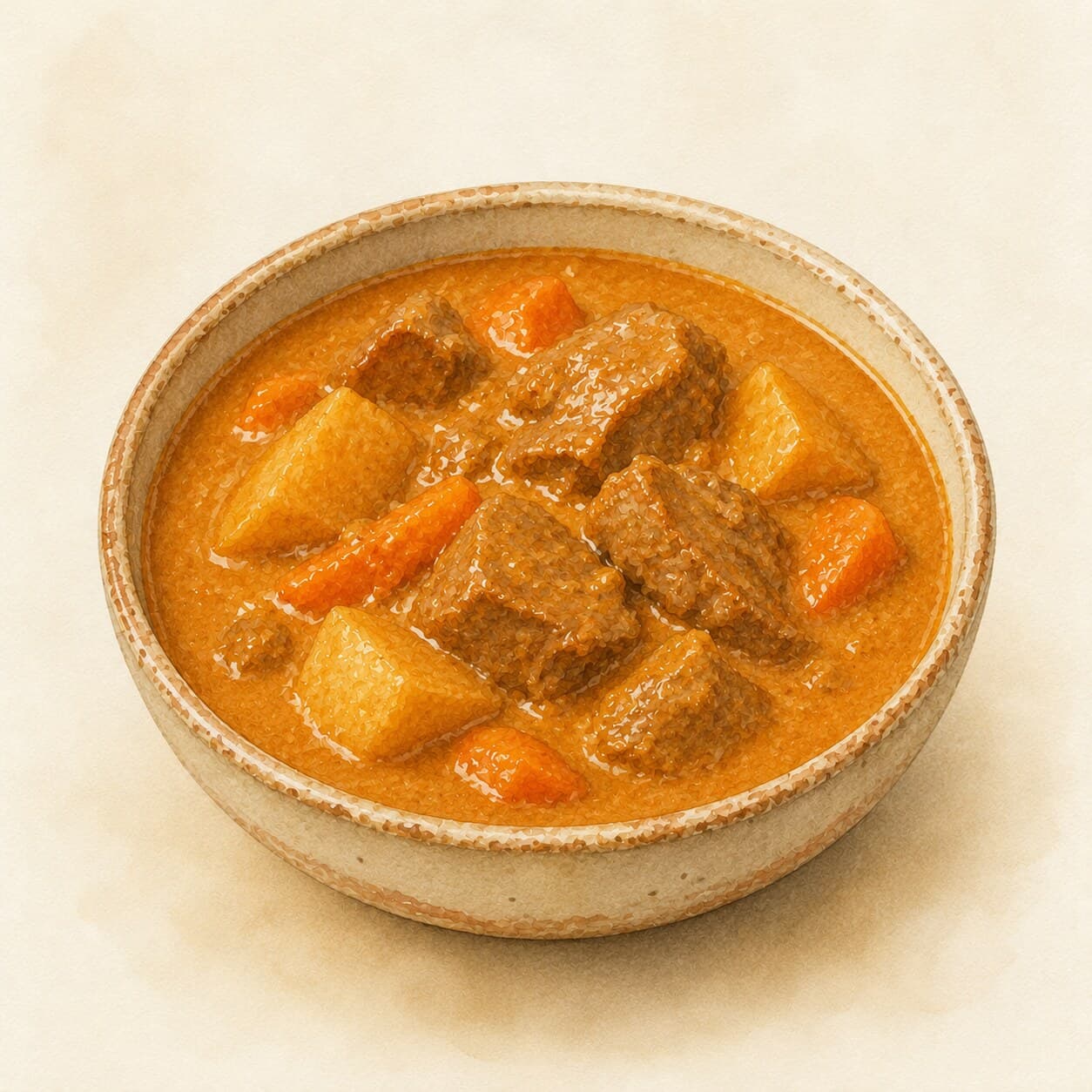
Domoda is a rich Gambian peanut stew, featuring tender lamb or beef and a unique sour twist from lemon or bitter tomatoes.
Contents (5 sections)▾
Ingredients
- 500 g lamb or beef, cut into cubes
- 200 g peanut butter
- 2 medium tomatoes, chopped
- 1 bitter tomato (gbògu), chopped
- 1 medium onion, finely chopped
- 2 cloves garlic, minced
- 1 tbsp ginger, minced
- 1 lemon, juiced
- 500 ml water
- 2 tbsp vegetable oil
- Salt to taste
- Fresh herbs (parsley or cilantro) for garnish
- Cooked rice, for serving
Steps
In a large pot, heat the vegetable oil over medium heat. Add the chopped onion, garlic, and ginger, sautéing for about 5 minutes until softened and fragrant.
Add the lamb or beef cubes to the pot, browning them for about 5-7 minutes on all sides.
Stir in the chopped tomatoes and bitter tomato, cooking for another 3 minutes to release their juices.
Add the peanut butter, mixing well to coat the meat, then pour in the water and lemon juice. Bring to a boil.
Reduce the heat to low, cover the pot, and simmer for 15-20 minutes until the meat is tender and the sauce thickens. Stir occasionally to prevent sticking.
Season with salt to taste. Serve hot over cooked rice, garnished with fresh herbs.
Why this works
Domoda stands out due to its distinctive sourness, which is achieved through the addition of lemon juice or the unique bitter tomato, gbògu. This sour edge differentiates it from Senegalese mafé, which tends to be sweeter. The peanut butter provides a creamy, nutty base that complements the savory meat, while the tomatoes add acidity and depth. If the stew seems too thick, you can adjust its consistency by adding a bit more water or stock. Conversely, if it's too soupy, let it simmer uncovered for a few minutes to allow for evaporation and thickening. The balance of flavors, particularly the interplay between the nutty, savory, and sour elements, is crucial for an authentic experience.
Common mistakes
Rushing the meat into the pot before it's really browned.
Target: Let the lamb or beef cubes sit undisturbed in the hot oil for the full 5-7 minutes, turning only when a deep brown crust has formed on each side, rather than stirring constantly.
Why it matters: That browning is the Maillard reaction (the browning that happens when a meat's proteins and sugars are exposed to high, dry heat), and it builds the savory foundation that the peanut butter and tomatoes are layered on top of; meat that's stirred too often steams in its own juices instead of browning, and the finished stew tastes flatter for it.
What to do: Resist the urge to move the meat around — let each side sit until it releases easily from the pot before turning, which also tells you it's properly browned.
Stirring the peanut butter into a hard-boiling pot.
Target: Bring the heat down to low-to-medium before adding the peanut butter, stirring it into the meat and tomatoes gently before the liquid returns to a boil.
Why it matters: Peanut butter is a dense mix of fat, protein, and starch; over high, direct heat it can scorch onto the bottom of the pot before the rest of the sauce even notices, and a hard boil can knock its fat out of suspension, leaving an oily film instead of a unified, creamy sauce.
What to do: Lower the heat before adding the peanut butter, stir it through until smooth, and only then bring the pot back up to a bare simmer.
Keeping the pot at a rolling boil for the full simmer.
Target: Once everything is combined, drop the heat to keep the stew at a gentle simmer — a lazy bubble here and there — for the 15-20 minutes it needs to tenderize.
Why it matters: A hard boil is doubly counterproductive here: it toughens the meat by driving out moisture faster than the connective tissue (the tough tissue that dissolves into gelatin with slow, gentle heat) can break down, and it makes the thick, peanut-based sauce far more likely to catch and scorch on the bottom of the pot.
What to do: Turn the heat down as soon as the stew comes to a boil, stir occasionally as the recipe suggests, and check that the bottom of the pot isn't browning or sticking.
Adding all the lemon juice at the start and locking in the sourness.
Target: Add most of the lemon juice with the other liquid, but hold back a spoonful to taste and adjust once the stew has finished simmering.
Why it matters: The tomatoes, bitter tomato, and lemon all contribute acidity, and exactly how sour the stew tastes depends on how far the tomatoes have cooked down; adding all the lemon juice up front means an overly sharp result can't be corrected later, while an under-seasoned one is easy to fix with a final squeeze.
What to do: Taste the stew in the last few minutes of cooking and add the reserved lemon juice a little at a time until the sourness feels balanced against the peanut richness.
What to look for
- A deep brown crust on the meat before any liquid goes in. That color is the flavor base for the whole stew; pale or grey meat means it was crowded or moved around too soon.
- A sauce that looks glossy and unified, with the peanut fat blended in rather than pooling on the surface. A split, oily-looking sauce is a sign the heat was too high or the peanut butter went in too fast.
- Meat that yields easily to a fork with no toughness, and no raw color left at the center of a cut piece. Cubed meat simmered in a stew should be fully cooked through and tender, not chewy or springy.
- A thickened sauce that coats the back of a spoon rather than looking thin and separated. That body means the peanut butter has properly bound the sauce; a thin, watery stew wants a few more minutes uncovered.
A note on history
Domoda is often described as the national dish of the Gambia, a rich peanut-based stew that belongs to a wider family of West African groundnut stews found across Senegal, Mali, Guinea, and neighboring countries — most famously Senegalese mafé (or maafe), thought to have roots among the Bambara and Mandinka peoples of the region. What sets domoda apart within that family is its pronounced sourness, usually from lemon juice and from bitter tomato (sometimes called garden egg or jaxatu in neighboring languages), which gives it a sharper, more savory-sour profile than the sweeter mafé it's often compared to.
Peanuts themselves arrived in West Africa from the Americas via Atlantic trade routes centuries ago and went on to become a major regional crop, particularly under European colonial-era agriculture — part of why groundnut stews like domoda became such an established part of the everyday table across the region rather than a rare or festive dish.
Get the essays in your inbox — free
Weekly notes on flavor, fermentation, and food history — the writing behind the Atlas of Flavor. No spam; unsubscribe anytime.