
Doenjang Jjigae
Doenjang Jjigae is a savory Korean stew made with fermented soybean paste, vegetables, and tofu, embodying rich umami flavors.
Contents (5 sections)▾
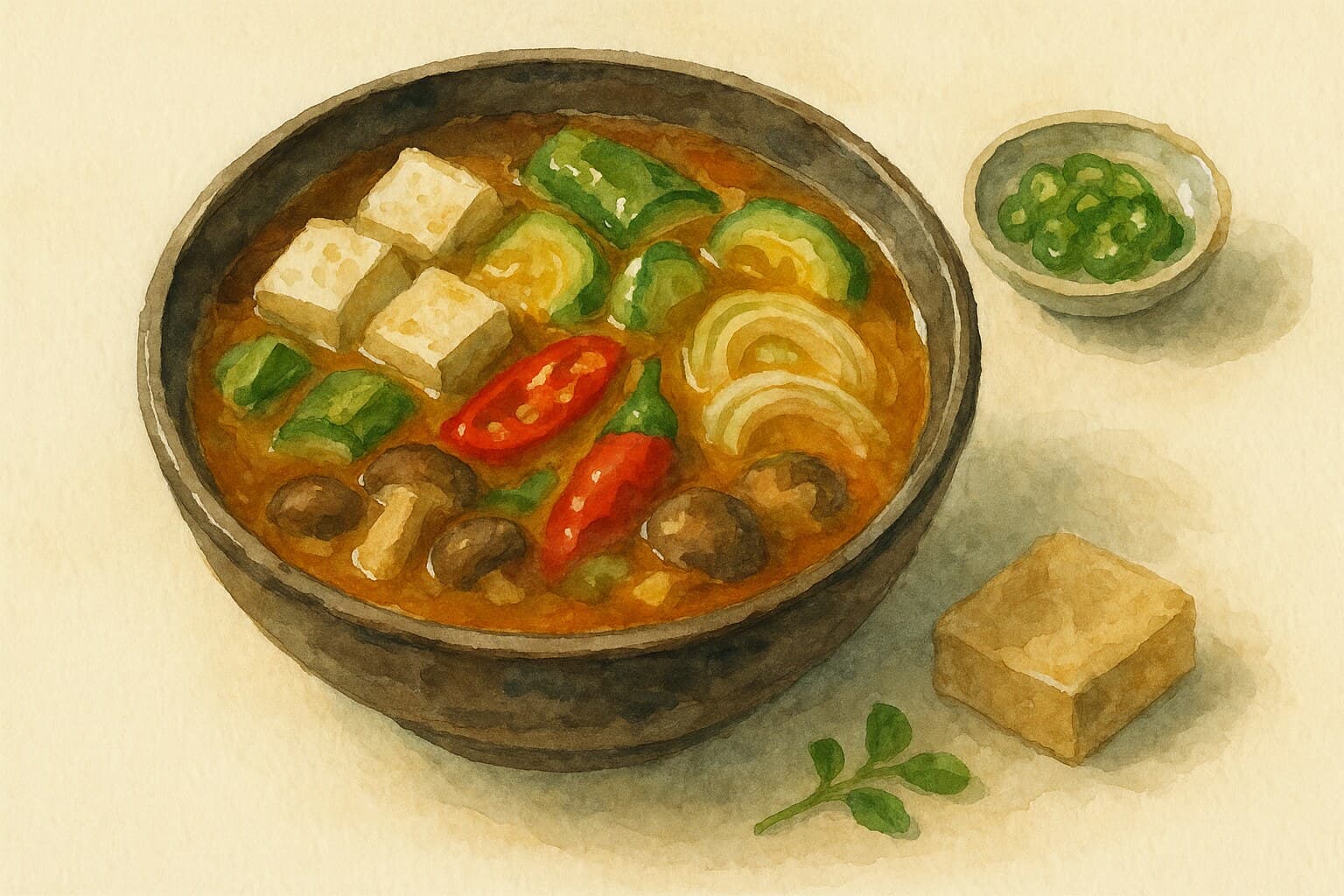
Ingredients
- 200 g firm tofu, cubed
- 200 g zucchini, sliced
- 100 g mushrooms, sliced
- 1 medium onion, chopped
- 2 tbsp doenjang (fermented soybean paste)
- 2 cups water
- 2 green chili peppers, sliced
- 1 tsp sesame oil
- 2 clove(s) garlic, minced
- to taste salt
Steps
In a pot, combine water and doenjang. Stir well to dissolve the paste, bringing it to a gentle simmer over medium heat.
Add the chopped onion and garlic, cooking for 5 minutes to let the flavors meld.
Introduce the zucchini and mushrooms, simmering for another 5 minutes until the vegetables soften.
Gently add the cubed tofu and green chili peppers, simmering for an additional 5 minutes to heat through.
Drizzle with sesame oil and adjust seasoning with salt to taste before serving.
Why this works
Doenjang Jjigae's rich umami flavor comes from the fermented soybean paste, a staple in Korean cuisine, which deeply enhances the broth's complexity. The layering of ingredients, starting with aromatics like garlic and onion, ensures that each component contributes to the final taste. Cooking the vegetables like zucchini and mushrooms at different intervals allows them to maintain their textures, balancing softness and bite. If the stew seems too thick, you can add a bit more water to achieve the desired consistency. Alternatively, should the flavor appear too strong, a touch of sugar can help mellow it out without compromising the overall umami profile. This stew is highly adaptable; you can include other seasonal vegetables or proteins, ensuring that the core flavor of the doenjang remains dominant.
Common mistakes
Boiling the doenjang hard instead of simmering it.
Target: A gentle simmer — small bubbles breaking the surface, never a rolling boil.
Why it matters: Doenjang (fermented soybean paste) carries its umami in delicate aromatic compounds and live-culture by-products. A hard boil drives off those volatile aromas and can turn the broth muddy and flatly salty. A bare simmer keeps the savory depth in the pot where you want it.
What to do: Dissolve the paste, then hold the heat just low enough that the surface shivers rather than churns. Stir occasionally so the paste doesn't sink and scorch on the bottom.
Adding the paste too early — before there's anything to dissolve it into smoothly.
Target: Whisk the doenjang into warm liquid until no lumps remain.
Why it matters: Doenjang is a stiff paste; dropped into cold or barely-warm water it clumps, and the lumps stay grainy no matter how long you cook. Smoothly dispersed paste gives an even, rounded broth.
What to do: Press the paste through a small strainer or ladle held in the broth, or whisk a spoonful of hot liquid into the paste first (a slurry) and then stir that back in.
Under-cooking added pork or seafood.
Target: Pork cooked through to no pink (74°C / 165°F at the center); clams and mussels open fully; shrimp opaque throughout.
Why it matters: If you add meat or shellfish to this stew (both are traditional and common), they must reach a safe internal temperature — a simmer that looks lively on top can still be too cool deep in a thick piece. Discard any clams or mussels that stay shut after cooking.
What to do: Cut pork small so it cooks quickly and evenly, give it a few extra minutes of simmering, and cut into the thickest piece to confirm it's no longer pink before serving.
Over-salting because doenjang's saltiness builds late.
Target: Season at the very end, after the broth has reduced and concentrated.
Why it matters: Doenjang is already salty, and as the stew simmers and water evaporates, the salt concentration climbs. Salt added early can leave the finished stew harsh.
What to do: Taste only near the end. If it's already balanced, add no salt at all; a splash of plain water can pull back a broth that has tipped too salty.
What to look for
- Dissolving the paste: the broth turns an even, cloudy tan with no floating lumps. That uniform color means the doenjang is fully dispersed and will season the stew evenly.
- The simmer itself: small bubbles rising at the edges, the surface trembling rather than rolling. This is the gentle heat that protects the paste's aroma.
- Vegetables done right: zucchini turns translucent at the edges but still holds its shape; mushrooms darken and soften. Cooked through but not collapsed — the textural contrast is part of the dish.
- Finished broth: savory and rounded, smelling deeply of fermented soybean, with a clean salty edge rather than a sharp one. That depth is the sign the doenjang was treated gently.
A note on history
Doenjang — the fermented soybean paste at the heart of this stew — is one of the oldest elements of Korean cooking, with fermented soybean products recorded in Chinese histories of the Korean kingdom of Goguryeo and roots traced to the Three Kingdoms period (Wikipedia: Doenjang). It is traditionally made from meju, blocks of cooked soybeans fermented and dried before being aged in brine. Doenjang jjigae itself is an everyday home stew built on this paste, with vegetables, tofu, and optional seafood or meat added around it (Wikipedia: Doenjang-jjigae).
Get the essays in your inbox — free
Weekly notes on flavor, fermentation, and food history — the writing behind the Atlas of Flavor. No spam; unsubscribe anytime.