
Dal Makhani
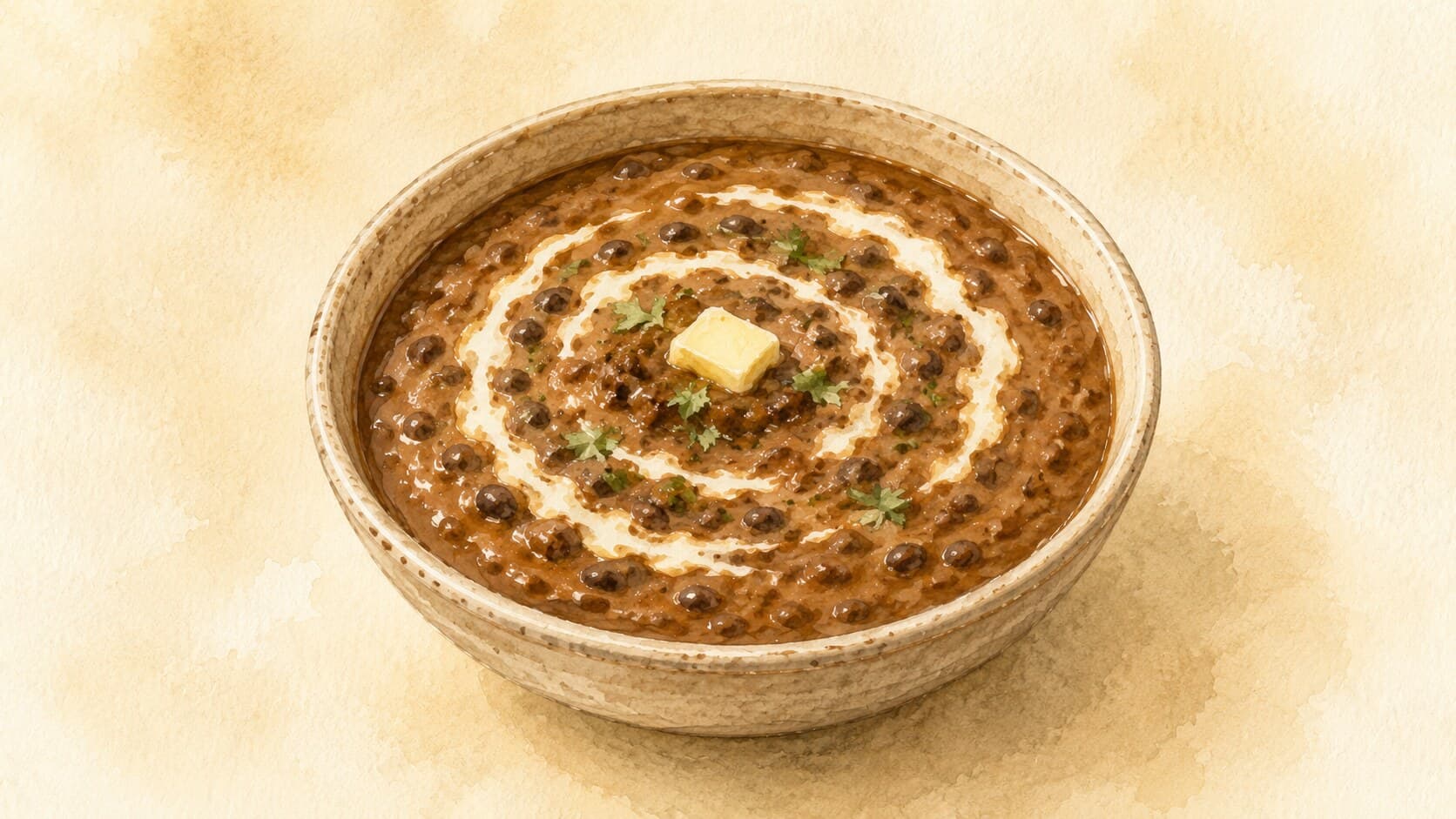
Dal Makhani is a creamy stew of black lentils and kidney beans, simmered for hours and finished with cream for emulsification.
Contents (5 sections)▾
Ingredients
- 200 g black lentils (urad dal)
- 100 g kidney beans (rajma)
- 50 g unsalted butter
- 200 ml heavy cream
- 1 large onion, finely chopped
- 2 cloves garlic, minced
- 1 inch ginger, grated
- 2 green chilies, slit
- 1 tsp cumin seeds
- 1 tsp coriander powder
- 1 tsp garam masala
- 1 tsp salt (to taste)
- 500 ml water
- fresh cilantro, chopped (for garnish)
Steps
Soak the black lentils and kidney beans in water for at least 8 hours or overnight. This softens them, making them easier to cook and digest.
In a pressure cooker, add the soaked lentils and beans with 500 ml of water. Cook on high pressure for about 15 minutes until tender. If you don’t have a pressure cooker, boil in a pot for about 1.5 hours until soft.
In a separate pot, heat the butter over medium heat. Add cumin seeds and let them splutter, which enhances their flavor.
Add the chopped onions, and sauté until golden brown, about 8-10 minutes. This step develops a rich base flavor for the dish.
Stir in the minced garlic, ginger, and green chilies, cooking for another 2-3 minutes until fragrant.
Add coriander powder, garam masala, and salt, mixing well. Then, add the cooked lentils and beans along with some of the cooking liquid to achieve your desired consistency.
Simmer the mixture on low heat for about 10 minutes, stirring occasionally. This allows the flavors to meld beautifully.
Finally, stir in the heavy cream and cook for an additional 2-3 minutes. Adjust seasoning as necessary. The cream adds richness and mellows the spices.
Serve hot, garnished with chopped cilantro and a drizzle of cream for an elegant touch.
Why this works
Dal Makhani relies on the slow cooking of lentils and beans to develop deep flavors and a creamy texture. Soaking the legumes reduces cooking time and ensures they cook evenly, preventing any hardness. The use of butter, along with the tempering of spices (briefly sizzling whole spices in hot fat to release their aroma), adds layers of flavor that are characteristic of Indian cuisine. The long simmering (cooking gently at a bare bubble, just below a boil) process melds the spices into the dal, making each bite rich and satisfying. If the consistency seems too thick, simply add a bit of water or cream to reach your desired texture. If you want an extra layer of flavor, consider adding a pinch of fenugreek leaves (a slightly bitter, maple-scented herb common in Indian cooking) during the cooking process, which enhances the overall aroma and depth of the dish.
Common mistakes
Skipping the soak — or not cooking the kidney beans fully.
Target: Soak both legumes 8 hours or overnight, then cook until completely soft and creamy inside, with the kidney beans brought to a true boil at some point (not just held warm).
Why it matters: Soaking rehydrates the dried beans and lentils so heat can penetrate to the center; without it they cook unevenly and stay chalky. Beyond texture, raw and undercooked kidney beans (rajma) contain a natural toxin (a lectin called phytohaemagglutinin) that a proper hard boil destroys but a low, gentle warm-through does not. This is a genuine safety point, not just a matter of doneness.
What to do: Soak fully, discard the soaking water, and cook (in a pressure cooker or a hard stovetop boil followed by a long simmer) until a bean crushes to a paste between your fingers with no firm core.
Rushing the onion base.
Target: Onions cooked slowly to deep golden-brown, about 8–10 minutes, not just translucent.
Why it matters: That browning is the Maillard reaction (the chemistry between sugars and proteins under heat that creates roasted, savory depth) plus some caramelization of the onion's own sugars. It is the backbone of the dish's flavor — pale, barely-cooked onions leave the dal flat and one-dimensional no matter how long it simmers afterward.
What to do: Keep the heat moderate and be patient. Stir often, let the onions take on real color, and don't add the spices until the base smells sweet and deep.
Cooking the garam masala hard and long.
Target: Add garam masala late and warm it through only briefly.
Why it matters: Garam masala (a blend of warm ground spices — cardamom, cinnamon, clove, and others) is built from aromatic compounds that are volatile, meaning they evaporate and turn dull or bitter with prolonged high heat. Whole spices like cumin seeds can take early heat; a finishing blend should not.
What to do: Build the dish with the sturdier spices first, then stir garam masala in near the end so its aroma stays bright.
Boiling hard after the cream goes in.
Target: Stir cream in at the end and keep it at a bare simmer or gentler.
Why it matters: Cream is an emulsion (fat suspended in water). High heat can break it — the fat separates into greasy droplets and the sauce looks curdled instead of smooth and glossy. The cream is there to round the spice and add richness (the fat axis), and that only works if it stays integrated.
What to do: Lower the heat before adding cream, warm it through gently, and stop short of a rolling boil.
What to look for
- The beans: a bean crushes to a smooth paste between two fingers with no hard center. That softness is both the creamy texture you want and the sign the legumes are fully, safely cooked.
- The onion base: deep golden-brown and sweet-smelling, not pale or sharp. Color here is flavor — it tells you the Maillard browning has happened.
- The simmering dal: thick enough to coat a spoon, with the surface occasionally blooping rather than churning — and a thin film of fat or butter glistening on top. That fat sheen is the classic makhani (buttery) signature.
- After the cream: the sauce turns one even, glossy shade with no separated greasy pools. A broken, curdled look means the heat was too high.
A note on history
Dal makhani grew out of maa ki dal, a rustic Punjabi preparation of whole black urad lentils — originally cooked simply, without cream (Food in History, KPU). The modern buttery version is widely credited to Kundan Lal Gujral, founder of the Moti Mahal restaurant, who after the 1947 Partition brought his Peshawar cooking to Delhi; the story goes that the same idea behind butter chicken — simmering food in a rich tomato-butter-cream gravy — was applied to his black urad dal, giving rise to dal makhani around the same time (Moti Mahal; Kundan Lal Gujral, Wikipedia). The attribution is contested — a rival Delhi restaurant has claimed its own predecessor as the inventor — so the precise origin remains disputed (MikeLegal).
Get the essays in your inbox — free
Weekly notes on flavor, fermentation, and food history — the writing behind the Atlas of Flavor. No spam; unsubscribe anytime.