
Cochinita Pibil
Cochinita Pibil is a Yucatán classic featuring slow-cooked pork marinated in achiote and wrapped in banana leaves.
Contents (5 sections)▾
Ingredients
- 1 kg pork shoulder, cut into large pieces
- 100 g achiote paste
- 100 ml orange juice
- 50 ml lime juice
- 2 cloves garlic, minced
- 1 tsp salt
- 1 tsp black pepper
- 4 banana leaves, wilted
- 1 medium red onion, thinly sliced
- 100 ml vinegar
- 1 tsp sugar
- to taste: pickled jalapeños
Steps
In a bowl, combine achiote paste, orange juice, lime juice, minced garlic, salt, and black pepper to create a marinade.
Rub the marinade all over the pork pieces, ensuring they are well-coated. Cover and refrigerate for at least 12 hours, ideally overnight.
Preheat your oven to 150°C (300°F).
Line a baking dish with two banana leaves, leaving excess hanging over the sides.
Place the marinated pork in the center of the leaves and fold them over to encase the meat completely.
Cover the dish with foil to trap steam, and roast in the preheated oven for about 4 hours, until the pork is tender.
While the pork cooks, prepare the pickled red onions by combining sliced onions, vinegar, sugar, and salt in a bowl. Let them marinate for at least 30 minutes.
Once cooked, remove the pork from the oven, let it rest for 15 minutes, then shred it with two forks.
Serve the shredded pork on a platter, accompanied by the pickled onions and warm tortillas.
Why this works
Cochinita Pibil relies on the unique flavor of achiote (a brick-red seasoning paste made from annatto seeds), which infuses the pork with a rich, earthy tone, while the slow-cooking method ensures it becomes tender and juicy. The acidic components from the orange and lime juices help to break down the meat fibers, enhancing tenderness. Wrapping the pork in banana leaves preserves moisture and imparts a subtle flavor to the dish. If the pork seems too dry after cooking, you can add a bit of the reserved marinade or some broth to moisten it before serving. Conversely, if it's too wet, let it rest uncovered for a few minutes to allow excess liquid to evaporate, ensuring a perfect balance of texture and flavor.
Common mistakes
Cutting the marinade time short. Target: Pork rubbed with the achiote-citrus marinade and refrigerated at least 12 hours, ideally overnight. Why it matters: The marinade works by time, not force. The acid from the orange and lime slowly penetrates the surface and begins loosening the meat's protein structure, while the achiote (the brick-red annatto-seed paste) carries its color and earthy flavor inward. A quick coat seasons only the outside; the interior stays bland and the color stops at the surface. What to do: Marinate the night before and let it sit. Rub the paste into every face of the pork so the whole piece, not just the top, takes on flavor.
Roasting uncovered and drying out the meat. Target: The banana-leaf parcel sealed under foil so steam stays trapped during the long roast. Why it matters: Cochinita pibil is a moist-heat method dressed up as roasting — the leaves and foil hold a humid pocket that cooks the pork gently and keeps it from drying. Left open, the surface dehydrates and the meat turns stringy and tough long before it becomes tender. What to do: Wrap the pork fully in the wilted leaves, then crimp foil tightly over the dish. Keep the oven low (150°C / 300°F) and let time, not high heat, do the work.
Pulling the pork before it is truly fork-tender. Target: Pork roasted about 4 hours, until it shreds with gentle pressure from two forks and offers no resistance. Why it matters: Pork shoulder is full of tough connective tissue (collagen) that only melts into soft gelatin after hours of low, moist heat. Stop early and the meat is both unsafe-feeling and chewy — it will not shred and the texture stays rubbery. Doneness here means tender, not just "cooked through." What to do: Test by twisting a fork in the thickest piece; if it resists, re-cover and keep roasting. Tenderness, not the clock alone, tells you it is ready.
Rushing the pickled onions. Target: Sliced red onions left in the vinegar, sugar, and salt at least 30 minutes before serving. Why it matters: The raw onion's harsh bite needs time in the acid to soften and turn bright and tangy. Those sharp pickled onions are the deliberate counterweight to the rich, fatty pork — without their acidity, the dish reads as heavy and one-note. What to do: Mix the onions first, before the pork goes in the oven, so they have the full cooking time to mellow and take on their pink color.
What to look for
- The marinated pork before cooking: evenly coated in deep brick-red paste, the color worked into every surface. Pale patches mean uneven seasoning and a streaky final color.
- The sealed parcel: leaves wrapped snug and foil crimped tight, with no open gaps. A good seal keeps the steam in; that trapped moisture is what keeps the pork succulent.
- The pork at doneness: it pulls apart into soft strands with no resistance, juices running clear, no pink at the center. Resistance means more time; this is both the tenderness check and the safety check.
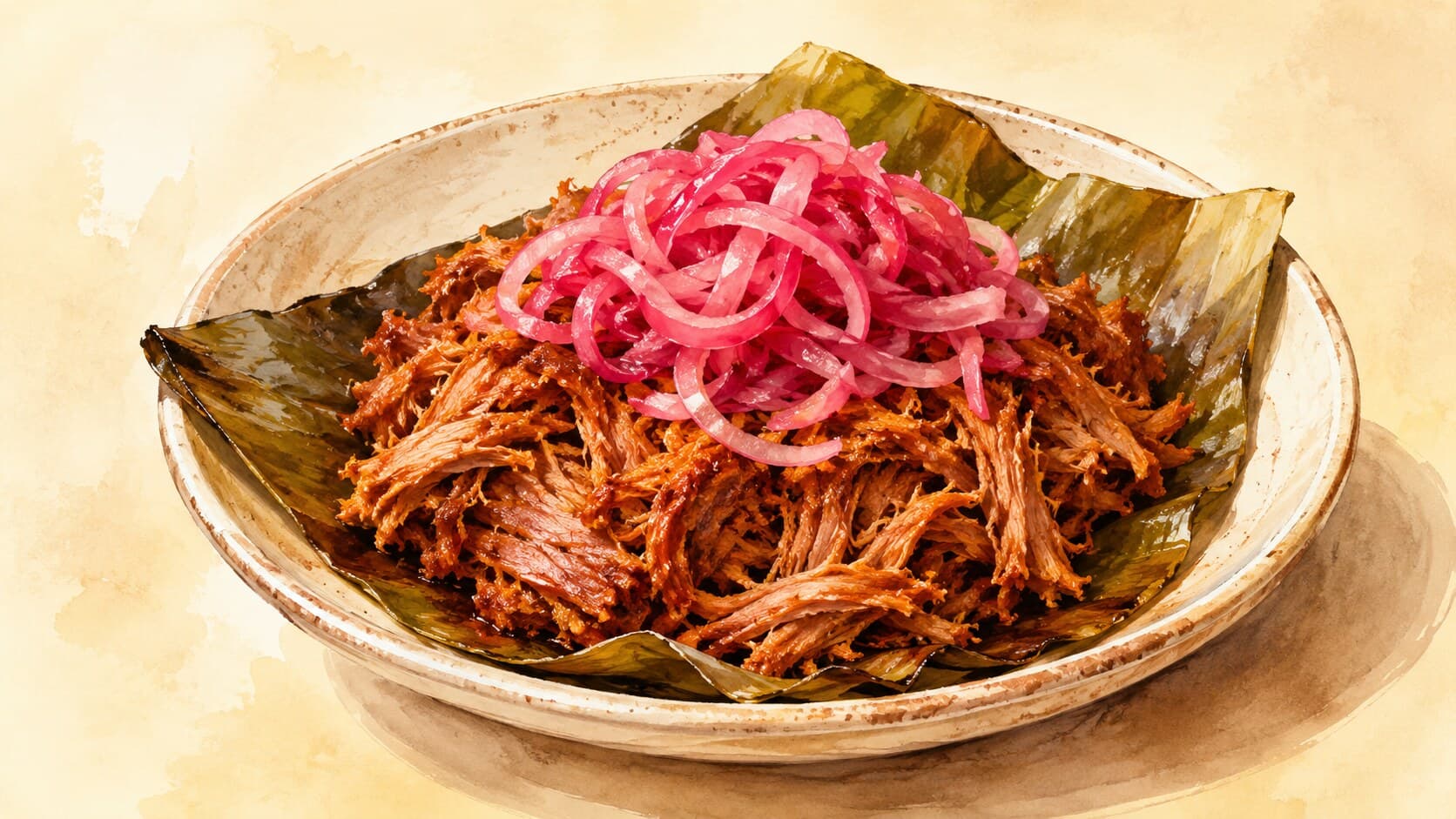
- The finished plate: deep orange-stained, glistening shredded pork against sharp, bright-pink pickled onions. That contrast of rich meat and tangy onion is the dish working as intended.
A note on history
Cochinita pibil traces back to the ancient Maya, who slow-cooked meat wrapped in banana leaves inside a píib — an earth oven dug into the ground (Wikipedia, Undiscovered Mexico). The dish as we know it took shape after the Spanish arrived in the 16th century and introduced both pigs and the sour orange, so pork replaced the original wild game and bitter citrus joined the achiote marinade (Wikipedia). The name itself carries that blend of worlds: cochinita is Spanish for "little pig," while pibil comes from the Maya pib, meaning "buried" or cooked in the earth oven (Undiscovered Mexico).
Get the essays in your inbox — free
Weekly notes on flavor, fermentation, and food history — the writing behind the Atlas of Flavor. No spam; unsubscribe anytime.