
Chole Bhature
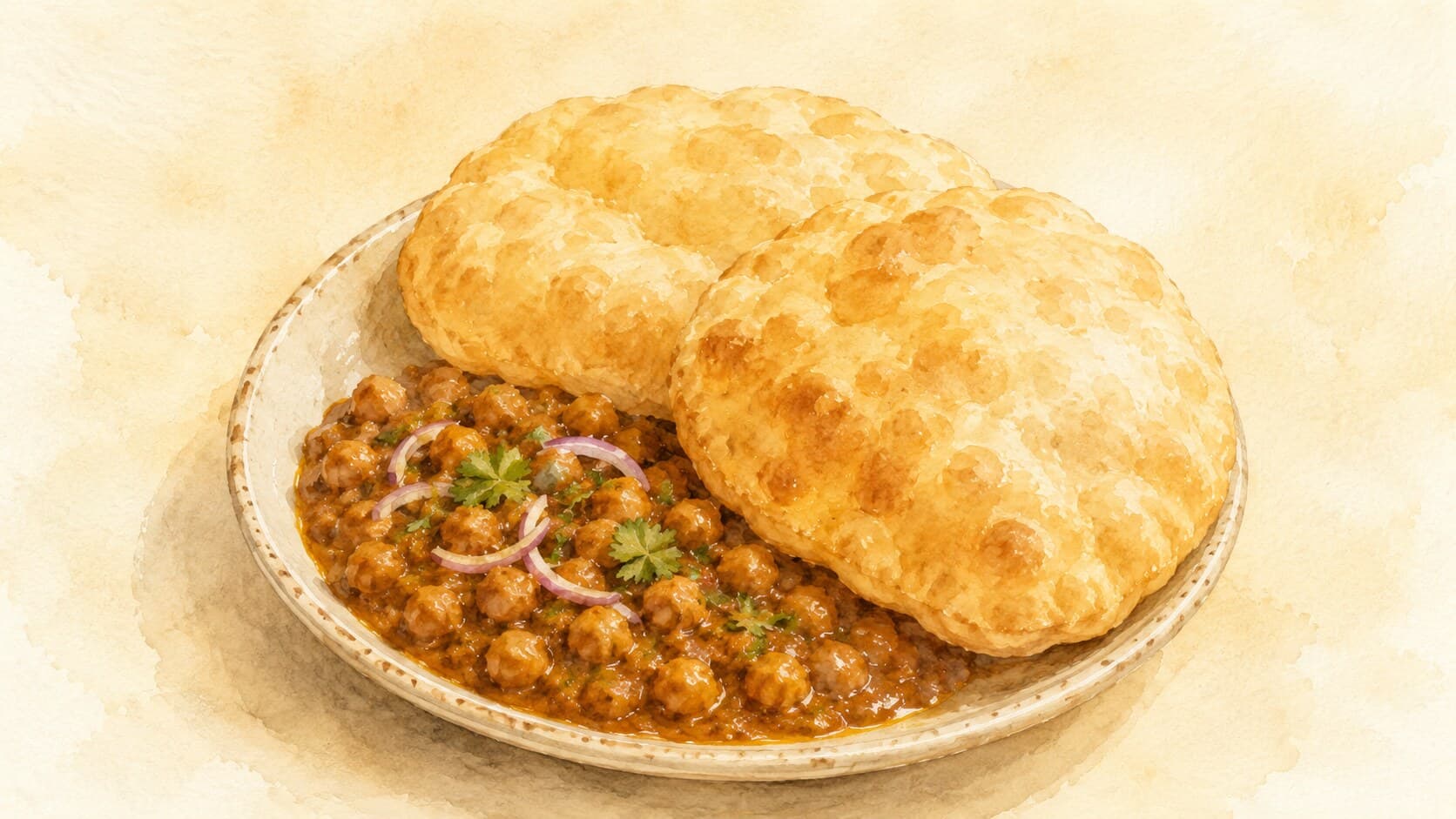
Chole Bhature is a classic North Indian breakfast featuring spicy chickpea curry served with deep-fried bread.
Contents (5 sections)▾
Ingredients
- 250 g chickpeas, soaked overnight
- 1 onion, finely chopped
- 2 tomatoes, pureed
- 2 green chilies, slit
- 1 tbsp ginger-garlic paste
- 1 tsp cumin seeds
- 1 tsp coriander powder
- 1 tsp garam masala
- 1/2 tsp turmeric powder
- 1/2 tsp red chili powder
- Salt to taste
- 3 tbsp oil
- 4 cups water
- 2 cups all-purpose flour
- 1/2 tsp baking powder
- 1 tsp salt
- 1 tbsp yogurt
- Warm water as needed for dough
- Oil for deep frying
Steps
In a pressure cooker, heat 3 tbsp of oil over medium heat. Add cumin seeds and let them splutter. This releases their flavor into the oil.
Add the chopped onion and sauté until golden brown, about 5-7 minutes. This caramelization adds depth to the curry.
Stir in the ginger-garlic paste and green chilies, cooking for 1-2 minutes until fragrant.
Add the pureed tomatoes, turmeric, coriander, red chili powder, and salt. Cook until the oil separates from the mixture, about 8-10 minutes.
Add the soaked chickpeas and water to the mixture. Pressure cook for 15 minutes until the chickpeas are tender. If the curry seems too thick, add a bit of water and stir.
For the bhature, combine flour, baking powder, salt, and yogurt in a bowl. Mix and knead with warm water until a soft dough forms. Let it rest for 20 minutes.
Divide the dough into small balls and roll them out into circles about 6 inches in diameter.
Heat oil in a deep pan over medium-high heat for frying. To check readiness, drop a small piece of dough; it should rise to the surface immediately.
Fry each rolled-out bhature until they puff up and turn golden brown, about 1-2 minutes per side. Remove and drain on paper towels.
Serve the hot chole with bhature, garnished with fresh coriander and sliced onions.
Tools you'll want
Why this works
The technique of pressure cooking the chickpeas ensures they cook evenly and absorb the flavors of the spices, creating a rich and aromatic curry. Sautéing the onions until golden caramelizes their natural sugars, enhancing the overall taste. The resting time for the bhature dough allows gluten to relax, making the dough easier to roll out and resulting in puffier breads when fried. If the bhature does not puff, the oil may not be hot enough; wait for the right temperature, or if the dough seems too dry, a splash of warm water can help achieve the right consistency.
Common mistakes
Pulling the masala base off the heat before the oil separates.
Target: Cook the onion-tomato-spice base until the oil visibly separates and pools at the edges — about 8–10 minutes.
Why it matters: That oil break (bhuna) is the signal that the raw water has cooked out of the tomato and the spices have bloomed in fat (frying spices in oil releases their fat-soluble aroma compounds). Stop too soon and the gravy tastes raw, sharp, and thin instead of deep and rounded. The separated oil is doing flavor work, not just sitting there.
What to do: Keep cooking and stirring past the point where it looks done. Wait for the glossy oil to ring the edges of the pan before the chickpeas go in.
Under-soaking or under-cooking the chickpeas.
Target: Dried chickpeas soaked overnight (8+ hours), then cooked until a chickpea crushes effortlessly between two fingers.
Why it matters: Chickpeas that are still firm at the center stay starchy and faintly raw-tasting, and they never drink in the gravy. A long soak rehydrates them so they cook evenly to a creamy interior; the pressure cooker then drives that softness home.
What to do: Soak ahead — don't shortcut it. After pressure cooking, crush-test one. If it resists, cook longer with a little more water rather than serving them firm.
Frying the bhature in oil that isn't hot enough.
Target: Oil hot enough that a small piece of dough dropped in rises to the surface within a couple of seconds.
Why it matters: Bhature puff because hot oil flashes the dough's surface moisture to steam fast enough to inflate it before the crust sets (the same steam-leavening that puffs a poori). In cool oil the steam escapes slowly, so the bread soaks up grease and turns flat, heavy, and oily instead of puffed and light.
What to do: Test with a dough scrap before committing a full bhatura. If it sinks and sits, wait; if it browns instantly, the oil is too hot and needs a moment to settle.
Skipping the dough rest, then rolling too thick.
Target: Rest the dough at least 20 minutes; roll to an even, moderate thickness with no thick center.
Why it matters: Resting lets the gluten relax (gluten is the stretchy protein network in wheat dough) so the rounds roll out without snapping back, and the yogurt-and-leavening dough develops the give it needs to balloon. An uneven round with a thick middle traps steam unevenly and puffs poorly.
What to do: Give it the full rest. Roll from the center outward to keep the thickness even, and don't leave a dense disc in the middle.
What to look for
- Masala base, ready for chickpeas: the mixture pulls together and a glossy ring of oil separates around the edges. A wet, dull, loose mass means the water hasn't cooked out yet.
- Chickpeas, properly cooked: one crushes to a smooth paste between two fingers with no firm core. Any resistance at the center means more time is needed.
- Oil at frying temperature: a dough scrap surfaces within a second or two, sizzling steadily with fine bubbles. Sluggish rise means too cool; furious browning means too hot.
- A finished bhatura: it balloons within seconds and turns golden and blistered, light when lifted. Flat, pale, grease-heavy bread is the sign of oil that wasn't hot enough.
A note on history
Chole bhature pairs a spiced chickpea curry with deep-fried (cooked by submerging in hot oil) bhatura and is strongly associated with Punjab and Delhi. Its exact origin is debated — food writers variously trace it to pre-Partition Punjab (linked to pindi chole) or to eastern Uttar Pradesh — but it became iconic in Delhi after the 1947 Partition, when refugees from Lahore and West Punjab brought the dish and popularized it through stalls and restaurants in the resettling city (Wikipedia, The Better India). Early sellers like Sita Ram Diwan Chand in Paharganj helped embed it in the city's everyday food culture, where it remains a familiar breakfast and brunch.
Get the essays in your inbox — free
Weekly notes on flavor, fermentation, and food history — the writing behind the Atlas of Flavor. No spam; unsubscribe anytime.