
Chistorra al Vino
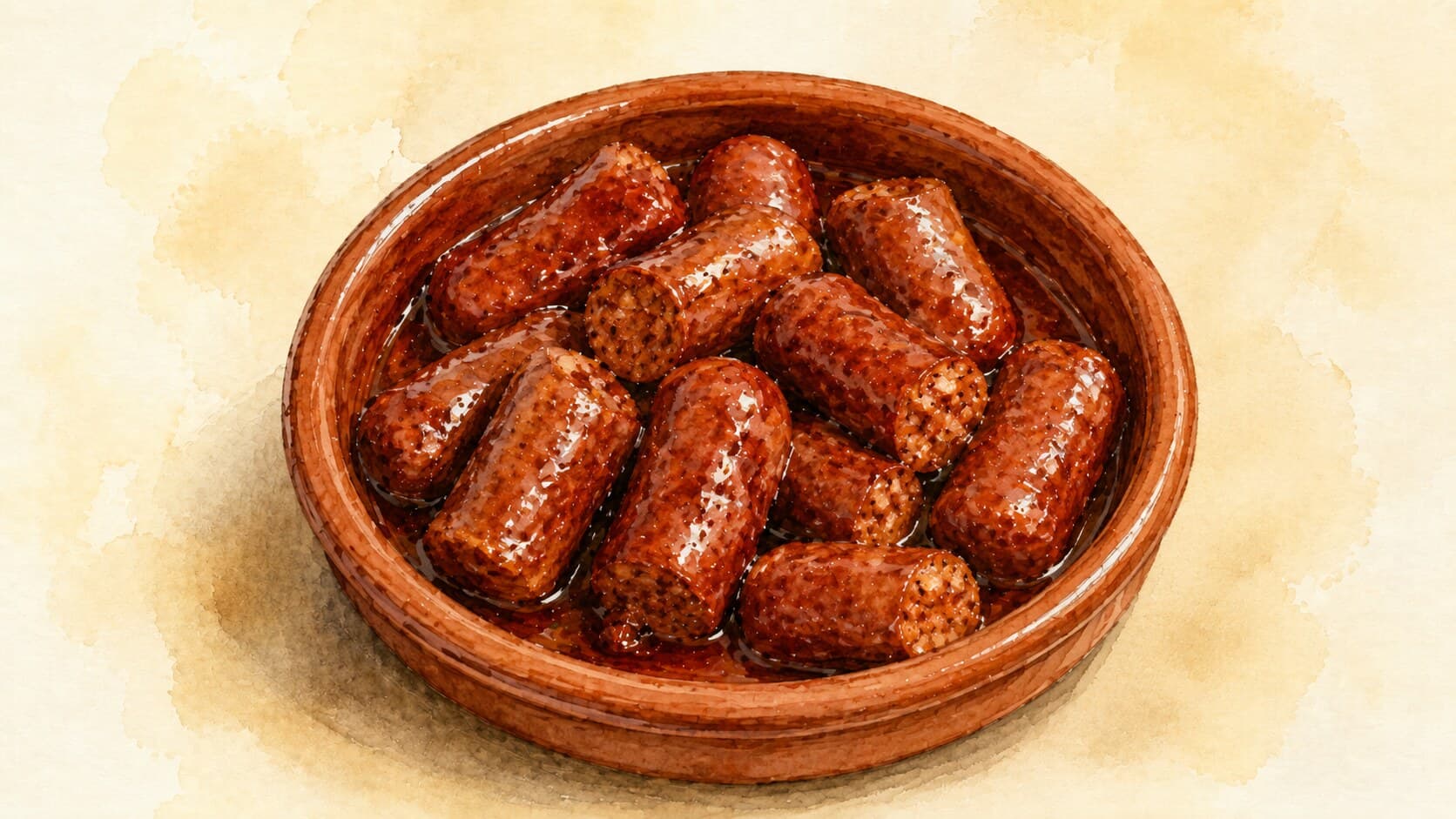
Chistorra al Vino is a quick and flavorful Spanish tapa featuring paprika sausage simmered in red wine.
Contents (5 sections)▾
Ingredients
- 150 g chistorra sausage
- 2 tbsp olive oil
- 150 ml red wine
- 1 clove garlic, minced
- Salt to taste
- Chopped parsley for garnish
Steps
Heat 2 tablespoons of olive oil in a medium skillet over medium heat. This step is crucial as it allows the sausage to render its fat and develop a nice golden-brown crust.
Add the chistorra sausage to the skillet and cook for about 5 minutes, turning occasionally, until browned on all sides. Browning enhances the flavor through the Maillard reaction.
Pour in 150 ml of red wine and add 1 minced garlic clove. Stir gently and allow it to simmer for about 5-7 minutes until the wine reduces to a glossy coat. This reduction intensifies the flavors and creates a rich sauce.
Season with salt to taste, then remove from heat. Garnish with chopped parsley before serving. This adds a fresh contrast to the rich sausage.
Why this works
The technique of browning the chistorra sausage in olive oil enhances its flavor and allows the rendered fat to mix with the wine, creating a luscious sauce. The specific choice of red wine is essential, as it adds depth and complexity to the dish. As the wine simmers, it reduces (gently boils down so water evaporates and the flavor concentrates), concentrating its flavors and thickening into a glossy coat that clings to the sausage. If the sauce seems too thin, allow it to simmer for a couple more minutes until it reaches the desired consistency. Conversely, if it becomes too thick, a splash of additional wine can help loosen it. This dish exemplifies simple yet effective cooking techniques that result in a beautifully rich appetizer, perfect for a tapas spread.
Common mistakes
Adding the wine before the sausage has browned.
Target: A deep golden-brown crust on the chistorra first, then the wine.
Why it matters: Browning is the Maillard reaction (the heat-driven reaction between proteins and sugars that builds deep, savory, roasted flavor), and it only happens on a dry, hot surface. Pour the wine in early and the pan drops below browning temperature; the sausage poaches pale and the sauce tastes thin and one-note instead of rich. Color first, liquid second.
What to do: Let the chistorra sit and color on each side over medium heat — about 5 minutes total, turning occasionally — before the wine goes anywhere near it.
Boiling the wine hard instead of simmering it down.
Target: A gentle simmer, reducing over about 5–7 minutes to a glossy coat.
Why it matters: A reduction concentrates by gently evaporating water so the flavors deepen and the sauce thickens enough to cling. A hard boil blows the alcohol and aromatics off too fast and can scorch the sugars to bitterness before the sauce has body. Patience is what turns raw wine into sauce.
What to do: Keep it at a lazy simmer. Tilt the pan now and then to judge the coat — it's ready when it slides slowly and clings to the sausage rather than running off like liquid.
Treating chistorra like a sausage that needs long cooking — or skipping doneness.
Target: Cooked through and piping hot all the way to the center, but not dried out.
Why it matters: Chistorra is a thin, fast-cure fresh sausage (about 10–15 mm across); it's raw and must be cooked through, yet it gets there fast precisely because it's slender. Overcook it and the fat fully renders out and the meat turns dry and tight. The window between "done" and "dry" is short.
What to do: The brown-then-simmer sequence cooks it through; cut a thick piece to check the center is hot and no longer pink-raw. Pull it as soon as it's cooked rather than letting it sit and tighten in the pan.
Drowning it in wine.
Target: Just enough wine to reduce to a glossy coat — about 150 ml for 150 g of sausage.
Why it matters: This is a glaze, not a stew. Too much liquid takes far longer to reduce, and by the time it does, the sausage has overcooked. The wine should frame the paprika-rich fat, not submerge it.
What to do: Use a pan sized so the wine sits shallow around the sausage. If it somehow reduces too far before the sausage is done, loosen with a small splash more wine rather than water.
What to look for
- Sausage before the wine: a deep, even golden-brown crust with rendered fat shimmering in the pan. Pale, dry sausage means it hasn't browned — give it more time before the wine.
- The moment the wine goes in: it bubbles up fast and the browned bits lift off the pan into the liquid. Those loosened bits (the fond) are pure flavor dissolving into the sauce.
- As it reduces: big rolling bubbles give way to small glossy ones, and the liquid turns syrupy. That shift signals the sauce is concentrating and gaining body.
- Ready to serve: the sauce clings to the sausage in a glossy reddish-brown coat and the center of a cut piece is hot through. A thin, watery puddle means it needs another minute or two.
A note on history
Chistorra (Basque txistorra) is a thin, fast-cured fresh sausage of Navarre, Aragon, and the Basque Country, traditionally tied to the matanza — the winter pig slaughter where excess pork was ground and lightly cured to keep for the cold months; its presence in Navarrese cooking dates back at least to the early 19th century (Foods & Wines from Spain / ICEX, Wikipedia). Its signature red comes from paprika, which transformed Spanish charcuterie after the pepper arrived from the Americas in the 16th century. Unlike chorizo, chistorra cures only briefly — roughly a day — which is exactly why it is sold and cooked as a fresh sausage rather than a cured one.
Get the essays in your inbox — free
Weekly notes on flavor, fermentation, and food history — the writing behind the Atlas of Flavor. No spam; unsubscribe anytime.