
Chimichurri
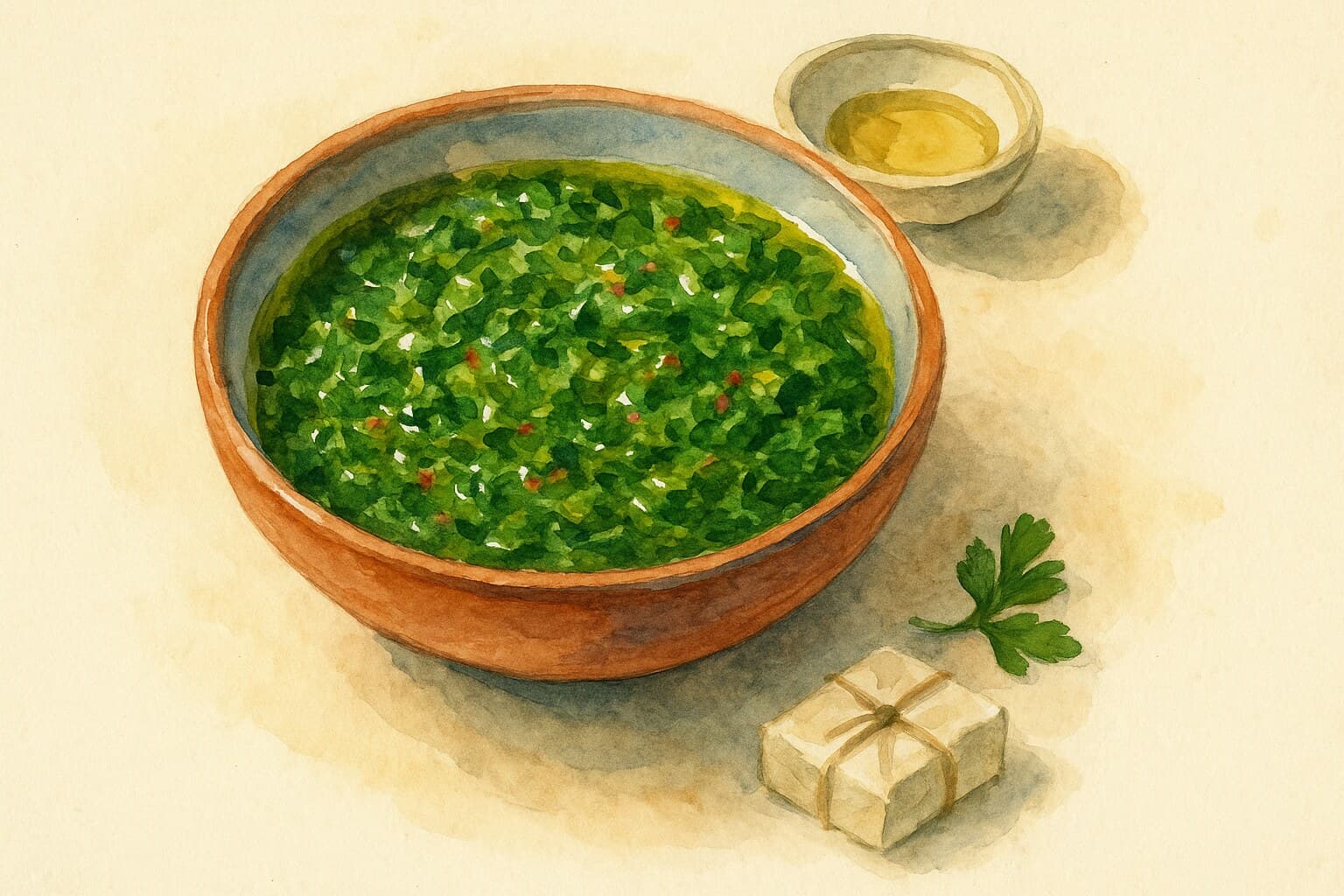
Chimichurri is a sauce made by emulsifying herbs, garlic, vinegar, and oil, used to enhance the flavor of grilled meats and vegetables.
Contents (5 sections)▾
Ingredients
- 1 cup fresh parsley, finely chopped
- 1/2 cup fresh cilantro, finely chopped
- 4 clove(s) garlic, minced
- 1/2 cup extra virgin olive oil
- 1/4 cup red wine vinegar
- 1 tsp red pepper flakes
- 1/2 tsp salt
- 1/4 tsp black pepper
Steps
1. In a mixing bowl, combine the chopped parsley, cilantro, minced garlic, red pepper flakes, salt, and black pepper. This forms the aromatic base.
2. Slowly whisk in 120 milliliters (1/2 cup) of olive oil and 60 milliliters (1/4 cup) of red wine vinegar until the mixture is well combined. This emulsion helps to blend the flavors and ensure a smooth consistency.
3. Let the chimichurri sit for at least 10 minutes at room temperature (around 20-22°C or 68-72°F). Resting allows the flavors to meld together, enhancing the overall taste.
Why this works
Chimichurri is a classic sauce that thrives on the balance between fresh herbs, acidity from vinegar, and richness from olive oil. The fresh parsley and cilantro provide a bright, herbaceous flavor that complements grilled meats exceptionally well. The emulsion (oil and vinegar beaten together so they hold as one rather than separating) created by whisking 120 milliliters of olive oil with 60 milliliters of vinegar binds these flavors together, ensuring a cohesive sauce. If the chimichurri seems too thin, you can add more herbs to thicken it up; if it becomes too thick, a splash of water or more olive oil can adjust the consistency. Allowing the chimichurri to rest for at least 10 minutes is crucial; it enhances the flavor and allows the garlic to mellow, avoiding an overpowering raw taste. This technique is often overlooked, but it’s essential to achieving the best flavor. The resting period allows the ingredients to interact, deepening the overall taste. By adhering to these precise measurements and time, you ensure a balanced and flavorful chimichurri that adds to any dish.
Common mistakes
Blitzing it into a smooth purée.
Target: Herbs and garlic hand-chopped fine, so the sauce stays loose and textured — a "rustic" sauce of distinct flecks suspended in oil, not a paste.
Why it matters: Chimichurri is meant to spoon, not spread. A food processor over-purées the herbs and whips air into the oil, turning the sauce muddy green and slightly bitter (the blades bruise the parsley, releasing more of its harsh compounds). Hand-chopping keeps the color bright and the texture spoonable.
What to do: Chop the parsley, cilantro, and garlic by knife. If you must use a machine, pulse two or three times only — never run it.
Using too much raw garlic, or not letting it mellow.
Target: Garlic present but not searing; the sauce rested at least 10–15 minutes before serving.
Why it matters: Raw garlic crushed into acid is aggressive at first — that sharp heat is allicin (the pungent compound garlic releases when its cells are cut). The rest lets the vinegar tame it and the flavors marry, so the garlic reads as savory rather than hot.
What to do: Mince the garlic finely so no big shards remain, then give the finished sauce a short rest. Taste before serving; pull back the garlic next time if it still bites.
Drowning the herbs in vinegar.
Target: Enough red wine vinegar for a clear tang, but oil still the dominant body — roughly two parts oil to one part vinegar.
Why it matters: Acid is there to brighten and to cut the fat of grilled meat, not to pickle the herbs. Too much vinegar flattens the fresh, grassy flavor and makes the sauce sour and thin.
What to do: Start with the smaller amount of vinegar, taste on a bit of bread or meat, and add more by the teaspoon only if it needs lift.
Serving it ice-cold from the fridge.
Target: Chimichurri at room temperature when it hits the plate.
Why it matters: Cold mutes aroma and stiffens the olive oil, so a fridge-cold sauce tastes dull and looks cloudy. Warming to room temperature reopens the herb and garlic aromatics and lets the oil flow again.
What to do: If made ahead, pull it from the fridge 20–30 minutes before serving and stir to recombine, since the oil and vinegar separate as it sits (that separation is normal — just stir).
What to look for
- The chopped base: fine, even flecks of green and garlic — distinct, not a paste. That texture is what keeps the sauce loose and spoonable over grilled meat rather than spreading like pesto.
- Right after mixing: oil just coating the herbs, a little pooling at the edges, vibrant green throughout. Bright color means the herbs were chopped, not bruised; muddy green signals over-processing.
- After resting: the harsh raw-garlic bite softened, the flavors reading as one. A short rest is doing its job when no single element — garlic, vinegar, herb — jumps out alone.
- On the spoon: it drizzles and settles, neither stiff like paste nor watery and split. That loose-but-bodied flow is the texture that drapes over steak and vegetables the way chimichurri should.
A note on history
Chimichurri is the herb-and-vinegar sauce of the Argentine asado (grilled-meat) tradition, generally traced to the gauchos of the 1800s who needed a simple, preservative-free way to season grilled beef (Britannica, Wikipedia). It is strongly associated with both Argentina and Uruguay, and while the name's origin is debated, one common account links it to the Basque word tximitxurri, loosely "a mixture of several things," reflecting the Basque immigrants who settled in the region in the nineteenth century (Wikipedia).
Get the essays in your inbox — free
Weekly notes on flavor, fermentation, and food history — the writing behind the Atlas of Flavor. No spam; unsubscribe anytime.