
Chili con Carne
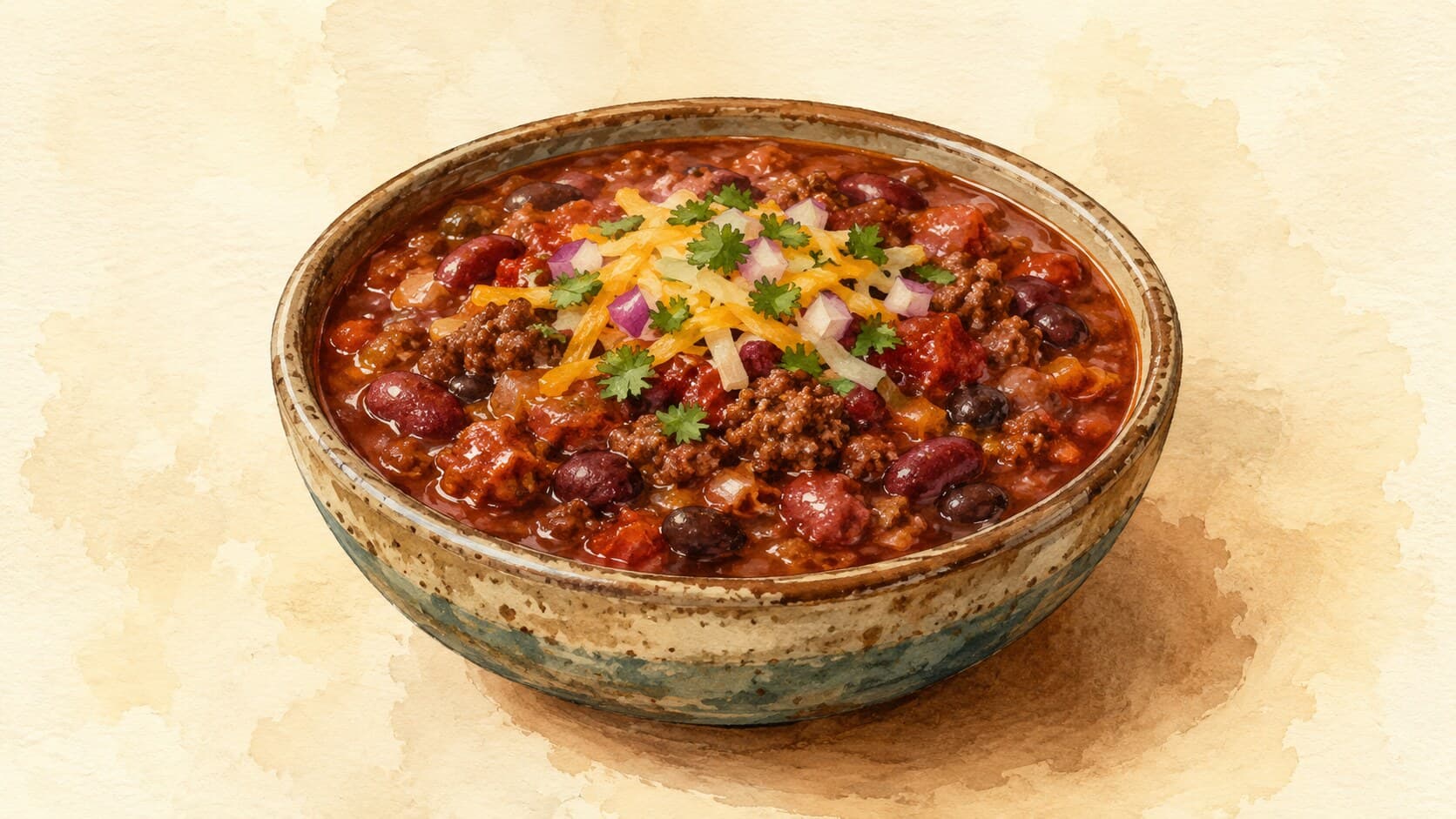
Chili con Carne is a Tex-Mex dish made with ground beef, beans, and a blend of spices, all simmered together in one pot.
Contents (5 sections)▾
Ingredients
- 500 g ground beef
- 1 can (400 g) kidney beans, drained and rinsed
- 1 medium onion, diced
- 2 cloves garlic, minced
- 1 bell pepper, diced
- 1 can (400 g) diced tomatoes
- 2 tbsp chili powder
- 1 tsp cumin
- 1 tsp smoked paprika
- 2 tbsp vegetable oil
- Salt to taste
- Pepper to taste
- Cheddar cheese, shredded for serving
- Scallions, sliced for garnish
Steps
In a large pot, heat the vegetable oil over medium heat. Add the diced onion and bell pepper, cooking until softened, about 5 minutes.
Stir in the minced garlic, chili powder, cumin, and smoked paprika. Cook for an additional 1-2 minutes to bloom the spices, enhancing their flavors.
Add the ground beef to the pot, breaking it apart with a spatula. Cook until browned, about 5-7 minutes. Season with salt and pepper.
Pour in the diced tomatoes and kidney beans, stirring to combine. Bring the mixture to a simmer, then reduce the heat to low and cover. Let it cook for 15 minutes to meld the flavors.
Taste and adjust seasoning if necessary. Serve hot, garnished with shredded cheddar cheese and scallions.
Why this works
Chili con Carne achieves its rich, intense flavor through the technique of braising, where the ingredients simmer (cook gently in liquid, with just small bubbles rising) together to develop depth and complexity. Starting with a base of sautéed onions and peppers allows the aromatics to release their essential oils, which then infuse the beef, enhancing its flavor. The blooming of spices like chili powder and cumin in oil draws out their full aromas, creating a fragrant base. If the chili seems too thick after simmering, you can add a splash of water or broth to reach your desired consistency. Conversely, if it appears too watery, simply let it simmer uncovered for a few more minutes to reduce the liquid. This flexibility allows you to adjust the dish to your taste while ensuring a satisfying meal with every preparation.
Common mistakes
Scorching the spices instead of blooming them.
Target: Chili powder, cumin, and paprika cooked in the warm oil for only 30–60 seconds, until fragrant — not browned.
Why it matters: Blooming (warming ground spices in fat to release their flavor compounds, which are oil-soluble) deepens and rounds the chili. But ground spices are tiny and have almost no water to protect them, so they burn in seconds, turning acrid and bitter — and a burnt-spice base cannot be rescued later.
What to do: Lower the heat before the spices go in, stir constantly, and add the tomatoes the instant they smell toasty. The liquid stops the cooking.
Adding liquid before the beef has browned.
Target: Ground beef cooked until the crumbles are deeply browned in spots, not just gray.
Why it matters: Browning is the Maillard reaction (the chemistry between protein and heat that builds savory, roasted flavor), and it only happens on a dry, hot surface. The moment you add tomatoes or water, the pan drops to boiling temperature and the meat steams gray instead — robbing the chili of its meaty backbone.
What to do: Brown the beef in the dry, hot pan first and let it sit undisturbed for a minute at a time so a crust forms. Only then add the canned tomatoes and beans.
Treating "browned outside" as "cooked through."
Target: Beef fully cooked — no pink in the crumbles, internal temperature 71°C / 160°F.
Why it matters: Grinding mixes any surface bacteria throughout the meat, so ground beef must be cooked all the way through, never left pink in the middle the way a steak can be. A seared exterior alone is not a safe interior.
What to do: Break the meat small so heat reaches every piece, and confirm no pink remains before the chili goes to its simmer. The 15-minute covered cook holds it safely there.
Rushing the simmer.
Target: At least 15 minutes of gentle, covered simmering — longer is better.
Why it matters: Time is the ingredient that marries raw spice, acidic tomato, and fatty beef into one flavor. Served the moment everything is combined, a chili tastes like its separate parts; even 15 minutes lets the harsh edges settle.
What to do: Keep it at a lazy bubble, not a hard boil, which can break the meat and drive off aroma. Stir occasionally so the bottom does not catch.
What to look for
- Spices in the oil: a sudden warm, toasty aroma and a slight darkening — caught before any smoke. That fragrance is the signal the flavor compounds have released; smoke means you have gone one beat too far.
- The beef: brown crust on the crumbles, fat running clear, no pink remaining. Clear fat and even color mean it is both well-browned for flavor and fully cooked for safety.
- The simmering chili: a slow, lazy bubble breaking the surface, fat pooling glossy on top. A gentle bubble is melding the flavors; a violent boil is toughening the meat.
- Final consistency: thick enough that a spoon dragged across the pot leaves a brief trail. That trail means the liquid has reduced and concentrated. Too watery: simmer uncovered longer. Too thick: loosen with a splash of water.
A note on history
Chili con carne grew out of San Antonio, Texas, where an 1828 traveler already described locals eating a peppery meat hash, and where Tejana and Mexican women known as the "Chili Queens" sold bowls of it from open-air stalls on the city plazas from the 1880s into the 1940s (Texas Monthly, Texas Highways). A "San Antonio Chili Stand" at the 1893 World's Fair in Chicago helped carry the dish across the country, which is why chili is firmly Tex-Mex — born on the Texas side of the border rather than in central Mexico (Texas Highways).
Get the essays in your inbox — free
Weekly notes on flavor, fermentation, and food history — the writing behind the Atlas of Flavor. No spam; unsubscribe anytime.