
Chickpea Grain Bowl
Chickpea grain bowl combines cooked grains, chickpeas, and assorted vegetables, providing a balanced meal rich in plant protein and nutrients.
Contents (4 sections)▾
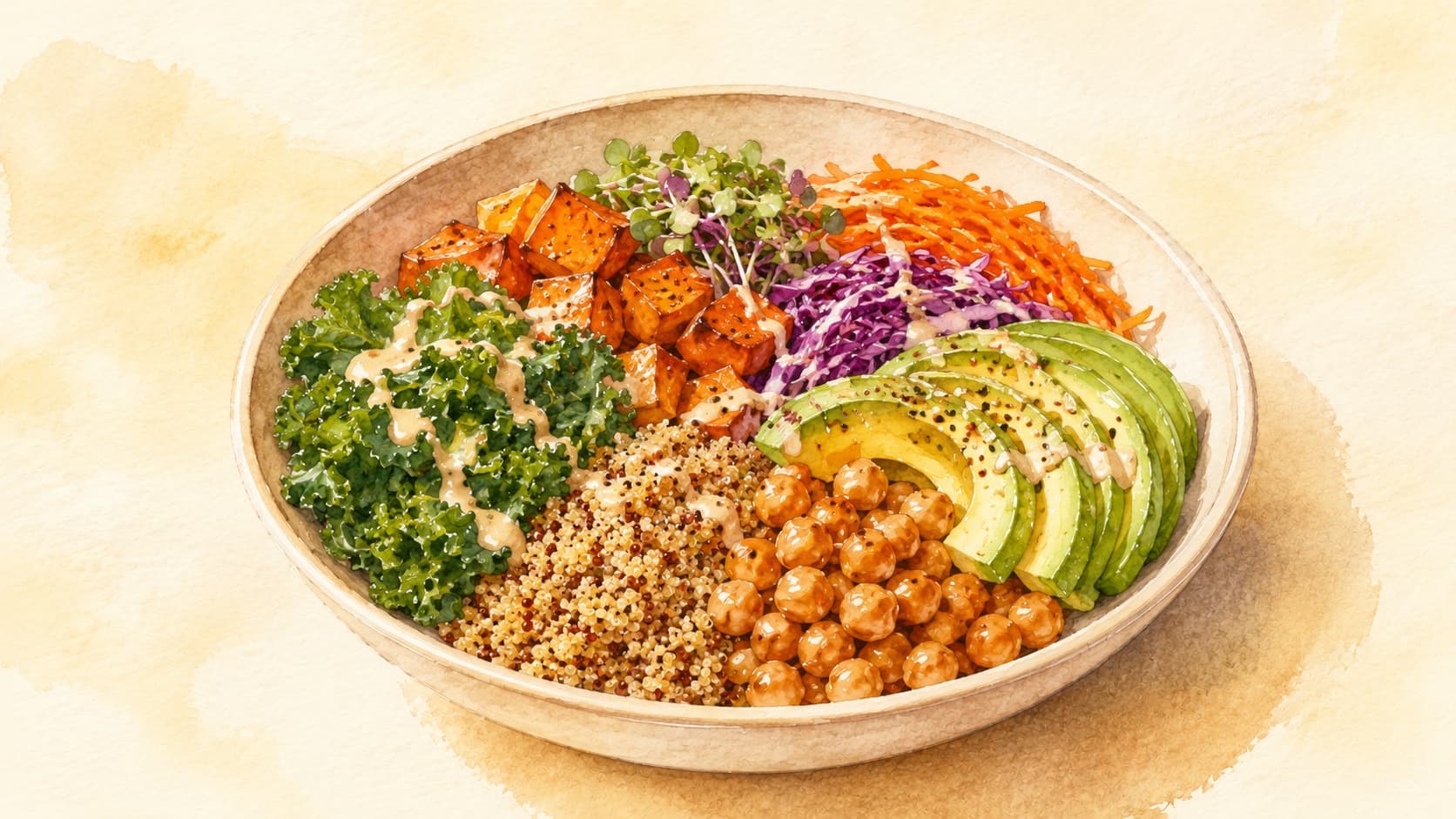
Ingredients
- 200 g cooked chickpeas
- 150 g cooked quinoa
- 100 g cherry tomatoes, halved
- 1 avocado, sliced
- 50 g spinach leaves
- 3 tbsp tahini
- 1 tbsp lemon juice
- 1 clove garlic, minced
- Salt to taste
- Pepper to taste
- 1 tbsp olive oil
- 1 tsp paprika
Steps
In a bowl, mix 1/4 cup tahini, 2 tablespoons lemon juice, 1 minced garlic clove, 1/2 teaspoon salt, and 1/4 teaspoon pepper. Whisk for 30 seconds until smooth to create a dressing.
In a large bowl, combine 1 can (15 ounces) of cooked chickpeas, 1 cup cooked quinoa, 1 cup halved cherry tomatoes, and 2 cups fresh spinach.
Drizzle the tahini dressing over the mixture and toss gently to combine.
Arrange 1 sliced avocado on top and sprinkle with 1/2 teaspoon paprika.
Serve immediately or chill for 10 minutes in the refrigerator to enhance flavors.
Why this works
This chickpea grain bowl excels in flavor and nutrition through the combination of whole grains and legumes, making it a complete protein source. Chickpeas provide a hearty texture and are high in fiber, while quinoa adds additional protein and essential amino acids. The tahini (a smooth paste of ground sesame seeds) dressing enhances the flavor and adds a creamy texture, thanks to its high-fat content, which complements the freshness of the vegetables. If the dressing seems too thick, you can thin it with a tablespoon of water or additional lemon juice to achieve your desired consistency. This bowl is versatile; feel free to swap in seasonal vegetables or grains based on availability. If the quinoa or chickpeas are overcooked and mushy, try adding a squeeze of lemon juice and fresh herbs to refresh the dish's overall flavor and texture. Each layer of this bowl works together to provide a satisfying and nourishing meal in one serving, ideal for busy days. The precise measurements and chilling time ensure that each ingredient retains its character, making for a balanced and delightful dish.
Common mistakes
Tahini dressing that seizes into a stiff paste.
Target: A pourable, creamy dressing that coats the back of a spoon and slides off slowly.
Why it matters: This is the one counter-intuitive moment in the bowl. Pure tahini is mostly fat; when you first stir in lemon juice (a water-based acid), the fat and water briefly fight and the mixture seizes — it goes thick, grainy, and almost solid. That's normal. Whisking adds water back gradually and emulsifies it (fat and water beaten into one smooth, unified dressing), and it loosens into silky cream.
What to do: Don't panic at the seize. Keep whisking and add water a teaspoon at a time until it flows. If it's still thick, it just needs more water, not more tahini.
Bland bowl from under-seasoning.
Target: Each component lightly salted; the finished bowl tastes seasoned, not flat.
Why it matters: Chickpeas, quinoa, and tahini are all mild and a little starchy, so a bowl like this falls flat without enough salt and acid to lift it. Salt sharpens every other flavor; the lemon's acid brightens the whole thing and stops the tahini's richness from feeling heavy.
What to do: Salt the dressing properly and taste the assembled bowl before serving. If it's dull, the fix is usually a pinch more salt and a squeeze more lemon — not more dressing.
Watery bowl from wet greens and tomatoes.
Target: Spinach dry; tomatoes cut just before assembling.
Why it matters: Water is the enemy of a creamy dressing. Washed spinach still beaded with water, or tomatoes salted and left to sit, leach liquid that thins the tahini into a pale puddle at the bottom of the bowl.
What to do: Spin or pat the greens dry, and halve the cherry tomatoes right before they go in. Dress just before eating rather than long ahead.
Browning avocado from cutting too early.
Target: Bright green slices added last, ideally right before serving.
Why it matters: Cut avocado browns through oxidation — its flesh reacting with oxygen in the air — turning grey and tired-looking within an hour. It still tastes fine, but the fresh look that makes the bowl appealing is gone.
What to do: Slice the avocado last and lay it on top at the end. A squeeze of lemon over the cut surface (the same acid already in your dressing) slows the browning.
What to look for
- The tahini through the seize: thick and grainy at first, then suddenly smooth and pourable as water goes in. That turn from claggy paste to silky cream is the emulsion forming — keep going until you see it.
- The dressing's final body: coats the spoon, ribbons off slowly, not runny and not gluey. Too thin won't cling to the chickpeas; too thick clumps instead of coating.
- The quinoa you're adding: fluffy and separate, each grain showing its little curled germ ring. Wet, clumped quinoa waters down the bowl; properly cooked and cooled grains stay distinct.
- The assembled bowl: every component lightly glossed with dressing, nothing sitting in a puddle. A pool at the bottom means too much liquid or greens that weren't dried.
Get the essays in your inbox — free
Weekly notes on flavor, fermentation, and food history — the writing behind the Atlas of Flavor. No spam; unsubscribe anytime.