
Chicken Quesadilla
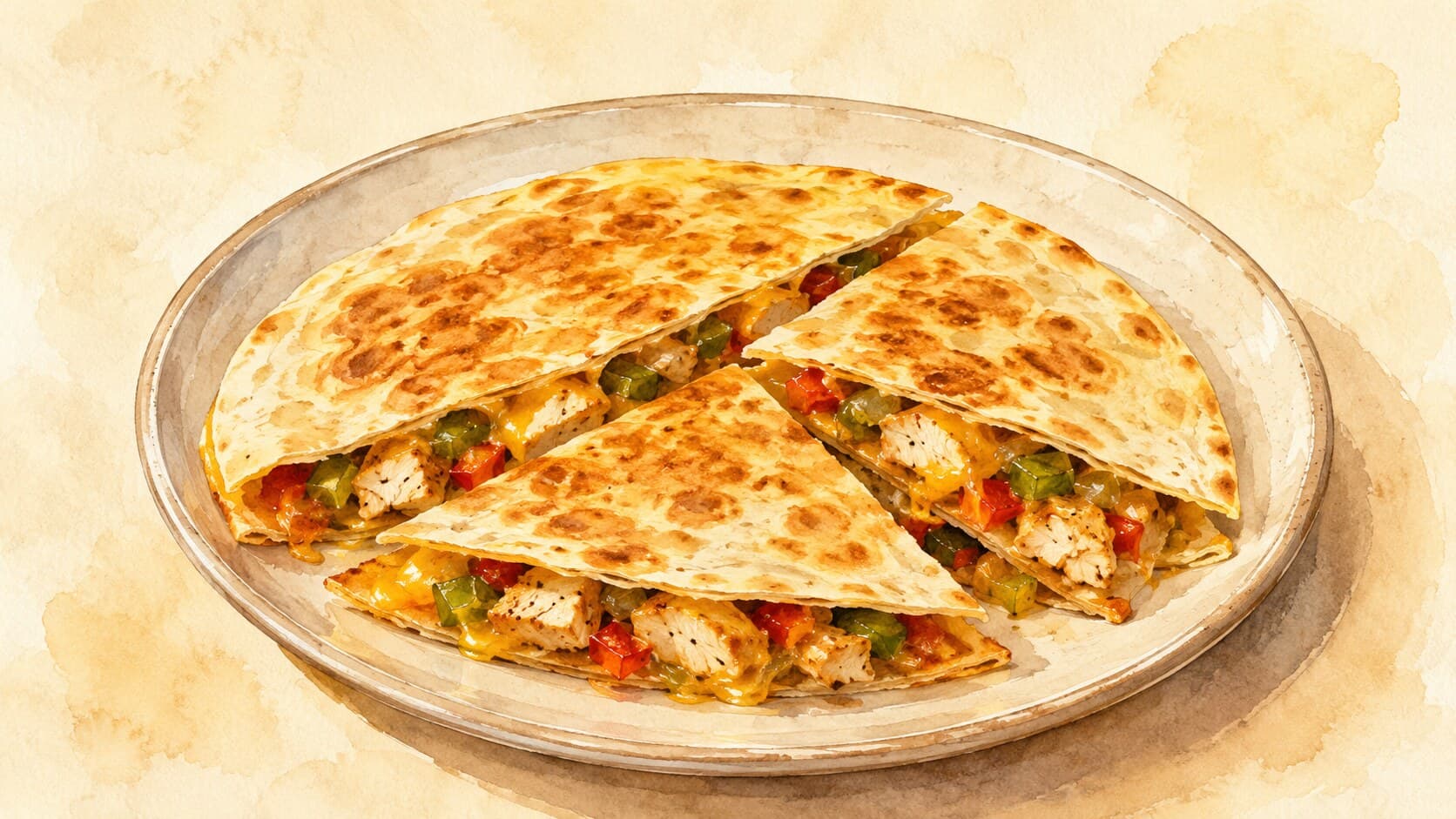
Chicken quesadilla made with layered tortillas, cooked chicken, and melted cheese, cooked on a skillet until golden and crispy.
Contents (5 sections)▾
Ingredients
- 2 cups cooked chicken, shredded
- 1 cup bell peppers, thinly sliced
- 1 cup shredded cheese (cheddar or Monterey Jack)
- 4 large flour tortillas
- 2 tablespoons olive oil
- 1 teaspoon taco seasoning
- Salt to taste
Steps
Heat 1 tablespoon of olive oil in a large skillet over medium heat. Add the sliced bell peppers and sauté for about 5 minutes until they are tender.
Add the shredded chicken to the skillet, sprinkle with taco seasoning and salt, then cook for an additional 3 minutes, stirring until well combined.
Lay a tortilla flat in another skillet over medium heat. Spread half of the chicken and bell pepper mixture onto one half of the tortilla, then top with 1/4 cup of shredded cheese.
Fold the tortilla in half and cook for about 3-4 minutes on each side, or until the tortilla is golden brown and the cheese is melted. Repeat for remaining tortillas.
Remove the quesadilla from the skillet, let it rest for a minute, then cut it into wedges and serve warm.
Why this works
The key to a successful chicken quesadilla lies in the combination of properly cooked ingredients and technique. By sautéing the bell peppers first (frying them quickly in a little oil over fairly high heat), you enhance their sweetness and ensure they add a delightful crunch to the quesadilla. The taco seasoning infuses the chicken with flavor, making each bite tasty. Using a moderate heat allows the cheese to melt perfectly without burning the tortilla. If the quesadilla seems too dry, you can brush a bit more olive oil on the pan or the tortilla before cooking to ensure a golden, crispy exterior. If the cheese doesn't melt well, cover the pan for the last minute of cooking to trap heat and encourage melting. This dish is quick; it also allows for variations based on your pantry, making it a fun, customizable meal for kids.
Common mistakes
Cold, raw, or under-warmed chicken in the filling.
Target: Chicken fully cooked through (no pink, 75°C/165°F) before it ever goes near the tortilla, and warm when assembled.
Why it matters: A quesadilla cooks fast — the few minutes per side are about melting cheese and crisping the tortilla, not cooking raw meat through. If you start with cold or under-cooked chicken, the outside browns and the cheese melts long before the center of the chicken is safe. This recipe uses pre-cooked shredded chicken for exactly that reason; keep it that way.
What to do: Use leftover or poached chicken that's already cooked, warm it through with the peppers, and never rely on the quesadilla stage to finish raw chicken.
Overfilling, so it won't seal or flip.
Target: A thin, even layer — cheese against both tortilla faces, filling in the middle, nothing spilling at the fold.
Why it matters: Cheese is the glue. When melted cheese touches the tortilla on both sides, it sets as it cools and holds the quesadilla shut. Pile in too much chicken and veg and the cheese can't bridge the layers, the tortilla can't crisp against the pan, and the whole thing falls apart at the flip.
What to do: Less than you think. Spread cheese first so it contacts the tortilla directly, then a modest layer of filling, then fold.
Heat too high — burnt outside, unmelted inside.
Target: Medium heat; tortilla deep golden in about 3–4 minutes a side as the cheese turns molten.
Why it matters: A tortilla browns in well under a minute on high heat, but cheese needs gentle, steady warmth to melt all the way through. Crank the burner and you get a scorched, bitter exterior wrapped around cold, rubbery cheese.
What to do: Keep it at medium. If the tortilla is coloring before the cheese melts, cover the pan for the last minute — the trapped heat melts the cheese (this is conduction giving way to a gentler steam/convection heat) without burning the surface.
Cutting it the instant it leaves the pan.
Target: A 1–2 minute rest before slicing into wedges.
Why it matters: Straight off the heat the cheese is fully liquid and runs out the moment you cut. A short rest lets it set just enough to stay put, so the wedges hold together instead of leaking filling.
What to do: Let it sit a minute or two, then cut with a sharp knife or pizza wheel in one clean stroke.
What to look for
- Peppers as they sauté: edges softened and just starting to color, still with a little bite. That light browning is sweetness developing; fully limp peppers have lost their texture contrast.
- The underside of the tortilla: golden-brown blistered spots, dry and firm to a peek under the edge. Pale and flexible means it hasn't crisped yet; lift a corner to check before flipping.
- The cheese at the fold: visibly molten and stringy, oozing slightly where the halves meet. That's your signal the inside is hot enough — set, white cheese means it needs more time.
- The finished wedge: crisp shell, clean cut edge, filling that stays put. If filling slides out, it was overfilled or cut too soon.
A note on history
The quesadilla is a colonial-era fusion: indigenous Mesoamerican corn tortillas (tlaxcalli in Nahuatl) met cheese and other dairy introduced by the Spanish in the 16th century (Mexico News Daily). The name comes from Spanish queso (cheese) — not from Nahuatl — and is often linked to the Asturian casadiella, a folded cheese-filled pastry (196flavors). The flour-tortilla, heavily-filled "beef and cheese" style here is closer to the Tex-Mex tradition of the U.S.–Mexico border than to the corn-tortilla quesadillas of central Mexico (Tijuana Flats overview).
Get the essays in your inbox — free
Weekly notes on flavor, fermentation, and food history — the writing behind the Atlas of Flavor. No spam; unsubscribe anytime.