
Chicken Piccata
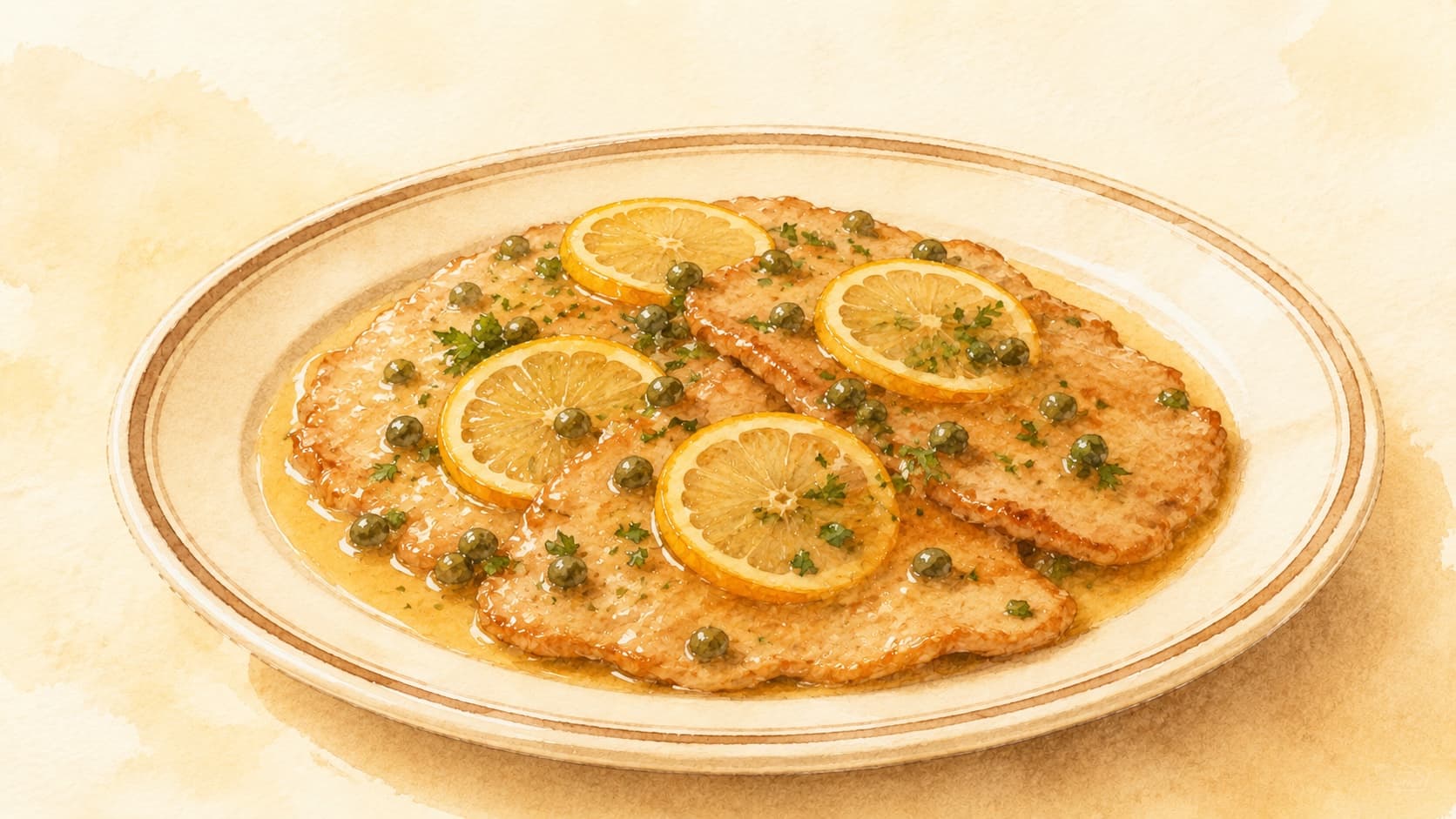
Chicken Piccata consists of sautéed chicken breasts served in a lemon-caper sauce, demonstrating techniques of emulsification and flavor balancing.
Contents (5 sections)▾
Ingredients
- 4 chicken breasts (about 150g each)
- Salt to taste
- Pepper to taste
- 1/2 cup all-purpose flour
- 1/4 cup olive oil
- 1/4 cup unsalted butter
- 1/2 cup chicken stock
- 1/4 cup fresh lemon juice
- 2 tbsp capers, drained
- 2 tbsp fresh parsley, chopped
- Lemon slices for garnish
Steps
Season the chicken breasts with salt and pepper on both sides.
Dredge each chicken breast in flour, shaking off the excess.
In a large skillet, heat the olive oil and 2 tablespoons of butter over medium-high heat until shimmering.
Add the chicken to the skillet and cook for about 4-5 minutes on each side, until golden brown and cooked through (internal temperature should reach 75°C/165°F). Remove chicken from the pan and set aside.
In the same skillet, add chicken stock, lemon juice, and capers. Bring to a simmer, scraping the bottom of the pan to release browned bits.
Return the chicken to the skillet and cook for an additional 2-3 minutes to heat through, spooning the sauce over the chicken.
Remove from heat, add the remaining butter and parsley, and stir until melted.
Serve the chicken hot, drizzled with the sauce and garnished with lemon slices.
Why this works
The key to a successful Chicken Piccata lies in the balance of flavors and the technique used to create the sauce. The dredging of the chicken in flour (coating it lightly in flour and shaking off the excess) helps to achieve a beautiful golden crust and thickens the sauce as it cooks. The use of chicken stock and fresh lemon juice creates a bright, tangy sauce that cuts through the richness of the butter. Capers add a briny punch. If the sauce seems too thin, you can let it simmer for an extra minute, allowing it to reduce and thicken. Conversely, if it thickens too much, add a splash of chicken stock to adjust the consistency. The dish's vibrant flavors and aromas make it a favorite for weeknight dinners, bringing a taste of Italy to your table.
Common mistakes
Skipping the pound — cooking thick, uneven breasts.
Target: Even thickness of about 1 cm before flouring. Internal temperature 75°C/165°F at the thickest point.
Why it matters: A whole breast is thick at one end and thin at the other. By the time the thick part is safely cooked through (chicken must never stay pink in the center), the thin part is dry and stringy. Pounding to an even thickness (placing the breast between two sheets and flattening it with a mallet or heavy pan) means the whole piece cooks in the same few minutes, so it leaves the pan juicy rather than overcooked.
What to do: Halve thick breasts horizontally or pound them flat, then cook hot and fast. Pull them at 75°C and let the carry-over heat finish the job.
Wet chicken that won't brown.
Target: Surface dry to the touch; flour goes on in a thin, even film.
Why it matters: Browning is the Maillard reaction (the chemistry between protein and sugar that builds savory, roasted flavor and color), and it only starts once the surface water has boiled off. A wet, dripping breast steams in its own moisture and stays pale and bland. A dry surface plus a light flour coat browns fast, which is where most of the dish's depth comes from.
What to do: Pat the chicken dry with paper towel, season, then dredge (coat lightly in flour and shake off the excess) just before it hits shimmering fat. Flouring too early turns the coat to paste.
Boiling the butter into the sauce while still on high heat.
Target: Pan off the heat, or barely simmering, when the finishing butter goes in.
Why it matters: Swirling cold butter into a sauce off the heat is an emulsion (butter's fat and the watery pan juices held together in one glossy, slightly thick sauce). If the pan is ripping hot, the butter's fat splits out instead and the sauce turns greasy and thin — the classic "broken" sauce.
What to do: Pull the pan off the burner, then add the cold butter a piece at a time and swirl until the sauce looks glossy and slightly thickened. Add the parsley last so it stays green.
Drowning it in lemon.
Target: Bright and tart, but the sauce should still taste of chicken and butter underneath.
Why it matters: Lemon is acid, and acid is there to cut the richness of the butter, not erase it. Too much and the sauce goes sour and one-note; the capers (already briny and acidic) push it further that way.
What to do: Add most of the lemon, taste, then adjust. A pinch of salt or an extra knob of butter pulls a too-sharp sauce back into balance.
What to look for
- Fat before the chicken goes in: the oil-and-butter shimmers and the foam has just subsided. That faint shimmer means it is hot enough to brown on contact rather than steam.
- The crust as it sears: deep golden, and the breast releases from the pan without sticking. If it grips the pan, it isn't browned yet — wait, don't force it.
- Deglazing the pan (pouring in liquid to loosen the stuck-on bits): the browned bits lift off the bottom as the stock and lemon bubble. Those bits (called fond) are concentrated flavor; scraping them up is what makes the sauce taste like more than lemon water.
- The finished sauce: glossy, lightly thickened, coats the back of a spoon. That sheen is the butter emulsion holding — thin and greasy means it broke; syrupy means it over-reduced.
A note on history
Despite its Italian name, chicken piccata as known in the United States is largely an Italian-American creation. Piccata traces to the Italian culinary verb sense of "larded" or "pounded," describing the flattened cutlet rather than a specific sauce, and the original Italian dish used veal (piccata di vitello), common in the north around Lombardy (Britannica/arousingappetites.com). The chicken version rose to popularity in mid-20th-century America, where chicken was cheaper and more available than veal, and it remains far more common on Italian-American menus than in Italy itself (196flavors / Medium overview).
Get the essays in your inbox — free
Weekly notes on flavor, fermentation, and food history — the writing behind the Atlas of Flavor. No spam; unsubscribe anytime.