
Cherry Clafoutis
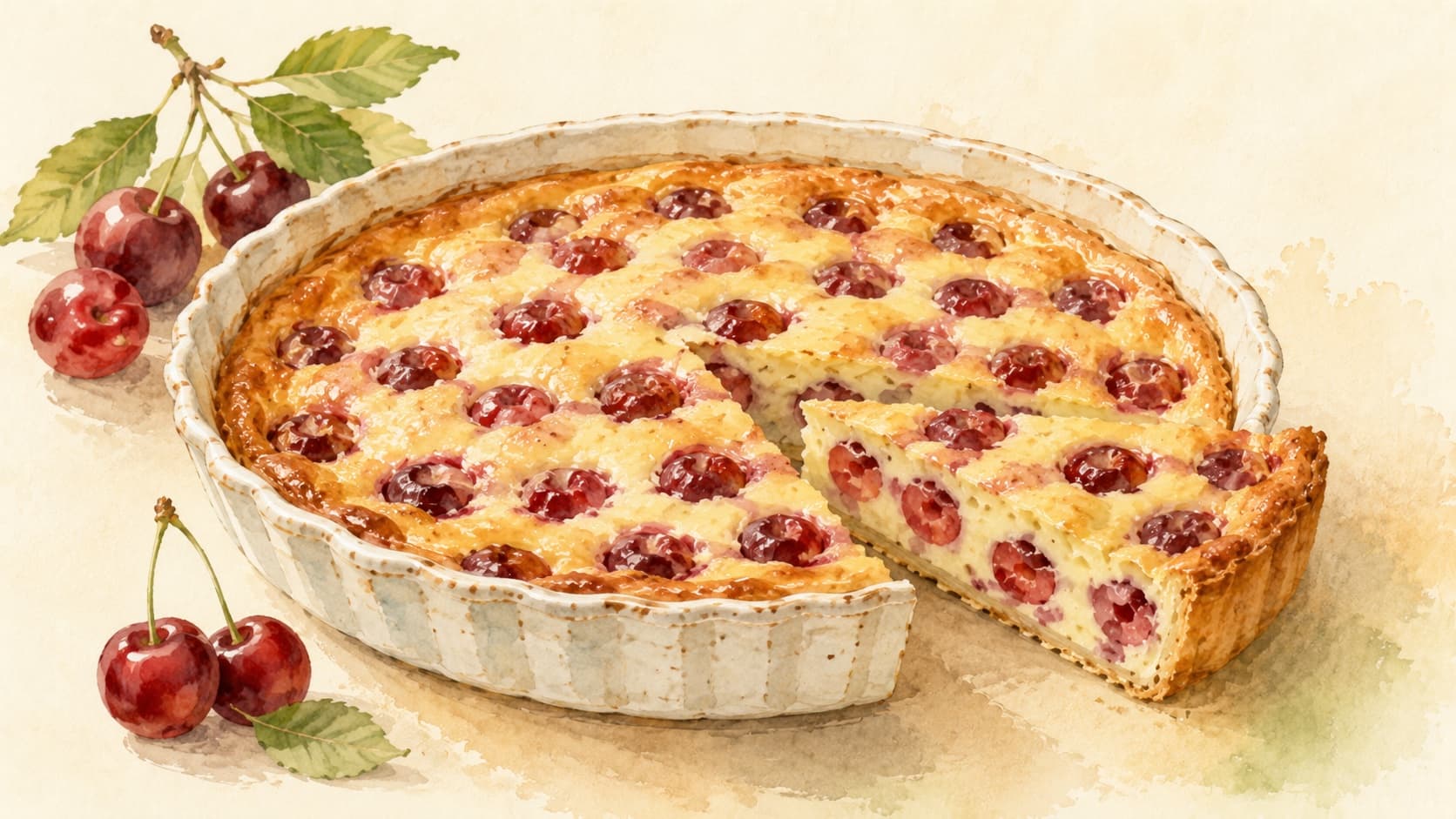
Cherry clafoutis is a French dessert made by integrating cherries into a custard batter, then baking until set.
Contents (5 sections)▾
Ingredients
- 250 g fresh cherries, pitted
- 100 g all-purpose flour
- 75 g granulated sugar
- 2 large eggs
- 300 ml milk
- 1 tsp vanilla extract
- 1/4 tsp salt
- 30 g unsalted butter, melted
- Powdered sugar for dusting
Steps
Preheat your oven to 180°C (350°F). This ensures the clafoutis cooks evenly and rises properly.
In a mixing bowl, whisk together the flour, granulated sugar, and salt until well combined.
In another bowl, whisk together the eggs, milk, vanilla extract, and melted butter until smooth.
Gradually pour the wet ingredients into the dry ingredients, whisking until just combined to avoid lumps.
Grease a baking dish with butter and arrange the pitted cherries evenly across the bottom.
Pour the batter over the cherries, ensuring they are submerged.
Bake in the preheated oven for 30-35 minutes or until puffed and golden on top, and a toothpick inserted comes out clean.
Let the clafoutis cool slightly before dusting with powdered sugar. Serve warm or at room temperature.
Why this works
Clafoutis is a classic French dish that beautifully showcases the technique of creating a baked custard (a soft mixture of eggs and milk that firms up as it cooks). The custard base is formed from a simple mixture of flour, eggs, milk, and sugar, which, when baked, puffs up around the fruit. The cherries add flavor and moisture that complement the creamy texture. If the custard seems too runny, ensure that it has baked long enough until a toothpick inserted comes out clean; if it breaks or sinks after baking, it may have been overmixed or underbaked. The key is to balance the batter's consistency and baking time for a perfect rise and texture. Additionally, using seasonal fruits enhances the flavor, making the dish visually appealing and a delightful treat that reflects the essence of fresh ingredients. Serve it warm for the best experience, as it retains its delicate structure while offering a rich, custardy interior.
Common mistakes
Lumpy batter.
Target: A smooth, pourable batter the texture of thin pancake batter or heavy cream, with no flour lumps.
Why it matters: Clafoutis is a baked custard (a mixture set by eggs as they cook), and lumps of dry flour won't fully hydrate in the oven — they leave gritty pockets and uneven texture. A smooth batter also bakes into one even, tender set instead of patchy firm-and-soft spots.
What to do: Whisk the eggs, milk and melted butter together first, then add the dry ingredients gradually and whisk just until smooth — or blitz everything in a blender for a few seconds. If lumps remain, pass the batter through a fine sieve before pouring.
Overmixing once the flour is in.
Target: Mix only until the flour disappears — stop the moment the batter looks even.
Why it matters: Beating flour hard develops gluten (the stretchy protein network in wheat), which makes the custard rubbery and chewy rather than soft and spoonable. The pillowy, tender texture of a good clafoutis depends on a gently mixed batter.
What to do: Whisk just to combine, no longer. A few seconds past smooth is enough. Letting the batter rest 30 minutes before baking also relaxes the gluten and gives a more tender crumb.
Wet, runny centre — pulling it out too early.
Target: A clafoutis that is set all the way to the middle: puffed, golden, and a tester slid into the centre comes out clean (allowing for cherry juice).
Why it matters: This is an egg custard, and an undercooked centre is not only unpleasantly raw and slack — it means the eggs haven't fully cooked and set. Bake until the middle is just firm; a clean tester is your signal it is properly set and safe to eat.
What to do: Test in the centre, not the edge — edges set first. If the top is browning before the middle is done, lay a sheet of foil loosely over the dish and keep baking until set. The custard should jiggle as one piece, not slosh.
Cherries sinking or weeping.
Target: Pitted cherries spread evenly across the dish, batter poured over so they sit suspended.
Why it matters: Crowded or very wet cherries release juice that thins the batter around them and leaves a soggy band. Spreading them out keeps the custard set evenly and the fruit distributed in every slice.
What to do: Arrange the cherries in a single even layer before pouring the batter. If using frozen or very juicy cherries, pat them dry first; a light dusting of flour over them helps hold them in place as the custard sets.
What to look for
- The batter: smooth and silky, coating the back of a spoon, pouring in an even ribbon. No flour specks, no lumps — it should look like thin cream.
- Cherries before baking: sitting in a single even layer, just submerged by the batter. They should be visible as gentle bumps under the surface, not piled or floating.
- Mid-to-late bake: puffed up and domed, the top turning evenly golden-brown, edges pulling slightly from the dish. The rise tells you the egg custard is cooking and setting.
- Doneness: the centre is just firm and a tester comes out clean (give or take cherry juice); the whole thing jiggles as one, not in waves. A wet, sloshing middle means it needs longer to set safely.
A note on history
Clafoutis comes from the rural Limousin region of central France and dates to at least the mid-19th century, where it began as a thrifty way for farmers to use the area's abundant cherry harvest in a simple batter. Traditionally the cherries are left unpitted: the stones (pits) are said to release a faint almond-like aroma into the custard as it bakes. The name likely derives from the Occitan verb clafir, "to fill" — that is, to fill the batter with fruit. Sources: Wikipedia, TasteAtlas. (This recipe pits the cherries for easier eating; if you leave the stones in for aroma, warn anyone at the table.)
Get the essays in your inbox — free
Weekly notes on flavor, fermentation, and food history — the writing behind the Atlas of Flavor. No spam; unsubscribe anytime.