
Chakalaka
Chakalaka is a quick-cooked South African spicy vegetable relish, perfect as a side dish with pap or grilled meat.
Contents (5 sections)▾
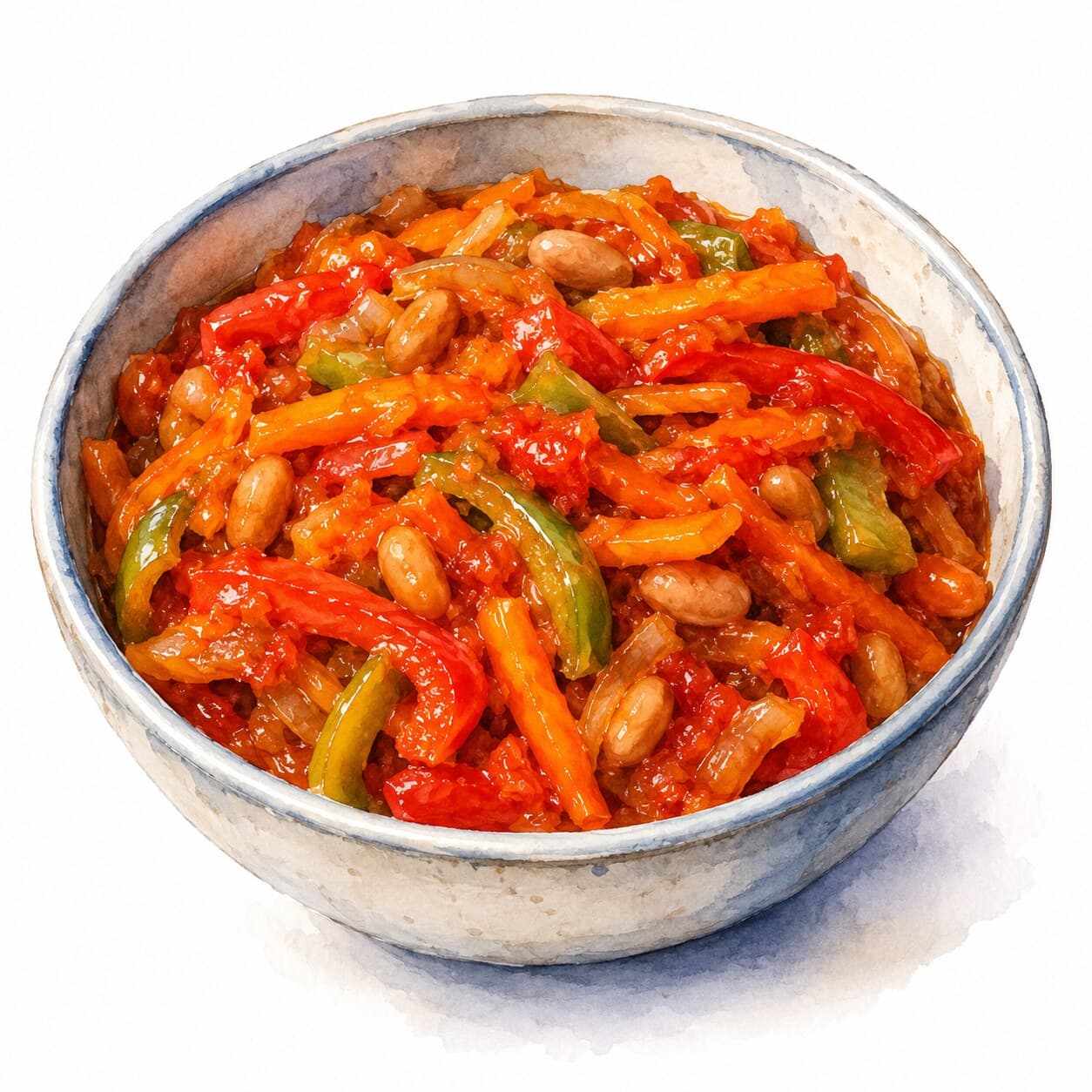
Ingredients
- 1 medium onion, chopped
- 2 medium carrots, grated
- 1 bell pepper, diced
- 2 medium tomatoes, chopped
- 1 can (400g) baked beans, drained
- 1 tbsp curry powder
- 1-2 fresh chili peppers, chopped (to taste)
- 2 tbsp vegetable oil
- Salt to taste
Steps
Heat the vegetable oil in a large skillet over medium heat for about 2 minutes.
Add the chopped onion and sauté for about 3-4 minutes until translucent, stirring frequently.
Stir in the grated carrots and diced bell pepper, cooking for another 3-4 minutes to soften.
Add the chopped tomatoes, baked beans, curry powder, and chili peppers, mixing well.
Simmer everything together for about 5-7 minutes, allowing the flavors to meld, and season with salt.
Why this works
Chakalaka's magic lies in its swift cooking technique that preserves the vibrant flavors and textures of the vegetables. By sautéing (cooking quickly in a little hot oil while stirring) the onions first, you build a flavor base that enhances the relish (a chunky, tangy vegetable condiment served in small amounts). The quick cooking of the carrots and bell pepper ensures they remain slightly crunchy, adding an appealing texture contrast. Including tomatoes and baked beans gives a rich, hearty element, while the curry powder and chili provide a spicy kick. If the mixture seems too thick, you can add a splash of water to adjust the consistency. On the other hand, if it appears too watery, simply cook it a few minutes longer to evaporate excess moisture. This relish is versatile, pairing beautifully with pap (a soft South African maize porridge) or grilled meats, making it a staple in South African cuisine.
Common mistakes
Cooking the vegetables until they go fully soft.
Target: Sauté the carrots and bell pepper just until they soften slightly at the edges but still offer some resistance, around the 3-4 minutes the recipe calls for — not until limp.
Why it matters: Chakalaka's identity is a textured relish, not a purée; part of its appeal alongside soft pap (a cooked maize porridge that's a staple across southern Africa) or grilled meat is the bite of still-crisp vegetables. Overcooked carrots and peppers lose that contrast and the dish reads as a soft, one-note side.
What to do: Watch the clock rather than the pot, and pull the vegetables off the heat while they still have some snap — they'll keep cooking a little more once the tomatoes and beans go in.
Adding the curry powder straight into the wet mixture.
Target: Stir the curry powder into the sautéed vegetables and let it cook in the oil for 30-60 seconds before the tomatoes and beans go in.
Why it matters: Many of curry powder's aromatic compounds are fat-soluble, so a brief sizzle in hot oil — a step often called blooming — releases far more flavor than stirring the same spice straight into a watery sauce. Skipping this leaves the seasoning tasting dusty and flat instead of rounded.
What to do: Clear a small space in the pan, add the curry powder directly to the oil until fragrant (well under a minute), then stir it through the vegetables before adding the tomatoes and beans.
Simmering the baked beans until they break apart.
Target: Stir in the canned baked beans toward the end and warm them through gently rather than hard-simmering them for the full 5-7 minutes.
Why it matters: Baked beans are already fully cooked and softened in the can; extended hard simmering turns them mushy and can make the relish gluey rather than chunky.
What to do: Add them in the last two to three minutes, just long enough to heat through and pick up the surrounding flavors, stirring gently to keep them mostly intact.
Salting on autopilot before tasting the beans and chili.
Target: Taste before adding salt, since canned baked beans already carry some salt and fresh chilies vary widely in heat.
Why it matters: Salting on top of an already-seasoned canned ingredient risks a relish that's too salty, and a heavy hand with chili — or a hotter pepper than expected — can't be undone once it's in the pot.
What to do: Add chili in stages, tasting as you go, and hold back on salt until the very end when you can taste the dish as a whole.
What to look for
- Carrots and bell pepper that still have a slight bite when you taste a spoonful. If they've gone fully soft with no resistance, the vegetables have cooked past the point that makes this a relish rather than a stew.
- A curry powder aroma that smells rounded and toasted, not sharp or dusty. That shift happens once the spice has had its moment in hot oil; a flat, raw-spice smell means it needed another minute over heat.
- A chunky, spoonable consistency rather than a soupy or dry one. The beans and tomatoes should bind the vegetables loosely; if it's swimming in liquid, a few more minutes uncovered will tighten it up, and if it looks dry, a splash of water loosens it.
A note on history
Chakalaka is closely associated with South Africa's townships — the urban communities that grew up around cities like Johannesburg and Durban during the twentieth century — where it developed as a quick, inexpensive relish that could be made from whatever vegetables were on hand and could stretch a simple plate of pap or grilled meat into a fuller meal. Its exact origins and the source of its name aren't well documented and are debated even among South African cooks, though the name itself is widely felt to evoke the dish's lively, spicy character.
There is no single authoritative version: recipes vary by household and region, and canned baked beans — a relatively modern, convenient addition — are now common enough to appear in many versions without being considered inauthentic. That adaptability, more than any fixed formula, is often cited as the heart of chakalaka's identity as a living, everyday dish rather than a museum piece.
Get the essays in your inbox — free
Weekly notes on flavor, fermentation, and food history — the writing behind the Atlas of Flavor. No spam; unsubscribe anytime.