
Cauliflower Cream Soup
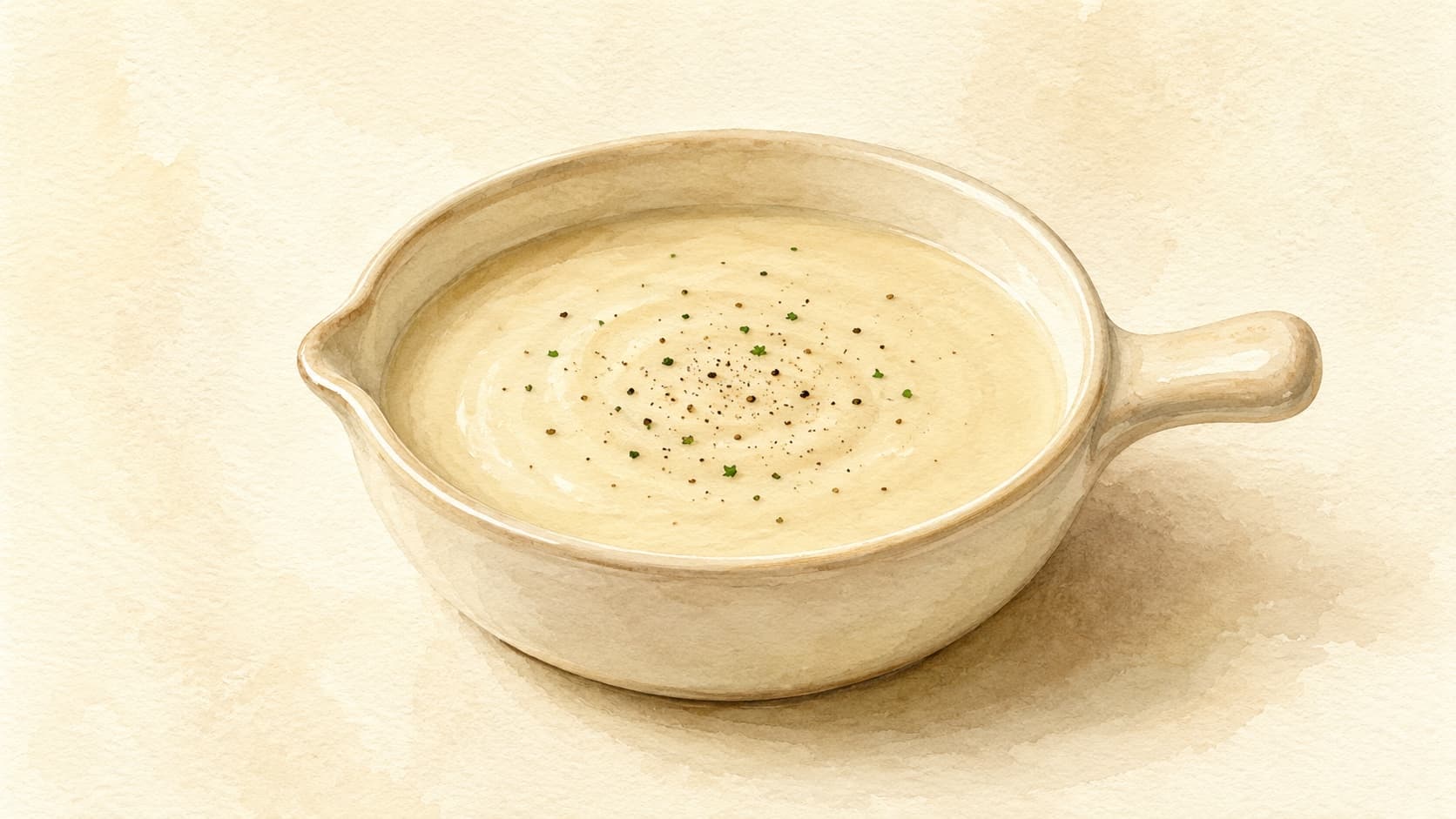
A velvety cauliflower cream soup that highlights the vegetable's delicate flavor in a classic French style.
Contents (5 sections)▾
Ingredients
- 500 g cauliflower florets
- 1 medium onion, chopped
- 2 tbsp olive oil
- 750 ml vegetable stock
- 200 ml heavy cream
- Salt, to taste
- White pepper, to taste
- Fresh chives, for garnish
Steps
In a large pot, heat the olive oil over medium heat. Add the chopped onion and sauté for about 5 minutes until translucent, which will release its sweetness and form a flavorful base.
Add the cauliflower florets to the pot and stir to combine with the onions. Cook for another 5 minutes, allowing the cauliflower to soften slightly.
Pour in the vegetable stock and bring to a boil. Reduce the heat and simmer for about 15 minutes until the cauliflower is tender.
Using an immersion blender, puree the soup until smooth, which creates a creamy texture without any lumps. If you don't have an immersion blender, transfer the soup in batches to a countertop blender.
Stir in the heavy cream and season with salt and white pepper to taste. Heat gently until warmed through, but do not boil. This prevents the cream from curdling.
Serve hot, garnished with fresh chives for a pop of color and flavor.
Tools you'll want
Why this works
The key to making a successful cauliflower cream soup lies in the foundational flavors and the blending technique. The sautéed onion provides sweetness, which balances the natural earthiness of cauliflower, while the heavy cream adds richness and a luxurious mouthfeel. It's essential to monitor the cooking time; overcooking the cauliflower can lead to an undesirable texture, making the soup grainy. If this happens, you can rescue it by blending it longer to achieve a smoother consistency. Additionally, the gradual addition of cream prevents curdling and ensures the soup remains silky. Maintaining a gentle heat after adding the cream is crucial; otherwise, the temperature might rise too high, risking separation. This soup can be served hot or chilled, and its versatility allows it to be adapted with various herbs or spices for different flavor profiles.
Common mistakes
Browning the onion instead of sweating it.
Target: Soft, translucent, no color — about 5 minutes over medium-low heat.
Why it matters: This is a pale soup whose whole appeal is the cauliflower's clean, delicate flavor. Browned onion adds a sweet, roasted note and a tan tint that muddies both the color and the taste. Sweating (cooking gently to soften without coloring) draws out the onion's sweetness while keeping it in the background.
What to do: Keep the heat moderate and stir; if it starts to color, lower the flame or add a pinch of salt to pull out moisture and slow the browning.
Not simmering long enough to fully soften the cauliflower.
Target: Florets that crush against the side of the pot with no resistance before blending.
Why it matters: A blender can only purée what is already soft. Undercooked florets leave gritty specks that no amount of blending fully smooths, because the cell walls haven't broken down enough to release their starch and collapse into a cream.
What to do: Simmer until a fork goes through a floret like soft butter — usually the full 15 minutes — then blend.
Under-blending, or filling a hot blender to the brim.
Target: A completely smooth, pourable purée with no visible pieces.
Why it matters: Texture is the entire point of a velouté-style soup (a smooth, creamy soup); a half-blended batch tastes rustic rather than refined. And hot liquid in a sealed countertop blender builds steam pressure that can blow the lid off and burn you.
What to do: Blend a full minute. With a countertop blender, work in batches no more than half full, hold the lid with a folded towel, and start on low.
Boiling the soup after the cream goes in.
Target: Gentle heat just to warm through — steaming, never bubbling.
Why it matters: Cream's proteins (casein) can coagulate and split into grainy curds when pushed to a hard boil, especially with the cream diluted in a watery soup. The result looks broken and feels rough on the tongue.
What to do: Stir the cream in off a rolling boil, warm gently, and serve. Season at the very end, after the cream has softened the soup's flavor.
What to look for
- Sweated onion: translucent and limp, no golden edges. You should smell sweetness, not roasting.
- Cauliflower before blending: collapses when pressed with a spoon. If it springs back, simmer longer.
- Blended soup: pours in a smooth ribbon, no flecks against the spoon. Run a drop between your fingers — it should feel silky, not gritty.
- After the cream: pale ivory, faintly steaming, evenly glossy. Tiny grains or a split, watery look mean it got too hot.
A note on history
This soup belongs to the French classical tradition as crème Dubarry, named after Madame du Barry, the last official mistress of Louis XV — a period convention by which a dish carrying her name signals cauliflower (Wikipedia). Escoffier's Guide Culinaire records the distinction this recipe rests on: thickened with stock it is a velouté, while the addition of cream (and classically an egg yolk) makes it a crème (Mad About Macarons).
Get the essays in your inbox — free
Weekly notes on flavor, fermentation, and food history — the writing behind the Atlas of Flavor. No spam; unsubscribe anytime.