
Cauliflower Gratin
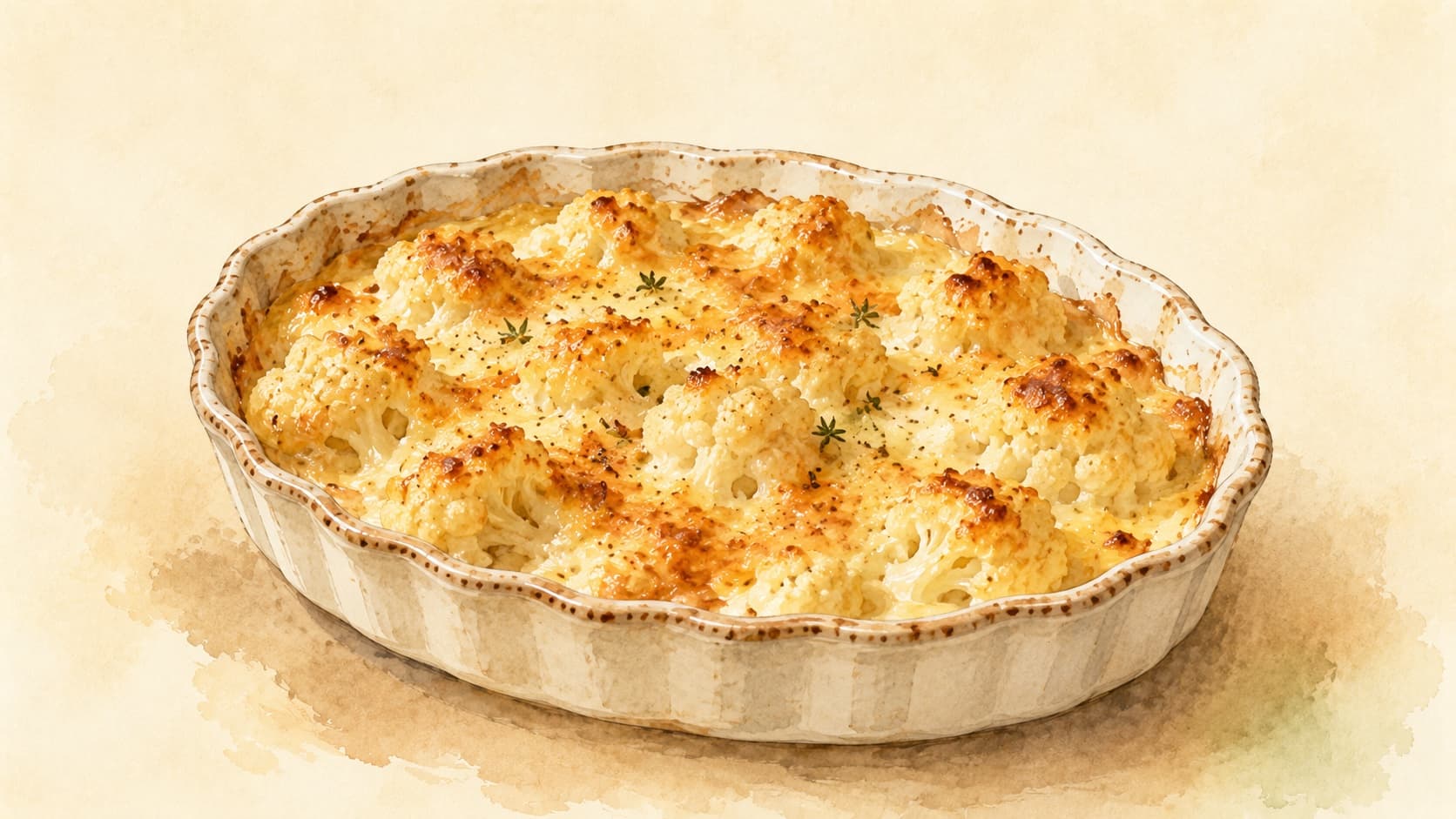
A creamy and cheesy cauliflower gratin that showcases the classic French technique of béchamel.
Contents (5 sections)▾
Ingredients
- 1 medium head of cauliflower, cut into florets
- 2 tablespoons unsalted butter
- 2 tablespoons all-purpose flour
- 2 cups whole milk
- 1 cup grated Gruyère cheese
- 1/2 teaspoon nutmeg
- Salt to taste
- Black pepper to taste
- 1/2 cup breadcrumbs
Steps
Preheat the oven to 200°C (400°F). This ensures an even bake and helps achieve a golden crust.
Steam the cauliflower florets for about 5 minutes until just tender. This step prevents the gratin from becoming watery.
In a saucepan, melt the butter over medium heat, then stir in the flour to form a roux, cooking for 1-2 minutes until golden.
Gradually whisk in the milk, ensuring there are no lumps, and cook until the sauce thickens (about 5-7 minutes).
Remove from heat and stir in the Gruyère cheese, nutmeg, salt, and pepper until smooth.
Combine the steamed cauliflower with the béchamel sauce, then pour into a baking dish and top with breadcrumbs.
Bake in the preheated oven for 15 minutes or until the top is golden brown. This step enhances flavor through caramelization.
Why this works
This cauliflower gratin employs the classic French technique of béchamel sauce, which serves as a rich base that envelops the cauliflower, providing both moisture and flavor. The nutty Gruyère cheese adds depth, while the crispy breadcrumb topping creates a delightful contrast. The steaming of the cauliflower is crucial; it allows the florets to soften without releasing excess water into the dish. If the béchamel sauce seems too thick, simply whisk in a little more milk until it reaches the desired consistency. If the top doesn't brown sufficiently, you can broil it for an additional 1-2 minutes at the end of baking—just keep a close eye to avoid burning.
Common mistakes
Boiling the cauliflower instead of steaming, or cooking it until soft.
Target: Steam (cook over boiling water, not in it) for about 5 minutes — florets yield to a knife tip but still hold their shape.
Why it matters: Cauliflower is roughly 92% water. Boiled or overcooked florets carry that water into the dish, where it leaks out under the oven's heat and thins the sauce into a puddle. Steaming softens the florets while leaving most of the water behind.
What to do: Steam to just-tender, then let the florets sit in the colander a minute so surface steam evaporates before they meet the sauce.
A lumpy béchamel (the milk-thickened white sauce).
Target: A smooth, pourable sauce that coats the back of a spoon, no visible flour specks.
Why it matters: Flour thickens by gelatinization — starch granules swell and burst as they heat in liquid. If milk hits the hot roux (the cooked butter-and-flour paste) all at once, the outside of each flour clump gelatinizes and seals dry flour inside, locking in lumps that no whisking removes.
What to do: Add the milk in stages, whisking each addition smooth before the next. Warming the milk first helps it blend without shocking the roux.
Adding the cheese while the sauce is still on the boil.
Target: Pull the pan off the heat, let it stop bubbling, then stir in the Gruyère.
Why it matters: Cheese is an emulsion of fat, water, and protein. Above roughly 82°C / 180°F the proteins tighten and squeeze the fat out, and the sauce turns grainy and oily instead of glossy.
What to do: Off the heat, add the grated cheese in handfuls and stir until each melts in. Residual warmth is plenty.
Pulling the gratin (a dish browned on top under high heat) before the top has colored.
Target: A deep golden-brown, blistered crust.
Why it matters: The brown crust is the Maillard reaction — amino acids and sugars rearranging under heat into hundreds of new roasted, nutty, savory compounds. A pale top tastes flat no matter how good the sauce is.
What to do: If 15 minutes leaves it pale, run it under the broiler 1–2 minutes, watching constantly — the jump from golden to burnt takes seconds.
What to look for
- Steamed cauliflower: a knife tip slides in with light resistance, florets still intact. Soft enough to eat, firm enough to hold a layer.
- Finished béchamel: coats the spoon and holds a clean line when you draw a finger through it. If it slides off like milk, cook a minute longer; if it sits in clumps, it needs more whisking or a splash of milk.
- Cheese stirred in: glossy and uniform, no oil slick on the surface. A greasy ring at the edge means it got too hot — next time, further off the heat.
- Gratin out of the oven: deep golden top, sauce bubbling slowly at the edges. Bubbling tells you it is hot through; the color tells you the crust has flavor.
A note on history
Cauliflower reached France from Italy in the 16th century and was being grown in the gardens of Versailles under Louis XIV (Mad About Macarons). The gratin treatment pairs it with Mornay — a béchamel enriched with grated cheese — which is itself a derivative of one of the French mother sauces (Pardon Your French). Brittany, in France's northwest, grows roughly 80% of the country's cauliflower, and the baked gratin remains one of the most common ways the vegetable is eaten there (Pardon Your French).
Get the essays in your inbox — free
Weekly notes on flavor, fermentation, and food history — the writing behind the Atlas of Flavor. No spam; unsubscribe anytime.