
Cassoulet
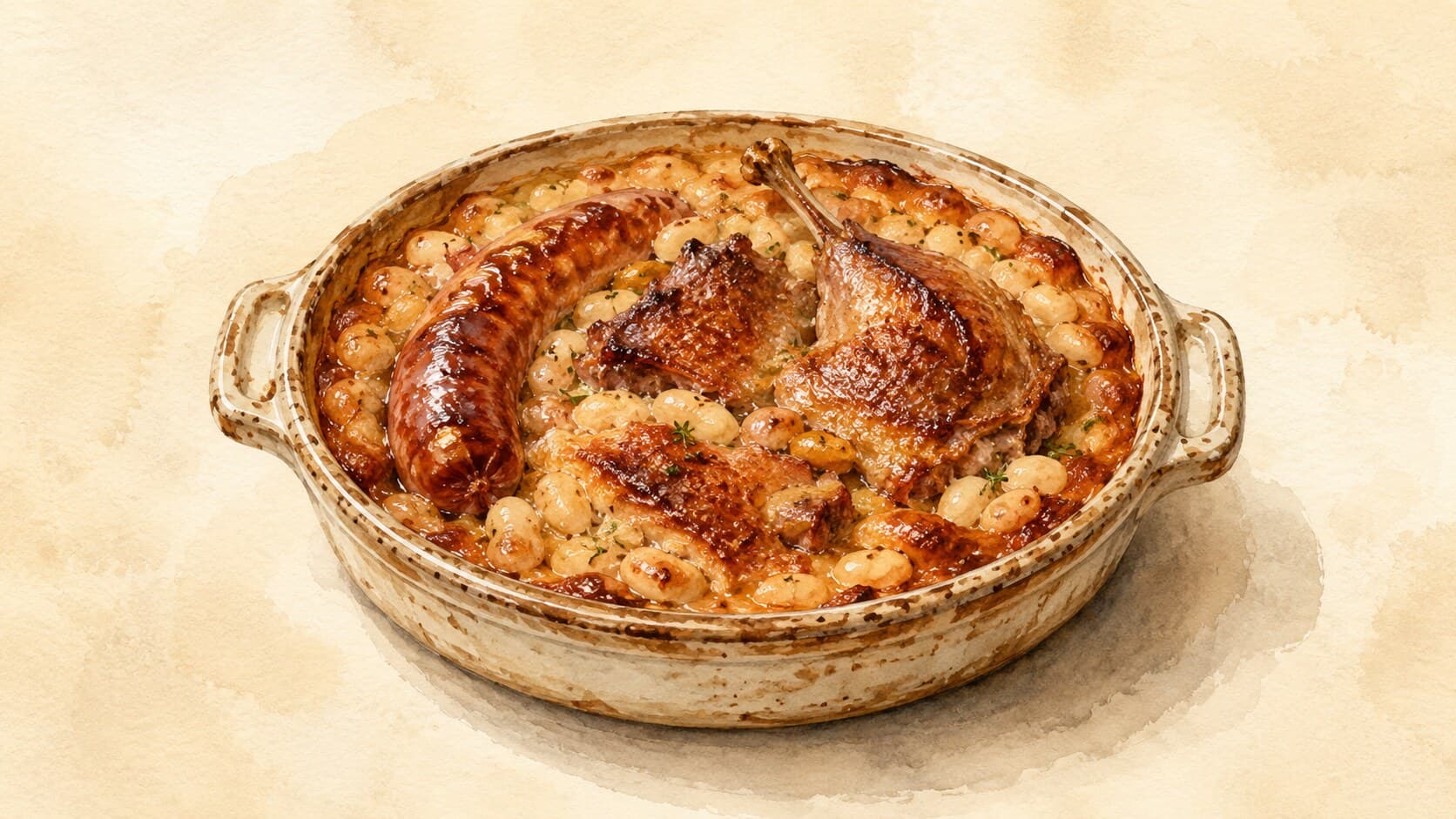
This hearty French classic features slow-cooked white beans with flavorful meats, topped with a crusty surface.
Contents (5 sections)▾
Ingredients
- 300 g dried white beans
- 200 g duck confit, shredded
- 150 g pork sausage, sliced
- 100 g smoked bacon, diced
- 1 medium onion, chopped
- 2 cloves garlic, minced
- 2 sprigs thyme
- 1 bay leaf
- 1 liter chicken stock
- Salt to taste
- Pepper to taste
- Breadcrumbs for topping
Steps
Soak the dried white beans in water for at least 8 hours or overnight. This rehydrates them and reduces cooking time.
Preheat your oven to 150°C (300°F). This low temperature is essential for a slow braise, allowing flavors to meld beautifully.
In a large pot, sauté the bacon over medium heat until crispy, then add the onion and garlic. Cook until softened, about 5 minutes.
Add the soaked and drained beans, duck confit, sausage, thyme, bay leaf, and chicken stock. Season with salt and pepper.
Bring the mixture to a gentle simmer, then cover and transfer to the preheated oven. Cook for 2.5 to 3 hours, stirring occasionally.
During the last 30 minutes, sprinkle breadcrumbs on top of the cassoulet and return to the oven uncovered to create a crusty topping.
Why this works
Cassoulet is a classic French dish that showcases the art of slow-cooking, allowing the flavors of the ingredients to meld beautifully over time. The key technical focus here is the slow braise (gentle cooking in a little liquid in a covered pot), which transforms the beans into creamy morsels while infusing them with the rich flavors of duck, sausage, and bacon. The use of a low oven temperature (150°C) ensures that the dish cooks evenly, preventing the meats from drying out. A common issue could be that the beans may become too soft if cooked at a higher temperature or for too long; if that happens, simply reduce the cooking time next time or check for doneness earlier. The crusty topping created by the breadcrumbs adds texture and contrast, ensuring that each bite of the cassoulet is both hearty and satisfying. This dish is perfect for a weekend meal, as it allows for a long, leisurely cooking process while you attend to other activities.
Common mistakes
Adding the tomato (or a heavy dose of salt) too early.
Target: Beans simmered until their skins are tender before the tomato and the bulk of the seasoning go in.
Why it matters: This is one of the most common causes of beans that stay stubbornly tough no matter how long they cook. Acid is the real culprit — the tomato's acidity stabilizes the pectin in the bean skins and slows their hydration, so the insides never go fully creamy; hard-water calcium does the same, while salt's own effect is slight (a light brine can even soften the skins). Bring the beans to tenderness first, then add the tomato and the bulk of the seasoning — they drink up flavor far better once they're soft anyway.
What to do: Soak the dried beans 8 hours or overnight, then simmer them gently in stock or water. Hold back the tomato and the bulk of the salt until the skins give easily, and check a few beans rather than trusting the clock.
Cooking the meats only partway, trusting the long oven time to "finish" them.
Target: Bacon rendered and browned, raw sausage and any fresh pork cooked through during the braise, and the assembled dish held at a true simmer before and during its oven time.
Why it matters: Cassoulet layers several meats, and fresh pork and raw sausage must reach a safe internal temperature — they cannot be served pink or undercooked. The low 150°C oven is gentle by design, so the pot needs to be genuinely simmering when it goes in and stay hot throughout; a dish that merely warms through is both unsafe and underdeveloped. (Duck confit is a special case: it's already fully cooked and cured, so here it only needs heating through.)
What to do: Brown and cook the fresh meats properly on the stovetop, bring the assembled pot to a real simmer before it goes in the oven, and if in any doubt use an instant-read thermometer — fresh pork and sausage are safe at 71°C (160°F) in the center. Never serve any fresh pork or sausage with pink, raw-looking interior.
Stirring constantly and never letting a crust form.
Target: The surface left undisturbed in the oven so a browned skin develops, broken and pushed under once or twice, then allowed to re-form.
Why it matters: That golden top crust is a signature of cassoulet, and it comes from the Maillard reaction (the browning of proteins and starches under dry heat that builds deep, roasted flavor) on the exposed surface. Stir it away every few minutes and the surface never dries and browns; you get a uniform stew instead of the layered crust-over-creamy-beans texture that defines the dish. The breadcrumb topping helps that crust along.
What to do: Once it's in the oven, mostly leave the top alone. Many traditional cooks break the crust and stir it down a couple of times so it forms again with more depth, but constant stirring defeats the purpose.
Letting it dry out instead of staying moist and unctuous.
Target: Beans and meat kept just covered or barely peeking above a thickened, gravy-like liquid throughout the long cook.
Why it matters: A great cassoulet is rich and almost creamy, the beans bound by a liquid thickened with their own starch and the gelatin from the meats. Cook it uncovered too aggressively, or for too long without checking, and the liquid boils away, leaving the beans dry, the top scorched, and the texture chalky rather than luscious.
What to do: Keep an eye on the liquid level and top up with warm stock or water if the beans start to look dry or poke too far above the surface. The goal is moist and bound, never soupy and never parched.
What to look for
- Beans tender all the way through before the long bake: the skins give with no chalky, hard core when you bite or crush one. Beans that are still firm at the center will never fully soften once the acid is in the pot.
- A deep golden, set crust on top: the surface is browned and slightly crusted, not pale and wet, breaking with a gentle crackle under a spoon. That crust is both the flavor and the visual signature of cassoulet.
- Fresh meats fully cooked, never pink: sausage and fresh pork are firm and cooked through to the center, juices running clear, reading 71°C / 160°F on a thermometer. This is the safety cue — when in doubt, check the temperature.
- A moist, bound interior beneath the crust: the beans sit in a thick, glossy, gravy-like liquid that clings rather than runs, and the whole thing looks unctuous, not dry or soupy. That richness is the gelatin and bean starch doing their work.
A note on history
Cassoulet comes from the old province of Languedoc in southwestern France, and is most associated with three towns — Castelnaudary, Carcassonne, and Toulouse — each with its own version (The Good Life France; D'Artagnan). The dish takes its name from the cassole, the wide, flared earthenware pot it is traditionally baked in. The rivalry over the "true" cassoulet was famously settled with a quip by chef Prosper Montagné, who called it the god of Occitan cuisine "in three persons" — the Father being Castelnaudary, the Son Carcassonne, and the Holy Spirit Toulouse (Grapes & Grains). The white bean at its heart is itself a later arrival, brought to the region through Spain.
Get the essays in your inbox — free
Weekly notes on flavor, fermentation, and food history — the writing behind the Atlas of Flavor. No spam; unsubscribe anytime.