
Carrot Glaze
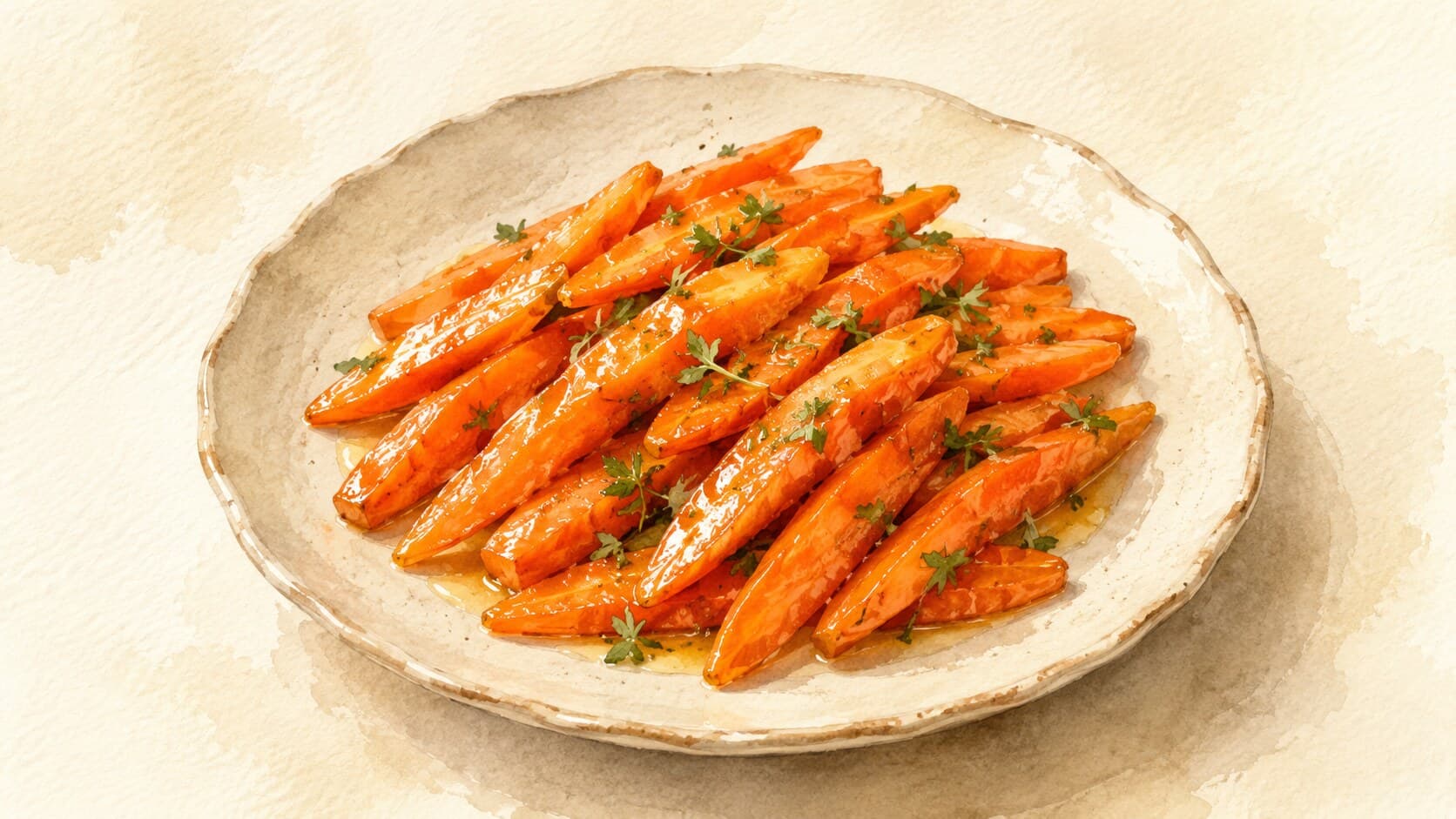
This Carrot Glaze recipe transforms simple carrots into a sweet and savory side dish with a glossy finish.
Contents (5 sections)▾
Ingredients
- 500 g carrots, peeled and cut into sticks
- 100 ml vegetable broth
- 50 g unsalted butter
- 2 tbsp brown sugar
- 1 tbsp soy sauce
- 1 tsp salt
- 1/2 tsp black pepper
- 1 tbsp chopped parsley, for garnish
Steps
In a large skillet, melt the butter over medium heat, about 2 minutes.
Add the carrots and sauté for 5 minutes, stirring occasionally to ensure even cooking.
Pour in the vegetable broth, brown sugar, soy sauce, salt, and black pepper. Stir well.
Increase the heat to medium-high and cook for an additional 8-10 minutes, allowing the liquid to reduce and glaze the carrots.
Once the carrots are tender and coated with a glossy glaze, remove from heat and garnish with chopped parsley.
Why this works
The technique of glazing involves cooking the carrots in a flavorful liquid until it reduces to a syrupy consistency. The use of butter adds richness, while the mixture of brown sugar and soy sauce creates a perfect balance of sweetness and umami. This glaze enhances the natural sweetness of the carrots, making them more appealing. If the glaze seems too thin, continue cooking on medium-high heat, allowing more liquid to evaporate. Conversely, if the glaze becomes too thick, you can add a splash of broth or water to loosen it. Sautéing the carrots initially helps to caramelize their sugars (brown them into a deeper, sweeter flavor), contributing to the overall flavor.
Common mistakes
Cutting the carrots unevenly.
Target: Pieces cut to a uniform size — sticks of the same thickness, or coins of the same width.
Why it matters: A glaze finishes all the pieces at the same moment, so they all need to reach tenderness together. Mix thick chunks with thin slivers and the thin ones turn to mush while the thick ones are still hard at the center — and by the time the thick pieces soften, the glaze has overcooked. Even cuts mean even cooking.
What to do: Take a moment to cut deliberately. If some pieces are unavoidably thicker, give them a head start in the pan before adding the thinner ones.
Boiling the liquid away too fast over high heat.
Target: A steady simmer that reduces the liquid in roughly the same time the carrots take to turn tender.
Why it matters: The whole trick of glazing is timing two things to finish together: the carrots becoming tender, and the liquid reducing to a syrup that coats them. Blast the heat and the water boils off before the carrots are cooked, leaving them raw and crunchy in a pan that's already going dry and threatening to scorch.
What to do: Keep it at a lively simmer, not a violent boil. If the liquid is nearly gone but the carrots are still firm, add a splash of water or broth and keep going until they're tender.
Letting the sugars scorch into bitterness at the end.
Target: Carrots pulled the moment the liquid becomes a glossy, clinging syrup, while it's still pale-amber and sweet-smelling.
Why it matters: As the last of the water evaporates, the sugar and butter left behind heat past the boiling point of water and start to caramelize (sugars browning under heat into deeper, nuttier flavor). A little is delicious; a few seconds too long and the sugars cross into burnt and acrid, and a thin film of butter-sugar can blacken on the pan in an instant.
What to do: Stay at the stove for the final minute. The moment the syrup coats the carrots in a shiny film, take the pan off the heat — it keeps cooking from residual warmth.
Drowning the carrots in too much liquid.
Target: Just enough liquid to come partway up the carrots — a shallow pool, not a full bath.
Why it matters: Glazing relies on a small amount of liquid reducing down to coat the vegetables. Too much liquid and you're really boiling the carrots; by the time it all reduces to a glaze, they've overcooked into softness and lost their fresh bite, and much of their flavor has leached into water you've now poured off or boiled down to nothing useful.
What to do: Start with a shallow amount. You can always add a splash more if the pan dries before the carrots are done — but you can't easily un-boil overcooked carrots.
What to look for
- A glossy, syrupy coating, not a watery pan: the liquid has reduced to a shiny glaze that clings to each piece and the carrots look lacquered. That sheen is the finished glaze; a thin, runny liquid means it needs more reduction.
- Carrots tender to a knife but not collapsing: the tip of a knife slides in with slight resistance, and the pieces hold their shape rather than falling apart. Tender-but-intact is the target; mushy means overcooked.
- The smell shifting from raw to sweet and buttery: the steam turns rich, sweet, and lightly caramelized rather than sharp and vegetal. That aroma signals the sugars are concentrating into glaze, not yet burning.
- Pale amber, never dark brown, on the syrup: the glaze is golden and glossy, not browning at the edges of the pan. Light amber is sweet; dark brown is the warning sign of scorching.
A note on history
Glazed carrots descend from the classic French technique called glacer — finishing vegetables in a shallow layer of liquid with butter and a little sugar until the liquid reduces to a glossy, lacquer-like coating (whats4eats). The closely related carottes à la Vichy appears in Escoffier's Le Guide Culinaire (1903), where the carrots cook in just enough liquid to nearly evaporate, then are tossed in the reduction so they shine (Mad About Macarons). The soy sauce in this version is a cross-cultural adaptation — swapping in an umami-rich seasoning for part of the classic salt — but the underlying reduce-to-a-glaze mechanism is straight out of the French repertoire.
Get the essays in your inbox — free
Weekly notes on flavor, fermentation, and food history — the writing behind the Atlas of Flavor. No spam; unsubscribe anytime.