
Caponata
Caponata is a traditional Sicilian sweet-sour eggplant dish that beautifully marries flavors and textures.
Contents (5 sections)▾
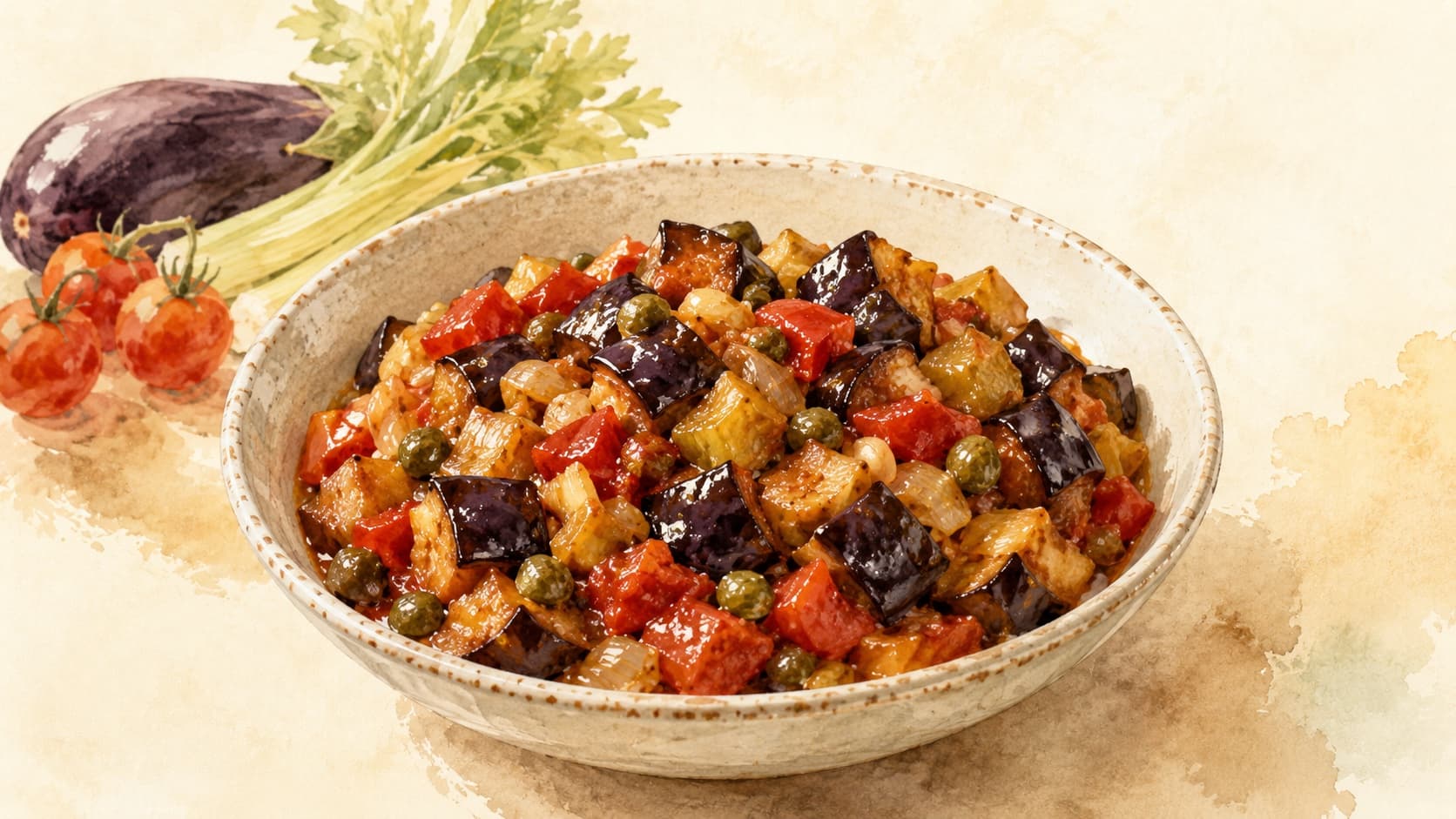
Ingredients
- 2 medium eggplants, diced
- 1 cup diced tomatoes (fresh or canned)
- 1 medium onion, finely chopped
- 2 celery stalks, diced
- 1/4 cup green olives, pitted and sliced
- 2 tbsp capers, rinsed
- 1/4 cup red wine vinegar
- 1/4 cup sugar
- Salt to taste
- Pepper to taste
- Olive oil for frying
- Fresh basil leaves for garnish
Steps
Heat olive oil in a large skillet over medium heat. Add the diced eggplant and sauté for about 5-7 minutes until golden brown and tender.
Add the chopped onion and celery to the skillet. Cook for an additional 5 minutes, stirring frequently, until the onion is translucent.
Stir in the diced tomatoes, olives, and capers. Cook for another 3-4 minutes, allowing the tomatoes to break down.
In a small bowl, whisk together the red wine vinegar and sugar until dissolved, then pour it into the skillet. Season with salt and pepper to taste.
Simmer the caponata for 10 minutes on low heat, stirring occasionally. This allows the flavors to meld together.
Remove from heat and let it cool. Caponata can be served warm or at room temperature, garnished with fresh basil.
Why this works
Caponata showcases the unique ability of eggplant to absorb flavors while also providing a meaty texture that makes it satisfying. The key to a successful caponata lies in balancing the sweet and sour elements, achieved through the combination of sugar and vinegar. This contrast enhances the overall depth of flavor. If the dish feels too acidic, adding a bit more sugar can help round it out; conversely, if it seems too sweet, a touch more vinegar will restore balance. The cooking process allows the eggplant to soften while the other ingredients contribute their distinct flavors, making each bite a delightful experience. Proper simmering helps integrate the flavors fully, so it’s important not to rush that step. Allowing it to cool also lets the flavors develop further, making it a perfect make-ahead dish to serve at gatherings or as a versatile condiment.
Common mistakes
Crowding the pan so the eggplant steams instead of browns.
Target: Eggplant cooked in a single uncrowded layer over medium-high heat until the cut faces are deep golden, working in batches if your pan is small.
Why it matters: Eggplant is mostly water held in a sponge-like cell structure. Pile it up and that water has nowhere to escape, so the pieces stew in their own steam, turn grey and slack, and never develop the browned, savory edge that gives caponata its backbone. Spread out, each surface hits the hot metal and undergoes the Maillard reaction (the browning of proteins and sugars under dry heat that builds roasted, nutty flavor).
What to do: Give the pieces room. If they release liquid and go pale, raise the heat and don't stir for a minute or two so the bottom faces can color before you move them.
Skimping on the salt-and-rest step (or skipping it).
Target: Diced eggplant tossed with salt and left to drain 20–30 minutes, then patted dry before it meets the oil.
Why it matters: Salt pulls water out of the eggplant by osmosis (water moving across the cell walls toward the saltier side) and collapses some of those air pockets. Drier, denser eggplant browns faster, soaks up less oil, and holds its shape in the finished dish instead of going to mush.
What to do: Salt the cubes in a colander, wait, then blot them firmly with a towel. If you're short on time, at least raise the heat and cook them longer to drive off the moisture.
Not cooking the vinegar's sharpness off — or drowning the dish in it.
Target: Vinegar and sugar added together, then simmered a few minutes until the raw, nose-stinging edge softens into a rounded sweet-sour (agrodolce) note.
Why it matters: Raw vinegar straight off the bottle reads as harsh and one-dimensional. A short simmer drives off the most volatile, pungent acetic-acid vapor and lets the acid and sugar marry into the balanced agrodolce that defines caponata. Too much acid and the dish bites; too little and it tastes flat and jammy.
What to do: Add the vinegar-sugar mix, let it bubble and reduce slightly, then taste. Adjust toward balance — a touch more sugar to tame acidity, a splash more vinegar to cut sweetness.
Serving it straight from the heat.
Target: Caponata rested at least a few hours, ideally overnight, and served at room temperature.
Why it matters: This is a dish that improves as it sits. Resting lets the salt, acid, and oil migrate evenly through every piece, and the flavors settle from a collection of separate ingredients into one rounded whole. Eaten hot off the stove, it tastes disjointed and sharp.
What to do: Make it ahead. Cool it, hold it covered, and bring it back to room temperature before serving.
What to look for
- Browned eggplant before anything else goes in: the cut faces are deep golden-brown, not grey, and the pieces feel tender but still hold their shape. This color is your flavor base — pale, watery eggplant cannot be rescued later.
- A glossy, just-bound mixture, not a watery one: the vegetables glisten with oil and reduced liquid that lightly coats them, with no thin puddle pooling at the edge of the pan. That gloss means the liquid has concentrated and the flavors have clung to the vegetables.
- The agrodolce smell at the balance point: the steam smells brightly sweet-and-sour but no longer stings your nose. When the raw vinegar fumes have mellowed, the acid has cooked into the dish.
- Texture contrast holding up: soft eggplant against the slight snap of celery and the pop of capers and olives. Caponata should never be a uniform purée — distinct pieces are the point.
A note on history
Caponata belongs to Sicily's agrodolce (sweet-and-sour) tradition, and its core ingredients reflect the island's layered history: eggplant arrived with Arab cultivation after the conquests of the 8th–9th centuries, and tomatoes came much later, introduced through Spain in the 1500s (Wikipedia; Sunbasket). The dish is documented from at least the 18th century, and its name has several competing explanations — among them the Latin caupo (tavern-keeper), since a version was served in fishermen's taverns, and the abundant capperi (capers) that grow wild across Sicily (PhilosoKitchen).
Get the essays in your inbox — free
Weekly notes on flavor, fermentation, and food history — the writing behind the Atlas of Flavor. No spam; unsubscribe anytime.