
Cabbage with Salt-Kombu
This quick and simple Cabbage with Salt-Kombu recipe elevates a common vegetable with umami-rich flavors, making it a perfect side dish.
Contents (5 sections)▾
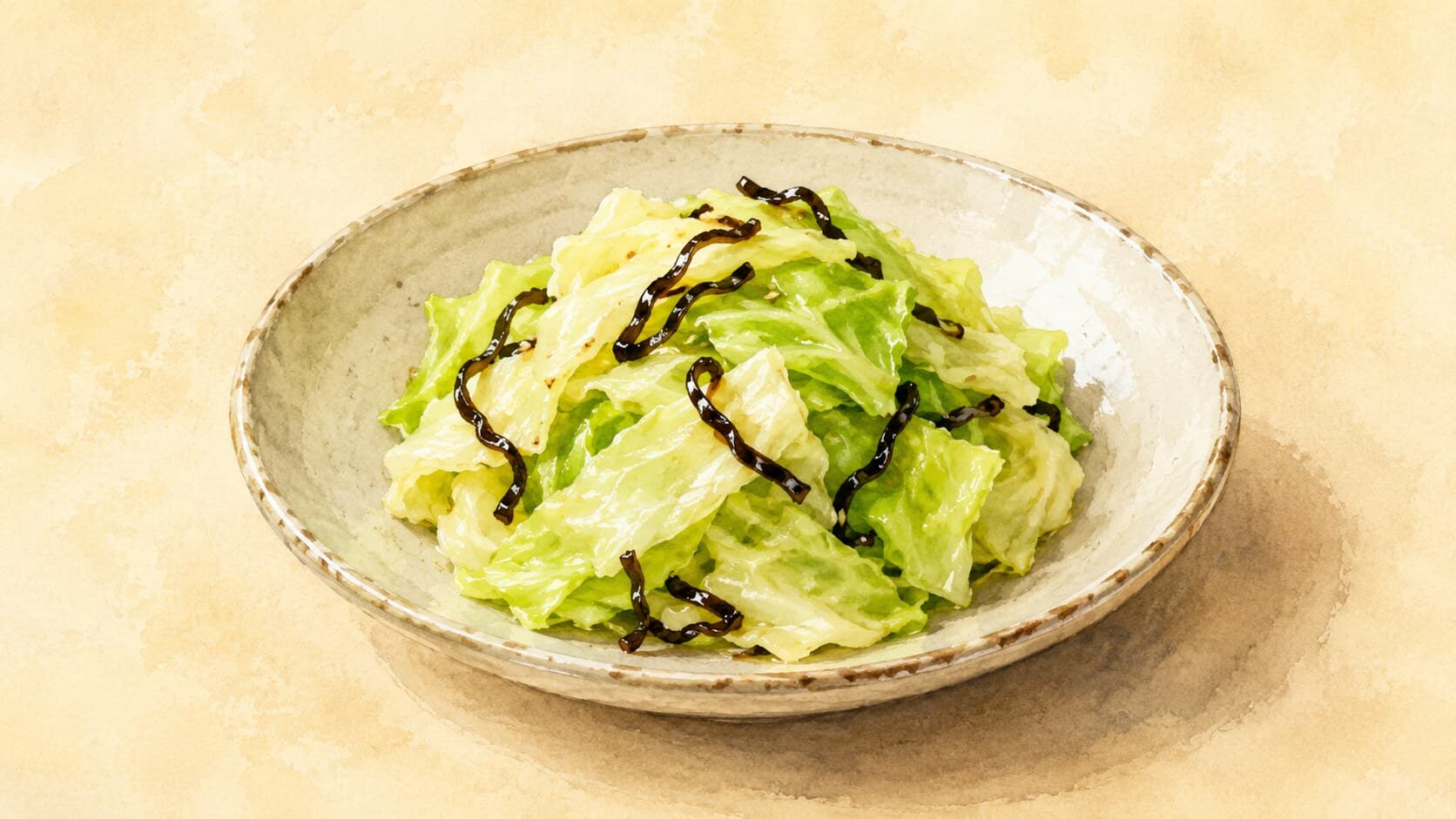
Ingredients
- 200 g green cabbage, finely shredded
- 20 g shio-kombu (salted kombu), chopped
- 1 tbsp sesame seeds, toasted
- 1 tsp soy sauce
- 1 tsp rice vinegar
- to taste: black pepper
Steps
In a large bowl, combine the finely shredded cabbage and chopped shio-kombu. Massage them together with your hands for about 2 minutes to soften the cabbage and infuse it with umami flavors.
Add soy sauce and rice vinegar to the cabbage mixture, then sprinkle with toasted sesame seeds. Toss the ingredients until evenly coated.
Let the mixture sit for an additional 3 minutes to allow the flavors to meld before serving. If the cabbage is too salty, add a little more vinegar or a splash of water to balance it out.
Why this works
The technique of massaging the cabbage with shio-kombu (salted kombu — a salty, savory kelp that carries the sea's umami) is crucial for infusing the vegetable with the kombu's rich umami flavor while also breaking down its cell walls, making it more tender. This process enhances the overall texture and taste of the dish. The addition of soy sauce and rice vinegar complements the saltiness of the shio-kombu and adds a refreshing tang that brightens the dish. If the cabbage seems too salty after mixing, you can rescue it by incorporating a bit more vinegar or water, which will help to balance the seasoning without compromising the dish's integrity. This quick method yields a flavorful side that pairs beautifully with a variety of mains, making it ideal for busy weeknights or when you're looking for something light yet satisfying.
Common mistakes
Cutting the cabbage too thick.
Target: Fine, even shreds — roughly 3–5 mm wide.
Why it matters: Salt and umami work by drawing moisture out of the cut surfaces of the cabbage (osmosis — water moving out of the cells toward the salt). Thick pieces have less surface area for their volume, so they stay stiff and raw-tasting and the shio-kombu (salted kombu — a salty, intensely savory kelp simmered until it concentrates the sea's umami) never penetrates. Thin shreds wilt evenly and absorb seasoning in minutes.
What to do: Stack a few leaves, roll or press them flat, and slice steadily. Discard the thick core or shave it very thin separately.
Skipping the massage, or massaging for ten seconds.
Target: A genuine 2 minutes of squeezing and folding until the cabbage visibly softens and beads with moisture.
Why it matters: The massage is the cooking. There is no heat here — the mechanical pressure plus the salt in the shio-kombu ruptures cell walls and starts the osmotic release that both tenderizes the cabbage and pulls the kombu's glutamate (the compound behind savory umami taste) onto every strand. Stop too soon and you have raw salted cabbage, not a marinated side.
What to do: Work it with your hands, not a spoon. You will feel the cabbage go from squeaky and rigid to limp and glossy — that change is the signal.
Drowning it in soy sauce.
Target: 1 tsp soy sauce as written — a seasoning accent, not the main salt.
Why it matters: Shio-kombu is already salt plus umami; it is doing the heavy lifting. Adding soy sauce as if the dish were unseasoned stacks salt on salt and flattens the kombu's subtler savory notes under a one-note saltiness.
What to do: Add the shio-kombu first, massage, taste, and only then decide whether the small spoon of soy sauce is needed at all. Let the rice vinegar's brightness, not more salt, be your adjustment lever.
Serving it the instant it is mixed — or hours too early.
Target: A 3–5 minute rest after seasoning, served the same day.
Why it matters: The flavors need a few minutes to meld as the released cabbage juice, salt, and umami redistribute. But left too long, osmosis keeps running: the cabbage weeps out water, goes floppy and over-salty, and loses its fresh snap.
What to do: Rest 3–5 minutes, then serve. If you must hold it, keep it cold and drain the accumulated liquid before serving so it does not turn watery and harsh.
What to look for
- The shreds before seasoning: pale, crisp, and dry-surfaced — they squeak when pressed. Even thin cuts mean even wilting later.
- During the massage: the cabbage darkens slightly, softens, and a thin film of moisture appears on your hands. That released liquid is the osmosis working — it carries the kombu's umami into the leaves.
- After the rest: limp but still springy, glossy with seasoning, a small pool of savory liquid at the bottom of the bowl. Tender, not mushy; seasoned through, not just on the surface.
- The seasoning balance: salt and savoriness arrive together, with a clean vinegar lift at the back. If salt dominates alone, add a few drops more rice vinegar rather than more soy.
A note on history
Shio-kombu belongs to the broader family of tsukudani — foods simmered in soy and seasonings until concentrated and shelf-stable — a tradition that took shape in Edo-period Japan (Wikipedia). Its home is Osaka: during the Edo period, kelp harvested in Hokkaido was carried south by the kitamae shipping routes to Osaka, which became the country's great kombu trading and processing hub — the "kitchen of the nation" (Osaka-Info). The familiar salt-bloomed style, simmered and dried until salt and glutamate crystallize on the surface, was developed by an Osaka kombu house in 1949 (Wikipedia).
Get the essays in your inbox — free
Weekly notes on flavor, fermentation, and food history — the writing behind the Atlas of Flavor. No spam; unsubscribe anytime.