
Bún Thịt Nướng
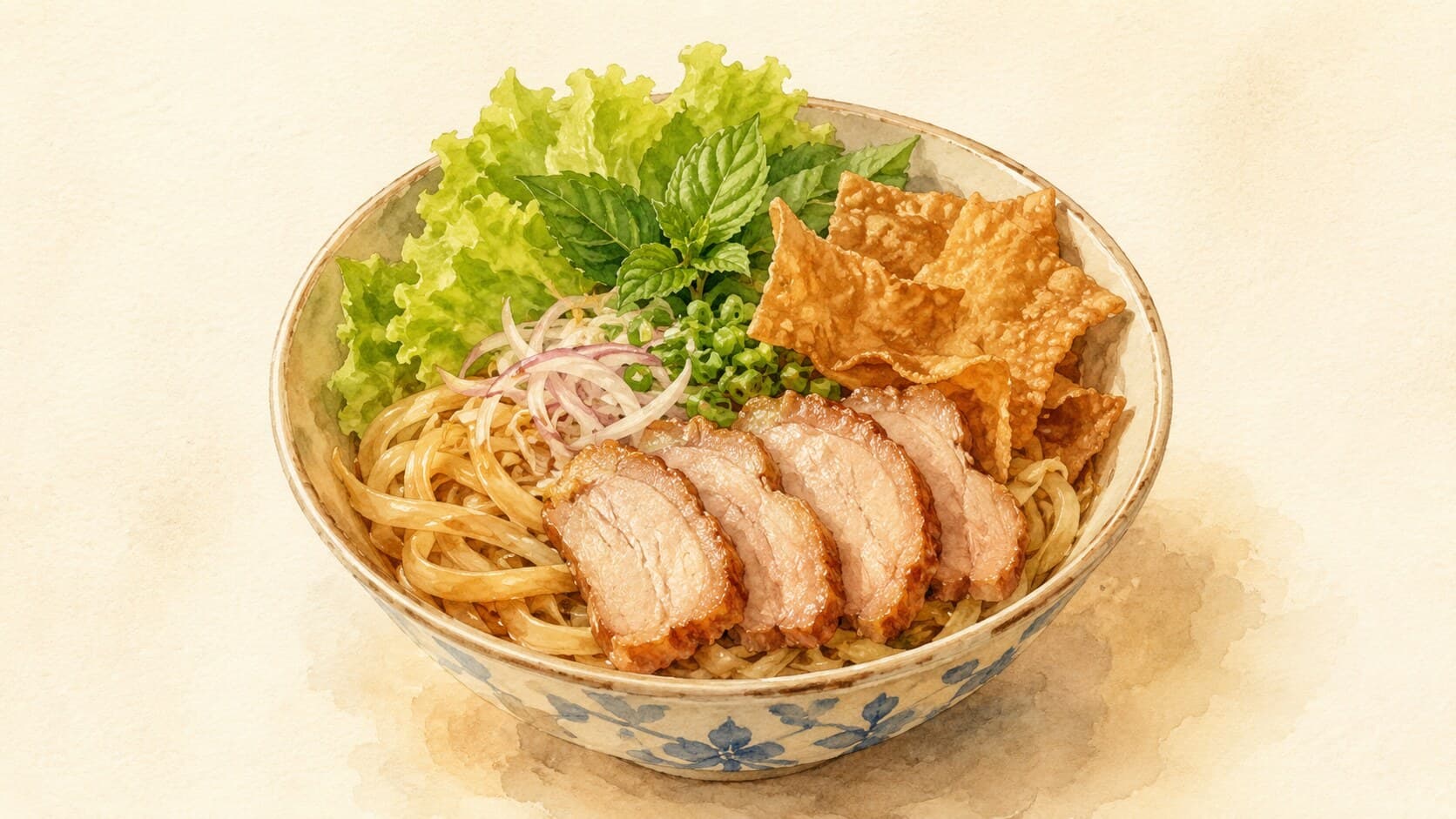
Enjoy a delicious bowl of Bún Thịt Nướng, featuring grilled pork, vermicelli noodles, and fresh herbs.
Contents (5 sections)▾
Ingredients
- 400 g pork shoulder, thinly sliced
- 200 g rice vermicelli noodles
- 3 tbsp fish sauce
- 2 tbsp sugar
- 1 tbsp soy sauce
- 2 cloves garlic, minced
- 1 tsp black pepper
- 1 tbsp vegetable oil
- 1 cup fresh herbs (coriander, mint, and basil)
- 1 cucumber, julienned
- 1 carrot, grated
- 2 tbsp crushed peanuts
- Nuoc Cham (dipping sauce) to taste
Steps
In a bowl, combine fish sauce, sugar, soy sauce, garlic, black pepper, and vegetable oil. Add the sliced pork and marinate for at least 15 minutes, allowing the flavors to penetrate the meat.
Preheat a grill or grill pan over medium-high heat. Once hot, grill the marinated pork slices for about 3-4 minutes per side until cooked through and slightly charred, enhancing the flavor.
Meanwhile, cook the rice vermicelli noodles according to package instructions, usually about 3-5 minutes in boiling water. Drain and rinse under cold water to stop the cooking process.
To assemble, place a portion of the noodles in a bowl, top with grilled pork, fresh herbs, cucumber, and carrot. Sprinkle with crushed peanuts for added texture.
Serve with Nuoc Cham on the side, allowing each person to drizzle it over their bowl to taste, enhancing the overall flavor.
Why this works
The key to a successful Bún Thịt Nướng lies in the marinade (the seasoned liquid the pork soaks in to take on flavor) and the grilling technique. The combination of fish sauce, sugar, and soy sauce provides a sweet and savory depth, while grilling caramelizes (browns the sugars into a richer, deeper flavor) the sugars, creating a delightful char that enhances flavor. The marinade should ideally be allowed to steep for at least 15 minutes, but if you find the pork slices too thick, consider slicing them thinner to better absorb the marinade. Cooking the rice vermicelli just until tender ensures they remain al dente, providing a pleasant texture that pairs well with the tender grilled pork. If the noodles seem too sticky after rinsing, a light drizzle of oil can help separate them. Serving the dish with fresh herbs and crunchy vegetables adds layers of flavor and freshness, balancing the rich grilled pork.
Common mistakes
Slicing the pork too thick, so it grills slowly and stays bland.
Target: Thin pieces, roughly 3–5 mm, even in thickness.
Why it matters: Thin slices grill fast over high heat, which is what lets the surface char before the inside dries out. They also carry far more of the marinade per bite — more cut surface means more salt and sugar in contact with the meat. Thick chunks sit on the grill long enough to toughen, yet taste of marinade only on the outside.
What to do: Slice across the grain (the visible muscle fibers) and, if the pork is hard to cut cleanly, firm it up in the freezer for 15 minutes first.
Skimping on sugar in the marinade — or skipping the char.
Target: Enough sugar that the marinade tastes distinctly sweet-salty, and a grill hot enough to leave real browned, slightly charred edges.
Why it matters: That browning is the Maillard reaction (the heat-driven reaction between sugars and proteins that builds roasted, savory flavor) plus caramelizing sugar. It's the smoky-sweet edge that defines bún thịt nướng and separates it from plain boiled pork. Too little sugar, or a cool pan, and you get grey, steamed meat with none of the signature aroma.
What to do: Keep the sugar in the marinade, get the grill or pan properly hot before the pork goes on, and don't crowd it — crowded meat steams in its own juices instead of searing.
Cooking the pork only until it "looks done" and stopping there.
Target: Pork cooked through — opaque all the way, no pink at the centre, 71°C / 160°F if you check.
Why it matters: These are thin slices over fierce heat, so the surface chars quickly and can look finished while a thicker piece is still raw inside. Pork should be cooked through for safety; the good news is that thin, well-charred slices reach that point in just a few minutes, with no loss of flavor.
What to do: Grill 3–4 minutes a side, check the thickest slice, and pull them as they finish rather than all at once.
Leaving the noodles in a sticky clump.
Target: Vermicelli cooked just to tender, then rinsed cold and well drained so the strands separate.
Why it matters: Hot rice vermicelli keeps cooking on its own heat and its surface starch turns gluey as it cools. A cold rinse stops the cooking and washes off that loose starch, so the noodles stay loose and springy under the warm pork instead of fusing into a paste.
What to do: Drain, rinse under cold water until the strands feel clean, drain again thoroughly, and loosen with your fingers (a few drops of oil help) before building the bowls.
What to look for
- The pork as it leaves the grill: glossy, deep brown, with charred edges and a savory-sweet smell. Pale and wet means the heat was too low or the pan too crowded.
- A cut through the thickest slice: opaque all the way through, juices running clear, no pink. That's your signal it's cooked through and safe.
- The drained noodles: separate, springy strands you can lift in a loose nest. A sticky clump means they needed a better cold rinse.
- The assembled bowl after a splash of nước chấm: everything lightly glistening, herbs still bright and crisp. Wilted, sauce-logged herbs mean it was dressed too early — add the sauce at the table.
A note on history
Bún thịt nướng — rice vermicelli topped with grilled pork, fresh herbs, pickled vegetables and crushed peanuts, served with nước chấm — is a dish of southern Vietnam (Bún thịt nướng, Wikipedia). It's the southern cousin of the northern bún chả from Hanoi, which serves grilled pork and patties in a bowl of dipping sauce rather than over a heaped bowl of noodles and herbs (Bún chả, Wikipedia). The marinade is often built on lemongrass and fish sauce, and the dish is typically assembled by the eater, who pours the sauce over to taste.
Get the essays in your inbox — free
Weekly notes on flavor, fermentation, and food history — the writing behind the Atlas of Flavor. No spam; unsubscribe anytime.