
Bún Riêu
Bún Riêu is a delicious Vietnamese dish featuring rice vermicelli in a flavorful tomato-crab broth.
Contents (5 sections)▾
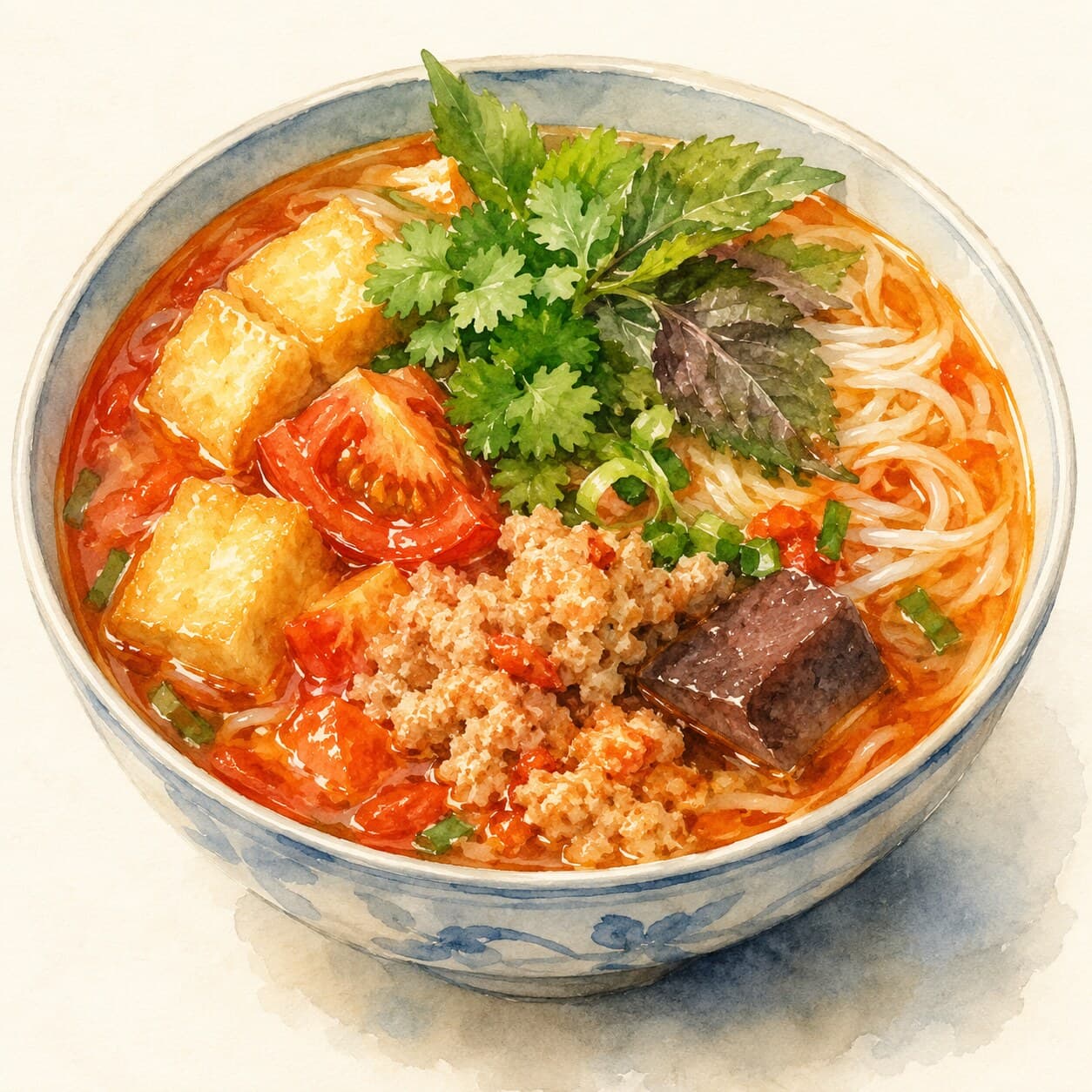
Ingredients
- 200 g rice vermicelli
- 150 g freshwater crab paste
- 300 g ripe tomatoes, chopped
- 200 g tofu, cubed
- 1 tbsp mắm tôm (shrimp paste, optional)
- 200 g water spinach, chopped
- 100 g banana blossom, sliced
- 1 liter water
- Salt to taste
- Black pepper to taste
Steps
Soak the rice vermicelli in warm water for about 15 minutes until softened, then drain and set aside.
In a pot, bring 1 liter of water to a boil over medium heat. Add the chopped tomatoes and cook for 5 minutes until they soften.
Add the freshwater crab paste to the boiling tomato mixture, stirring gently to allow it to curdle into rieu clouds. Continue to simmer for 5 minutes.
Introduce the cubed tofu, and let it cook for an additional 3 minutes. If using mắm tôm, add it at this stage for enhanced flavor.
Season the broth with salt and black pepper to taste, then add the water spinach and banana blossom. Cook for another 2 minutes until the greens are tender.
To serve, place a portion of the soaked rice vermicelli in a bowl and ladle the hot broth with rieu clouds on top.
Why this works
The technique of using freshwater crab paste is essential for creating the iconic 'rieu' clouds in the broth. As the crab paste heats up, it curdles, forming delicate white flecks that float in the rich tomato base, contributing to the flavor and the texture. The combination of fresh tomatoes and crab enhances the umami (the deep savory taste — the meaty, brothy richness) profile of the broth, creating depth. If the broth appears too thick, you can adjust it by adding more water to reach your desired consistency. The balance between the sweet and tangy flavors of the tomatoes and the briny essence of the crab paste generates a unique taste experience. Additionally, integrating water spinach and banana blossom adds freshness and crunch, rounding out the dish perfectly. Be careful not to overcook the vegetables; they should retain some bite for optimal texture.
Common mistakes
Stirring too hard or boiling too fast once the crab paste goes in.
Target: Add the crab paste to a gently boiling broth, stir just once or twice to distribute it, then let the pot sit mostly undisturbed at a bare simmer.
Why it matters: The prized "riêu" clouds (the soft curds that form when the crab's proteins coagulate, much the way an egg sets when poached) need gentle, still heat to clump together; vigorous stirring or a hard boil breaks them into small, grainy bits and muddies the broth instead of leaving clean curds floating in a clear one.
What to do: Stir gently just to spread the paste through the pot, then leave it alone at a low simmer for a few minutes so the curds can rise to the surface and set.
Adding the crab before the tomato base is developed.
Target: Let the chopped tomatoes cook down until they collapse into a jammy, slightly thickened base before the crab paste goes in.
Why it matters: The tomato base carries most of the broth's seasoning under the delicate crab curds; if it's underdeveloped, the finished broth tastes thin and watery no matter how much crab or salt is added afterward, since there's no body for those flavors to sit on.
What to do: Simmer the tomatoes on their own first, mashing them lightly as they soften, and build the rest of the soup only once they've broken down.
Overcooking the water spinach and banana blossom (the sliced flower bud of the banana plant).
Target: Add these greens last and cook them for only a minute or two, until just wilted.
Why it matters: Both are meant to keep a little crunch for contrast against the soft noodles and curds; cooked too long, they turn drab, grey, and limp, losing the fresh, slightly bitter edge they're meant to contribute.
What to do: Have them washed and ready before the broth is finished, stir them in during the final couple of minutes, and take the pot off the heat as soon as they wilt.
Misjudging the mắm tôm (fermented shrimp paste).
Target: Add it in small amounts, tasting as you go — it's meant to round out the broth in the background, not dominate it.
Why it matters: In concentrated form, mắm tôm is intensely pungent and salty; too much overwhelms the balance between tomato sweetness and crab brininess that defines the broth, while skipping it, if the rest of the recipe is built expecting it, can leave the broth tasting a little flat.
What to do: Stir in a small spoonful, taste, and add more only if the broth still seems to want a deeper savory note.
What to look for
- Loose, soft curds of crab floating distinctly in a clear, orange-red broth rather than a uniformly cloudy soup — that separation is the sign the paste was added gently.
- A broth that tastes rounded — tomato sweetness plus briny depth — rather than sharp, salty, or watery on its own.
- Water spinach and banana blossom that still have a slight bite and a bright green color, not faded or mushy.
- Rice vermicelli that's tender but still holds separate strands, not clumped or overly soft.
A note on history
Bún riêu traces back to northern Vietnam's rice-growing regions, where freshwater rice-paddy crabs (cua đồng) were an easy, everyday ingredient long before refrigeration or packaged stock existed. The traditional method was to hand-pound the live crabs, strain out the shells, and cook the extracted crab liquid until its proteins rose to the surface as the soft curds that give the dish its name — riêu. As the dish spread beyond the north, cooks added tomatoes, tofu, and regional touches like mắm tôm to round it out, and today crab paste is a common shortcut for the labor-intensive hand-pounding. Many food writers consider bún riêu one of Vietnam's older noodle soups, a home-style dish built from what the rice paddies made freely available, well before dishes like phở became internationally known.
Get the essays in your inbox — free
Weekly notes on flavor, fermentation, and food history — the writing behind the Atlas of Flavor. No spam; unsubscribe anytime.