
Brandade de Morue
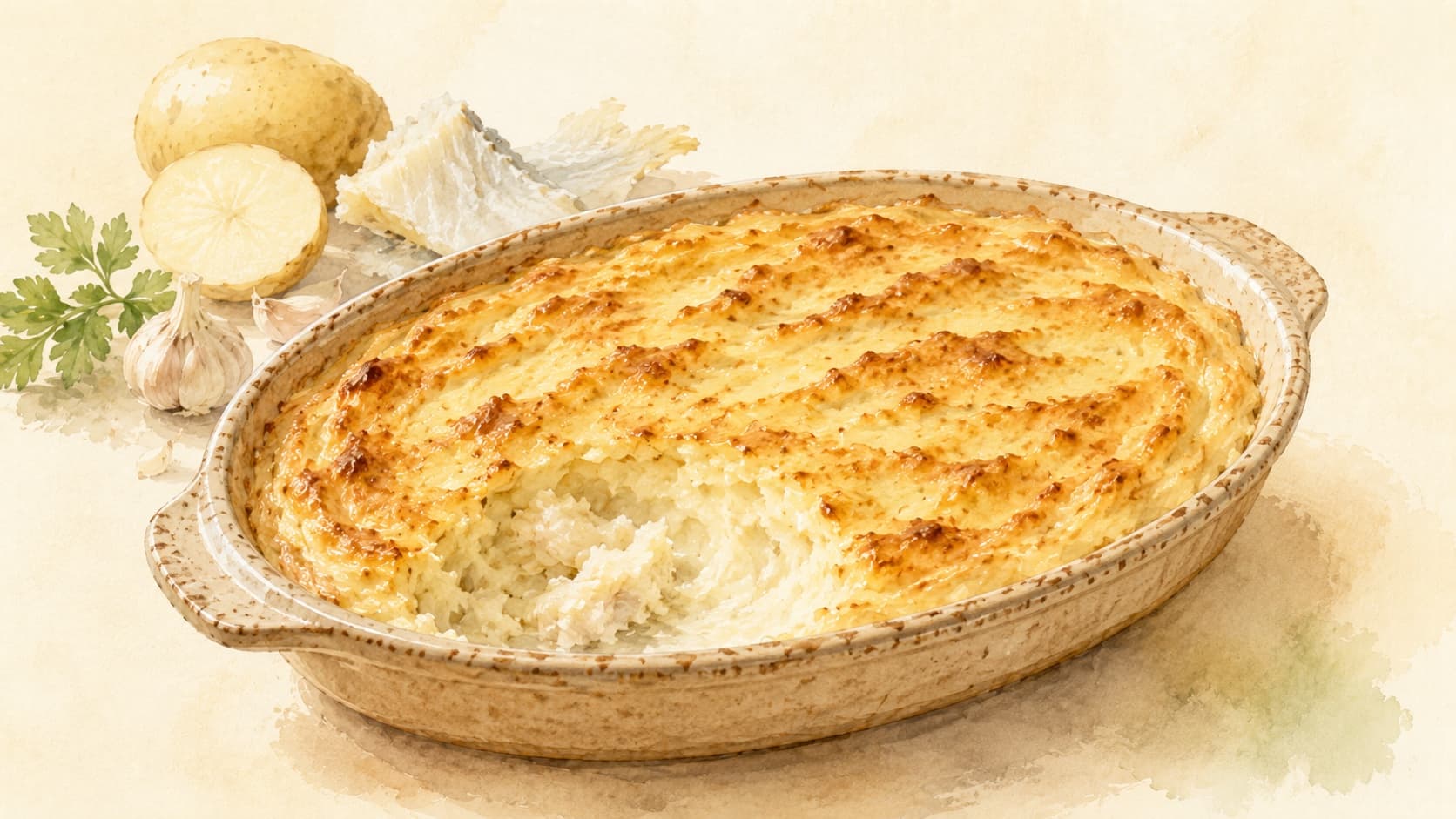
Brandade de Morue is a creamy emulsion of salt cod and potatoes, embodying the flavors of Provence.
Contents (5 sections)▾
Ingredients
- 250 g salt cod, soaked and desalted
- 300 g potatoes, peeled and diced
- 100 ml olive oil
- 50 ml milk
- 2 cloves garlic, minced
- 1 tbsp lemon juice
- Salt, to taste
- Black pepper, to taste
- Fresh parsley, for garnish
Steps
Begin by soaking the salt cod in cold water for 24 hours, changing the water several times to remove excess salt.
In a large pot, add the diced potatoes and cover with water. Bring to a boil and cook for about 15 minutes until tender.
While the potatoes are cooking, place the soaked salt cod in a separate pot and cover with fresh water. Bring to a simmer for about 10 minutes.
Drain the potatoes and salt cod, then transfer them to a mixing bowl. Add minced garlic, olive oil, milk, lemon juice, and season with salt and black pepper.
Using a hand mixer or a potato masher, blend the mixture until smooth and creamy. Adjust seasoning if necessary.
If the emulsion seems too thick, add a bit more olive oil or milk to achieve desired consistency.
Serve warm, garnished with chopped fresh parsley.
Why this works
The technique of emulsion (fat and liquid beaten together into one smooth, creamy mixture) in Brandade de Morue allows for a creamy and luscious texture that beautifully combines the flavors of salted cod (cod preserved by packing it in salt until hard and dry) and potatoes. The key is in the balance of ingredients: the oil contributes richness while the milk ensures a smooth consistency. The garlic adds flavor and enhances the overall aroma of the dish. If the emulsion breaks and separates, it may appear greasy; to rescue it, gradually whisk in a tablespoon of warm milk or water until it comes back together. This dish is typically served warm, making it a comforting main course, perfect for gathering and sharing. Understanding the importance of soaking the salt cod is crucial, as it rehydrates the fish and helps control the saltiness, which can overwhelm the dish if not managed properly. By following these steps, you can achieve a delightful blend that showcases the essence of Provençal cuisine.
Common mistakes
Under-soaking the salt cod. Target: Soak the salt cod in cold water for 24–48 hours in the refrigerator, changing the water 3–4 times. Why it matters: Salt cod is preserved by drawing nearly all the water out with salt; it is intensely salty and rock-hard. The soak does two jobs — it rehydrates the flesh so it can be flaked and whipped, and it pulls salt back out by diffusion (salt moving from the salty fish into the fresher water until they even out). Skip it or rush it and the dish is inedibly salty and the texture stays tough. What to do: Soak in the fridge, not on the counter, and change the water each time it tastes strongly of salt. Taste a small piece of the poached cod before seasoning — if it's still very salty, it needed longer.
Boiling the cod hard instead of poaching it. Target: A bare simmer — small bubbles barely breaking the surface — for about 10 minutes, until the fish flakes; never a rolling boil. Why it matters: Fish protein sets and tightens with heat. A hard boil seizes the flesh, squeezes out moisture, and turns it stringy, so it will never whip into a smooth emulsion (a stable, creamy blend of fat and liquid). A gentle poach cooks it through while keeping it tender enough to break down. What to do: Bring the water just to a simmer, slip the cod in, and hold it there. The fish is done when it flakes apart easily — cooked through, not raw.
Breaking the emulsion with cold oil or oil added too fast. Target: Warm the olive oil and milk, and add them gradually while the potato-and-cod mixture is still hot. Why it matters: Brandade is an emulsion held together by the starch from warm potato and the gelatin from the fish. Cold fat poured into a cooling mixture seizes and splits, leaving a greasy, grainy paste instead of a silky one. Heat and gradual addition let the fat disperse into tiny suspended droplets. What to do: Keep everything warm, add the oil in a thin stream while stirring, and alternate with splashes of warm milk. If it does split, whisk in a tablespoon of warm milk to bring it back.
Whipping it in a food processor until it turns to glue. Target: Mash or beat by hand, or pulse only briefly; stop while it still has a little texture. Why it matters: Potato cells are full of starch. Over-working them — especially with a high-speed blade — ruptures the cells and releases free starch, turning the mixture gluey and elastic, like wallpaper paste. The fish flakes and potato should bind, not become a paste. What to do: Use a potato masher, fork, or wooden spoon, or a few short pulses at most. The moment it's smooth and cohesive, stop.
What to look for
- Soaked salt cod: the flesh is plump, pliable, and a small poached piece tastes pleasantly salty — not harsh — desalting is complete. A piece that's still brick-hard or mouth-puckeringly salty needs more soaking.
- Poached cod: it flakes cleanly along its natural lines with gentle pressure — cooked through and tender. Flesh that's rubbery or resists flaking was boiled too hard.
- Finished texture: spreadably smooth and glossy, holding soft peaks like thick mashed potato — the emulsion is right. Oily pooling at the edges or a grainy look means it has split.
- The garlic: present as a warm background aroma, not a raw bite — balanced. A sharp, hot raw-garlic sting means too much, or it was added too late to mellow.
A note on history
Brandade de morue is a specialty of Nîmes in the Languedoc region, and its name comes from the Occitan brandado, "something stirred" — a direct description of the technique of beating salt cod, olive oil, and milk into a purée (Wikipedia; 196 flavors). The dish is tied to the region's salt trade: Nîmes sits near Aigues-Mortes, France's primary salt port in the 18th century, where cod fishermen offloaded their dried catch and traded it for salt (Regions of France). The refined version is usually dated to the late 18th century in Nîmes and was popularized in the 19th century by the chef Durand (Behind the French Menu).
Get the essays in your inbox — free
Weekly notes on flavor, fermentation, and food history — the writing behind the Atlas of Flavor. No spam; unsubscribe anytime.