
Bouillabaisse
This traditional French bouillabaisse features a rich broth filled with assorted Mediterranean seafood.
Contents (5 sections)▾
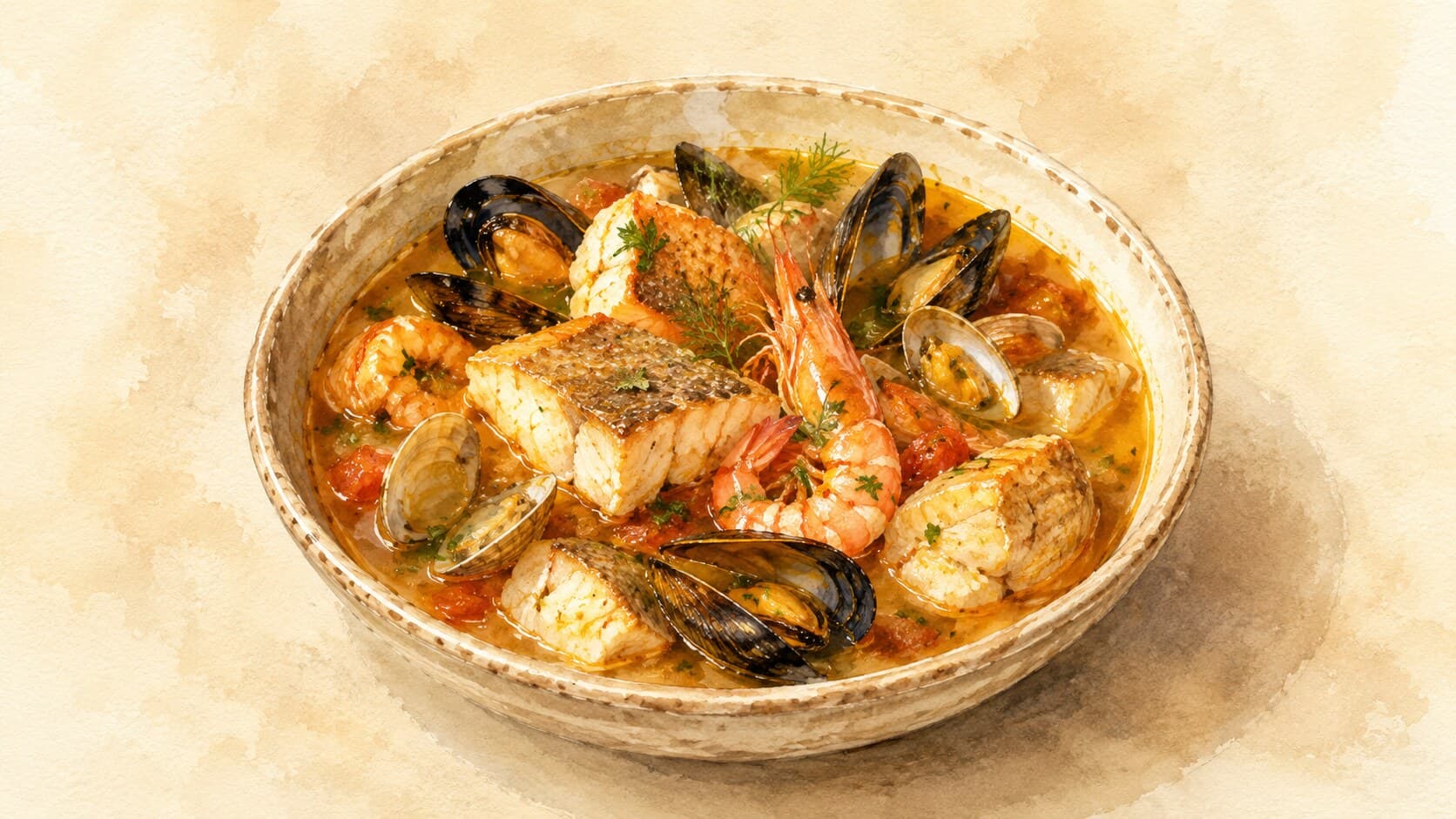
Ingredients
- 1 liter fish stock
- 300 g white fish fillets (e.g., cod, snapper), cut into chunks
- 200 g mussels, cleaned and debearded
- 200 g shrimp, peeled and deveined
- 150 g clams, cleaned
- 2 medium tomatoes, diced
- 1 medium onion, finely chopped
- 2 cloves garlic, minced
- 1 tsp saffron threads
- 1/2 tsp dried thyme
- 1/4 tsp black pepper
- 2 tbsp olive oil
- salt to taste
- 1/4 cup fresh parsley, chopped
- rouille sauce, for serving
Steps
Heat the olive oil in a large pot over medium heat, then sauté the onion and garlic for about 5 minutes until soft and fragrant.
Add the diced tomatoes, thyme, saffron, and black pepper to the pot, cooking for an additional 5 minutes to create a flavorful base.
Pour in the fish stock and bring the mixture to a gentle simmer for 10 minutes, allowing the flavors to meld.
Add the white fish chunks to the pot and cook for 5 minutes, ensuring the fish is cooked through but not overdone; overcooking can lead to a rubbery texture.
Gently stir in the mussels, shrimp, and clams, cooking for another 5-7 minutes until the shellfish open and the shrimp turn pink.
Taste and adjust seasoning with salt if necessary. Serve hot, garnished with fresh parsley and accompanied by rouille sauce.
Why this works
Bouillabaisse showcases the art of layering flavors, beginning with a base of aromatic sautéed onions and garlic. The addition of tomatoes brings acidity that balances the richness of the seafood. Saffron, a hallmark spice of this dish, infuses the broth with its distinctive color and flavor. The key to successful bouillabaisse is in timing; overcooking the seafood can lead to a tough texture. If the seafood seems too rubbery, remember that it may have been cooked too long. Always add delicate ingredients like shrimp and mussels towards the end of cooking to preserve their natural tenderness. This technique allows the broth to absorb their essence while keeping the seafood moist and succulent. The rouille sauce, a traditional garlicky mayonnaise, complements the dish perfectly, enhancing each spoonful of the broth.
Common mistakes
Building the broth on water instead of a real fish base. Target: A broth made from fish stock (water simmered with fish bones, heads, and aromatics until savory) — never plain water. Why it matters: Bouillabaisse is a broth dish first and a seafood dish second. The body and savor come from gelatin and dissolved proteins that bones release during the stock stage; water alone leaves the bowl thin and watery no matter how good the fish is. What to do: Start with a proper fish stock, or simmer the shrimp shells and any fish trimmings in the stock for 15 minutes and strain before the soup stage. That single step is the difference between a stew and a soup with depth.
Adding all the seafood at once. Target: Firm white fish first (about 5 minutes), then mussels, clams, and shrimp for the final 5–7 minutes — staggered by how long each takes to cook through. Why it matters: Each item cooks at a different rate. Shrimp and clams are done in minutes; thick fish needs longer. Dumped in together, the fast items turn rubbery (their proteins contract and squeeze out moisture) before the fish is safe to eat. What to do: Add by cook time, not convenience. Pull the pot off heat the moment the clams and mussels open and the shrimp turn opaque — carryover heat finishes them.
Treating saffron like a pinch of color. Target: Bloom the saffron (steep the threads in a little warm broth to release color and aroma) for 5–10 minutes before it goes in. Why it matters: Saffron's color and flavor compounds are water-soluble but slow to release. Added dry at the end, most of its cost stays locked in the threads. Blooming first pulls the aroma into the liquid where you can taste it. What to do: Ladle a few tablespoons of warm broth over the threads, let them steep, then stir the whole steeped liquid into the pot.
Letting shellfish that never opened onto the plate. Target: Every mussel and clam open after cooking; discard any that stay shut. Why it matters: A shellfish that stays closed after proper cooking may have been dead before it hit the pot, and dead shellfish spoil fast — a real food-safety risk, not just a texture issue. What to do: Scrub and de-beard mussels, discard any that are already gaping and won't close when tapped, and after cooking throw out any that remain sealed.
What to look for
- Broth before the seafood goes in: it coats the back of a spoon and smells savory, not just of tomato — the stock has body. A broth that tastes only of tomato and water needs more reduction or a better base.
- Saffron broth: warm gold-orange, not pale yellow — the threads have released their color. Pale liquid means the saffron hasn't bloomed yet.
- Fish doneness: the flesh turns from translucent to opaque and just flakes when nudged — cooked through but still moist. Flesh that resists and dries into firm threads has gone too far.
- Shellfish doneness: mussels and clams gape fully open, shrimp curl into a loose C and turn pink-opaque — all the way cooked. A tight, tight curl means overdone and tough.
A note on history
Bouillabaisse began as a working dish of Marseille fishermen, who simmered the bony rockfish they couldn't sell in seawater over a fire on the beach — the etymology preserves the method, from the Provençal bolhir (to boil) and abaissar (to lower the heat, i.e. simmer) (Wikipedia; Marseille Tourism). Its roots reach back to the Greeks who founded Marseille in the 7th century BC and their fish soup kakavia (Perfectly Provence). What began as a poor man's meal reached the wider French table in the 18th century, when it appeared on the menu of the Parisian restaurant Les Frères Provençaux (French Waterways).
Get the essays in your inbox — free
Weekly notes on flavor, fermentation, and food history — the writing behind the Atlas of Flavor. No spam; unsubscribe anytime.