
Boeuf Bourguignon
Classic French Boeuf Bourguignon, a rich beef stew braised in red wine with vegetables.
Contents (5 sections)▾
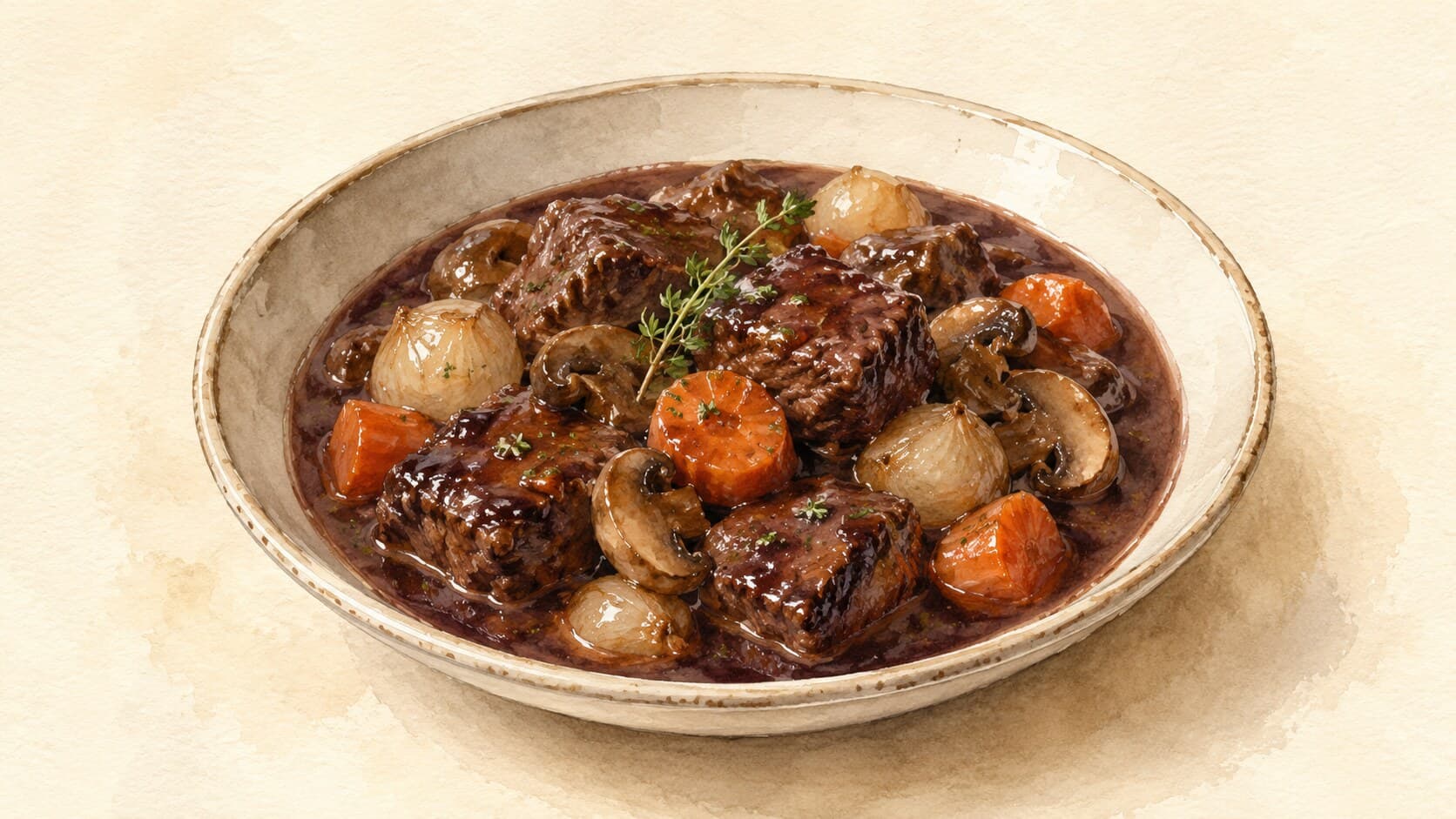
Ingredients
- 1 kg beef chuck, cut into 5 cm cubes
- 750 ml red wine (preferably Burgundy)
- 2 cups beef stock
- 200 g pearl onions, peeled
- 2 medium carrots, sliced
- 200 g button mushrooms, quartered
- 4 cloves garlic, minced
- 3 tbsp tomato paste
- 4 tbsp olive oil
- 2 tbsp all-purpose flour
- 1 bouquet garni (thyme, bay leaf, parsley)
- Salt to taste
- Black pepper to taste
Steps
Preheat your oven to 160°C (320°F). This low and slow cooking method allows the flavors to meld beautifully.
In a large Dutch oven, heat 2 tablespoons of olive oil over medium-high heat. Brown the beef cubes in batches, ensuring they are nicely seared on all sides. This step develops a deep flavor through the Maillard reaction.
Remove the beef and set it aside. In the same pot, add the pearl onions, carrots, and mushrooms. Sauté for about 5 minutes until they start to soften.
Stir in the garlic and cook for an additional minute. Then, add the tomato paste and flour, cooking for 2 more minutes to eliminate the raw flour taste.
Return the beef to the pot, pour in the red wine and beef stock, and add the bouquet garni. Bring to a simmer.
Cover the pot and transfer it to the preheated oven. Braise for 2.5 to 3 hours, or until the beef is tender. Check occasionally and add water if the liquid level gets too low.
Once done, taste and adjust seasoning with salt and pepper if necessary. If the sauce seems too thin, simmer uncovered on the stovetop until it thickens.
Why this works
Boeuf Bourguignon is a classic example of braising, where tough cuts of beef are transformed into tender morsels through slow cooking in liquid. The initial browning of the meat creates a rich, savory base that enhances the stew's flavor. Using a good quality red wine adds depth and contributes acidity, which helps to tenderize the meat during cooking. The addition of vegetables like pearl onions and carrots, along with the bouquet garni, infuses the dish with aromatic elements. If the sauce becomes too thin after cooking, simply remove the lid and simmer on the stovetop to reduce it to your desired consistency. This method ensures that your stew will be luxuriously thick and rich, embodying the essence of French cuisine. If, however, you find the sauce too thick, you can add a splash of beef stock or water to balance it out, maintaining the perfect consistency for serving. The result is a hearty, flavorful dish that reflects the essence of French culinary tradition.
Common mistakes
Choosing a lean cut to "keep it healthy."
Target: Use a well-marbled, collagen-rich braising cut like chuck; avoid lean cuts such as sirloin or round.
Why it matters: The whole point of a braise (slow cooking in liquid) is to melt the tough connective tissue — collagen — into gelatin, the substance that makes the meat meltingly tender and gives the sauce its glossy body. Lean cuts have little collagen, so hours in the pot leave them dry and stringy instead of silky.
What to do: Ask for chuck or "stewing beef" and keep the fat and sinew on; that is what becomes tenderness and richness over the long cook.
Crowding the pot and steaming the meat instead of browning it.
Target: Pat the cubes dry, then sear in batches in a single layer until deeply browned on several sides.
Why it matters: A wet, crowded pan can't get above the boiling point of water, so the beef greys and weeps rather than browning. That brown crust — the Maillard reaction (the savory browning of meat) — and the fond (the browned film left on the pot) are the foundation of the stew's deep flavor.
What to do: Dry the meat well, brown it in two or three batches with space between the cubes, and set each batch aside. Don't rush to fit it all in at once.
Leaving the flour and tomato paste raw.
Target: Cook the flour and tomato paste with the vegetables for about 2 minutes before adding liquid.
Why it matters: Raw flour tastes pasty and raw tomato paste tastes sharp and tinny. A short cook toasts the flour (so the sauce thickens cleanly) and caramelizes the paste into something deep and sweet-savory.
What to do: Stir them in over the heat until the flour smells nutty and the paste darkens a shade, then pour in the wine and stock and scrape up the fond.
Boiling the braise hard instead of barely simmering it.
Target: Keep the liquid at a bare simmer — an occasional lazy bubble — in a low 160 °C / 320 °F oven; the beef should reach fall-apart tender (well past 90 °C internal), which for a braise is correct and safe.
Why it matters: A rolling boil drives the muscle fibers to contract and toughen faster than the collagen can melt, so the meat turns dry and stringy even while submerged. Gentle heat lets the connective tissue dissolve slowly into tenderness.
What to do: Bring it up on the stove, then move it to a low oven (steadier than a stovetop flame) and check that it's only just trembling, not churning. Give it the full 2.5–3 hours.
What to look for
- A dark, even crust on the seared beef and a brown film on the pot. Deep browning before any liquid goes in is your flavor base; pale, grey cubes mean the pan was too cool or too crowded.
- Tomato paste that has darkened from bright red to brick, smelling sweet rather than sharp. That color shift signals the raw edge has cooked off and the paste is ready for the wine.
- A surface that barely shivers, with only an occasional bubble. That lazy movement is the sign of a true braise; a steady boil with bubbles breaking all over means the heat is too high — lower it.
- Meat that yields when pressed and a sauce that lightly coats a spoon. When a cube gives way to gentle pressure and the liquid has thickened enough to leave a trail on the back of a spoon, it's done; thin, watery sauce wants a few minutes of uncovered simmering to reduce.
A note on history
Boeuf bourguignon began as humble country cooking in Burgundy, where slow braising stretched cheaper, tougher cuts of beef into a nourishing meal. It entered the formal record relatively late: Auguste Escoffier set down a version in his 1903 Le Guide Culinaire, bringing the rustic stew into haute cuisine, and the familiar diced-meat home version was popularized for English-speaking cooks decades later through Julia Child's 1961 Mastering the Art of French Cooking (Gambero Rosso; Tasting History).
Get the essays in your inbox — free
Weekly notes on flavor, fermentation, and food history — the writing behind the Atlas of Flavor. No spam; unsubscribe anytime.