
Bò Lúc Lắc (Vietnamese Shaking Beef)
Bò Lúc Lắc is a Vietnamese stir-fry of tender beef cubes and vegetables, seasoned with a savory sauce, often served with rice.
Contents (5 sections)▾
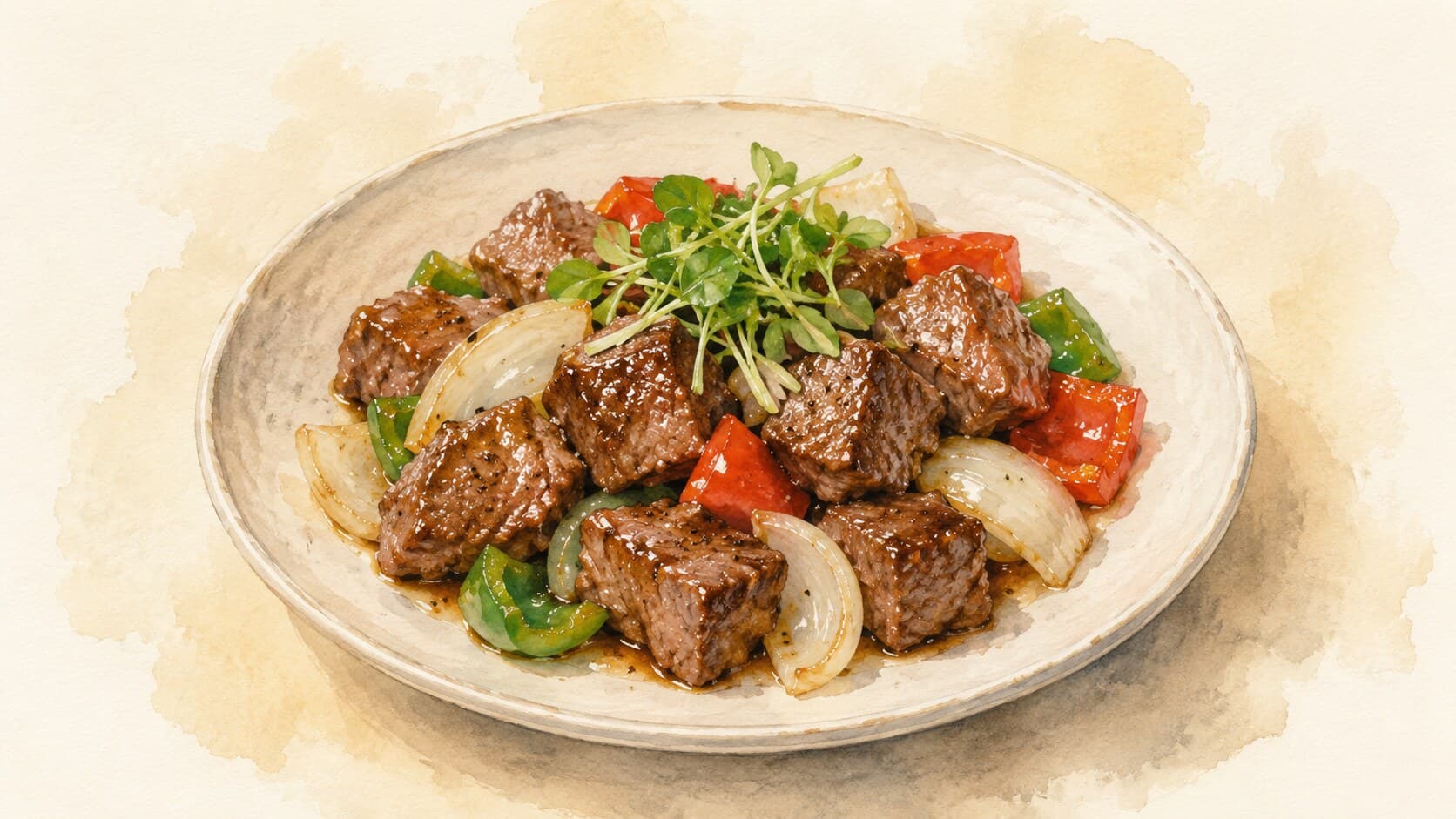
Ingredients
- 500 g beef sirloin, cut into 2 cm cubes
- 1 tbsp vegetable oil
- 1 red bell pepper, sliced
- 1 onion, sliced
- 3 cloves garlic, minced
- 2 tbsp soy sauce
- 1 tbsp fish sauce
- 1 tbsp oyster sauce
- 1 tsp black pepper
- 1 tsp sugar
- Cooked rice, for serving
Steps
Heat the vegetable oil in a wok over high heat until shimmering, about 2 minutes. This temperature ensures the beef sears quickly, creating a rich flavor.
Add the beef cubes to the hot wok in a single layer and sear for 2 minutes without stirring. This allows for better caramelization.
Stir-fry the beef for an additional 3 minutes until browned and cooked to your desired doneness. Remove the beef and set aside.
In the same wok, add garlic, onion, and red bell pepper, stir-frying for about 2-3 minutes until fragrant and slightly softened.
Return the beef to the wok, then add soy sauce, fish sauce, oyster sauce, black pepper, and sugar. Toss everything together, cooking for another 2 minutes to coat the ingredients evenly.
Serve hot over cooked rice and enjoy your Bò Lúc Lắc!
Why this works
The high-heat cooking technique employed in this Bò Lúc Lắc recipe is crucial for achieving a delicious sear on the beef (a quick, hot browning of the surface), which develops a deeply browned crust and enhances the overall flavor. Searing the beef in a single layer allows for better caramelization, while the quick stir-frying of vegetables ensures they remain crisp yet tender. The combination of soy sauce, fish sauce, and oyster sauce creates a complex glaze that brings depth to the dish. If the beef seems too tough, consider slicing it thinner next time or marinating it briefly in a mixture of soy sauce and sugar to help tenderize it. The quick cooking process keeps the dish vibrant and fresh while ensuring all ingredients are well-integrated.
Common mistakes
Crowding the wok with all the beef at once.
Target: Sear in 1–2 batches, each in a single uncrowded layer; the cubes should sizzle loudly, not stew.
Why it matters: A wok holds a fixed amount of heat. Pile in 500 g of cold beef and the metal cools, the meat releases water, and instead of browning it simmers gray in its own juice — you lose the savory crust (the Maillard reaction, the browning that builds roasted, meaty flavor) that defines the dish.
What to do: Get the oil shimmering-hot, add half the beef, leave it untouched for the first sear, then push it up the side or remove it before the next batch. Combine everything only at the glazing step.
Stirring constantly instead of shaking.
Target: Let each face sit 30–60 seconds, then shake/toss the pan to roll the cubes onto a fresh side.
Why it matters: Lúc lắc means "shaking" — the technique exists because beef only browns where it rests still against hot metal. Constant poking lifts the meat off the heat before a crust can form, and you end up with steamed cubes.
What to do: Think in flips, not stirs. Sear one side, shake once, sear the next. A few firm shakes of the wok do the turning for you.
Cooking the cubes until well done.
Target: Pull tender cuts at a safe-but-juicy medium — an internal 63 °C / 145 °F with a 3-minute rest reads done while staying pink and tender.
Why it matters: These are bite-size cubes of a quick-cooking cut. Beyond medium the muscle fibers tighten and squeeze out moisture, turning expensive sirloin chewy and dry. (Note: this safe-medium target applies to whole-muscle beef cubes only — never to ground beef, which must reach 71 °C / 160 °F throughout.)
What to do: Sear hard for color, then check early with an instant-read thermometer. Remember the beef keeps cooking for a minute after it leaves the pan, and gets a final warm-through when you toss it back with the sauce.
Adding the sauce too early, over high heat.
Target: Build the glaze in the last 1–2 minutes, tossing just until it coats and turns glossy.
Why it matters: Soy, fish, and oyster sauce are full of sugars and amino acids. Held too long over a roaring wok they scorch into bitterness instead of reducing into a clean, shiny glaze.
What to do: Return the beef and vegetables, pour the sauces around the edge so they hit the hot metal and reduce fast, then toss for under two minutes and serve.
What to look for
- A loud, steady sizzle when the beef hits the wok. Silence or a dull hiss means the oil isn't hot enough yet — the meat will leak water and stew. Wait for a shimmer and a wisp of smoke before adding the first batch.
- A deep brown crust on at least two faces of each cube. That browning is your flavor; pale gray cubes were crowded or flipped too soon. Color first, sauce second.
- Peppers and onion that bend but still snap. They should soften at the edges and pick up a little char while staying crisp in the center — limp, watery vegetables mean the heat dropped or they cooked too long.
- A glaze that clings to the cubes and sheets off the spoon. When the sauce goes from watery to glossy and coats the back of a spoon, it's reduced enough. A puddle in the bottom of the wok means it needs another 30 seconds.
A note on history
Bò lúc lắc is a child of the French colonial period in Vietnam: beef was scarcely eaten before the French arrived in the 19th century, and cubing a tougher, cheaper cut to feed more people made the once-luxury meat go further. The dish stayed largely a restaurant preparation rather than a home one, and its name simply describes the cooking action — lúc lắc means "to shake," for the way the cubes are tossed in the pan (Wikipedia; Hungry Huy).
Get the essays in your inbox — free
Weekly notes on flavor, fermentation, and food history — the writing behind the Atlas of Flavor. No spam; unsubscribe anytime.