
Beef Fajitas
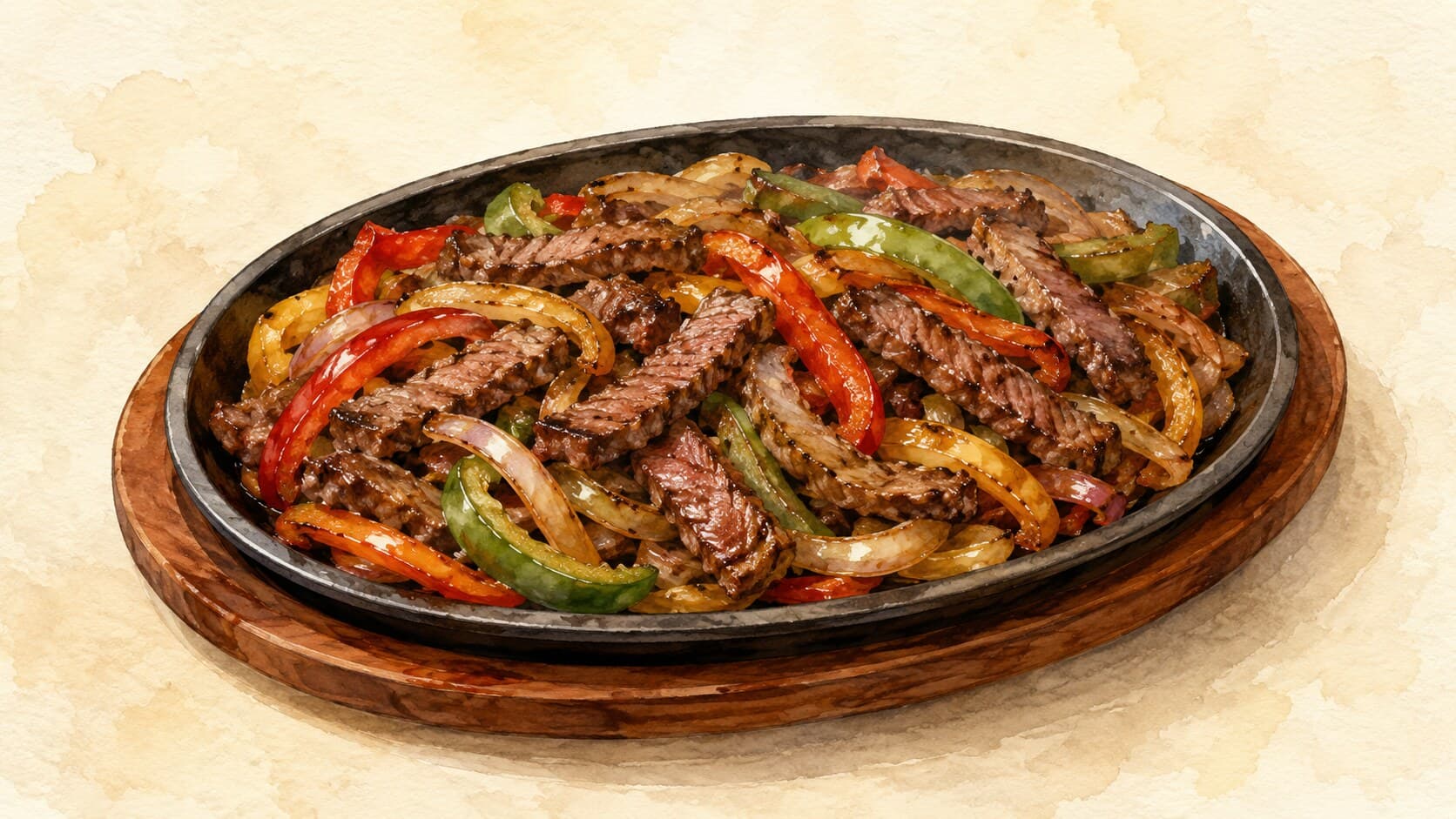
Beef fajitas consist of marinated beef strips seared and sautéed with bell peppers and onions, served in tortillas.
Contents (5 sections)▾
Ingredients
- 500 g beef sirloin, sliced into thin strips
- 2 tbsp olive oil
- 1 tbsp lime juice
- 1 tsp ground cumin
- 1 tsp smoked paprika
- 1 tsp garlic powder
- 1 tsp onion powder
- 1 tsp salt
- 1 bell pepper (red or green), sliced
- 1 medium onion, sliced
- 4 flour tortillas
- to taste: fresh cilantro, lime wedges
Steps
In a bowl, combine olive oil, lime juice, cumin, smoked paprika, garlic powder, onion powder, and salt. Add the beef strips and marinate for at least 15 minutes.
Heat a cast-iron skillet over high heat until it starts to smoke, about 5 minutes. This high-heat sear creates a delicious crust on the beef.
Add the marinated beef to the skillet in a single layer. Sear for 2-3 minutes without stirring to develop a good crust.
Stir in the sliced bell pepper and onion, cooking for another 5 minutes until the vegetables are tender and the beef is cooked to your desired doneness.
Warm the flour tortillas in a separate pan or microwave for 30 seconds, then serve the beef and vegetables wrapped in them, garnished with cilantro and lime wedges.
Why this works
The key to achieving perfect beef fajitas lies in the marination process and the high-heat sear. Marinating the beef infuses it with flavor from the spices and lime juice and helps to tenderize the meat. The acid from lime juice breaks down proteins, making the beef more tender. Additionally, cooking at high heat in a cast-iron skillet creates a beautiful brown crust, enhancing the overall flavor through the Maillard reaction (the browning of meat over high heat that builds deep, savory flavor). If the beef seems too tough after cooking, it may have been overcooked; letting it rest briefly before slicing keeps it from being cut at its hottest, and slicing thin across the grain does more for tenderness. Using fresh vegetables like bell peppers and onions adds texture and sweetness, balancing the savory beef. Wrapping the mixture in warm tortillas makes for a delightful handheld meal, perfect for sharing on weekends. The vibrant colors and sizzling presentation make this dish a feast for both the eyes and the palate.
Common mistakes
Searing the beef straight from the marinade, still dripping wet.
Target: Lift the strips out and let surface liquid drip off (a quick pat helps) before they hit the pan.
Why it matters: A wet surface has to boil off all its water before it can brown, and while that water evaporates it cools the pan and the meat steams grey instead of searing (browning hard and fast over high heat). Drier meat browns on contact, building the savory crust this dish depends on.
What to do: Let excess marinade run off. Add the strips in a single layer and leave them alone for the first minute.
Piling all the beef into the pan at once.
Target: A single layer with space between strips; cook in two batches if needed.
Why it matters: Cold meat crowded together drops the pan temperature fast, and the released juices pool and simmer the beef. You lose the crust and the strips turn out grey and steamed. Working in batches keeps the surface hot enough to sear.
What to do: If the strips overlap, split into two rounds. Get the pan fully hot again between batches.
Cooking the beef and the vegetables until everything is soft and grey.
Target: Sear the beef quickly to a crust and cook it through, then cook the peppers and onions just until crisp-tender.
Why it matters: Thin strips go from juicy to dry in moments once past doneness, and peppers collapse into mush if cooked as long as a stew. The appeal of fajitas is contrast — seared, fully cooked meat against still-vibrant vegetables with a little bite.
What to do: Cook the beef through — for whole-muscle beef the safe minimum is a measured 63 °C / 145 °F followed by a rest of at least 3 minutes, and a little pink can remain once it reaches that — then keep the vegetables moving over high heat just until they soften at the edges but still hold shape.
Slicing the cooked beef along the grain.
Target: Cut across the grain — perpendicular to the long muscle fibers you can see running through the meat.
Why it matters: Beef muscle is made of long fibers; slicing along them leaves them full-length and chewy, while cutting across them shortens every fiber so each bite gives way easily. Same meat, far more tender result.
What to do: Look for the lines running through the strip and draw the knife at a right angle to them. (If you started with whole steak, this matters even more.)
What to look for
- The pan is hot enough that the beef hisses sharply the instant it lands — confirms it will sear rather than steam. A quiet pan means wait, or the strips will go grey.
- A deep brown crust forms on the seared side before you stir — that browning is the Maillard flavor; lift a strip to check it before turning.
- The beef is seared and cooked through — for a whole cut like this the safety check is a thermometer reading of 63 °C / 145 °F followed by a rest of at least 3 minutes, not the colour; some pink can remain once it has reached temperature. Clear juices and colour are doneness cues, not the safety test.
- Peppers and onions are glossy and softened at the edges but still hold their shape — crisp-tender, the point to stop; limp and colorless means they've gone too far.
A note on history
Fajitas trace to the ranch lands of South and West Texas in the 1930s, where skirt steak — then considered a tough, throwaway cut — was given as part of the pay to Mexican vaqueros (cowboys) working the cattle drives (Wikipedia, Austin Chronicle). They grilled the meat over open fire and sliced it thin across the grain to make it tender. The name comes from the Spanish faja, "belt" or "sash," describing the long, narrow skirt-steak cut; the dish stayed a regional specialty until Texas restaurants put it on their menus in the 1970s (Wikipedia).
Get the essays in your inbox — free
Weekly notes on flavor, fermentation, and food history — the writing behind the Atlas of Flavor. No spam; unsubscribe anytime.