
Batata Harra
Batata Harra is a Lebanese side dish of roasted potato cubes seasoned with garlic, cilantro, and chili for a spicy flavor profile.
Contents (5 sections)▾
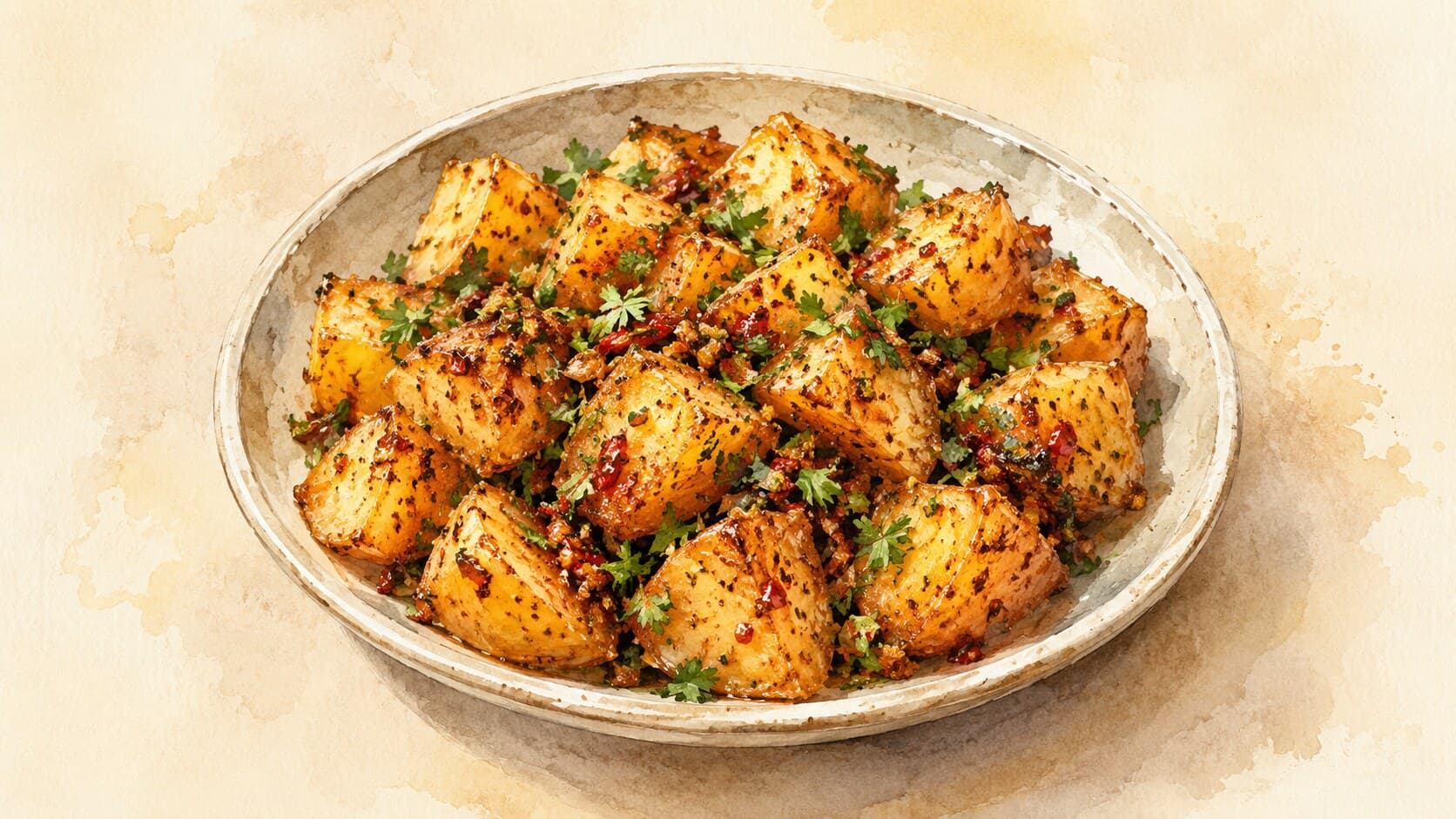
Ingredients
- 800 g potatoes, diced into 1 cm cubes
- 4 tbsp olive oil
- 3 cloves garlic, minced
- 1 tsp ground cumin
- 1 tsp ground coriander
- 1-2 tsp chili powder, to taste
- 1/2 tsp salt
- 1/4 cup fresh cilantro, chopped
- 1 lemon, cut into wedges
Steps
Preheat your oven to 200°C (400°F) to ensure a hot cooking environment for crispy potatoes.
In a large bowl, combine the diced potatoes with olive oil, minced garlic, cumin, coriander, chili powder, and salt. Toss well to coat evenly.
Spread the seasoned potato cubes in a single layer on a baking sheet lined with parchment paper. This will help them roast evenly.
Roast in the preheated oven for 15 minutes, flipping halfway through to encourage browning and ensure all sides are crispy.
Once golden and crispy, remove the potatoes from the oven, and immediately stir in the chopped cilantro for a fresh flavor burst.
Serve hot with lemon wedges on the side for an added zesty kick.
Why this works
The key to achieving perfectly roasted batata harra lies in the balance of heat and the right preparation method. Preheating the oven ensures that the potatoes start cooking immediately, promoting crispy exteriors while keeping the insides fluffy. The olive oil aids in roasting, adds flavor, and helps the spices adhere to the potatoes. If your potatoes seem too soft or have not browned as expected, make sure they are spread out on the baking sheet in a single layer; overcrowding traps steam and inhibits crispiness. The combination of garlic, cumin, coriander, and chili creates an aromatic spice blend that complements the natural sweetness of the potatoes. Adding cilantro at the end preserves its fresh flavor and vibrant color. This ensures that you have a delicious, well-balanced mezze side that perfectly accompanies various Lebanese dishes.
Common mistakes
Crowding the potatoes on the baking sheet.
Target: A single, well-spaced layer with a little gap around each cube.
Why it matters: Potatoes release a lot of steam (water vapor) as they cook. When they're packed tight, that steam has nowhere to go, so it surrounds the cubes and they essentially steam instead of roast — soft, pale, never crisp. Space lets the moisture escape so the surfaces dry out and brown.
What to do: Use a bigger sheet, or split across two. If they're touching, they're too close.
Skimping on oil or tossing it unevenly.
Target: Every cube lightly but fully coated before it goes in the oven.
Why it matters: Oil conducts heat onto the potato surface far better than air alone, which is what drives crisping; it also carries the fat-soluble flavor of the cumin and chili onto the potato. A dry or patchy cube browns unevenly and tastes flat where the spice never stuck.
What to do: Toss thoroughly in the bowl until the cubes look glossy all over before spreading them out.
Adding the cilantro before or during roasting.
Target: Stir the fresh cilantro in at the very end, off the heat.
Why it matters: Cilantro's aroma lives in delicate volatile oils that the oven's dry heat drives off and scorches in minutes, leaving a bitter, blackened herb and none of the fresh lift. Added at the end, it stays green and fragrant.
What to do: Keep the chopped cilantro aside. Fold it through the hot potatoes just before serving.
Pulling them out while still soft "to be safe."
Target: Roast until the edges are genuinely golden and crisp, flipping once partway.
Why it matters: The browning is where the flavor is — that golden crust is roasted starch and sugar, not just color. Undercooked cubes are gummy and bland, and flipping ensures the down-facing side, which sits in its own steam, also gets a chance to crisp.
What to do: Flip halfway through and judge by the edges. Wait for real color before they come out.
What to look for
- The cubes sizzle quietly and steam rises freely from a spaced-out sheet — confirms they're roasting, not stewing in trapped moisture. A silent, wet-looking sheet means they're crowded.
- Edges and corners turn deep golden-brown — the corners crisp first; that color is your doneness cue for the whole batch.
- The surface looks dry and crisp, not wet or glossy with released liquid — dry surface means the steam escaped and the crust set.
- A cube gives a faint crunch on the outside but is fluffy inside when you bite or press it — the target contrast of crisp shell and soft center.
A note on history
Batata harra — Arabic for "spicy potatoes" (batata, potato; harra, hot/spicy) — is a vegetable dish from the Levant, most often associated with Lebanon and Syria, where it is a staple of the meze (a spread of small shared dishes) table (196 Flavors, Chef Tariq). The word batata itself comes from Portuguese: Portuguese traders helped bring the potato from the New World into the region, and the name traveled with the plant (Urban Farm and Kitchen). It is traditionally built from potatoes, garlic, coriander (cilantro), and chili fried together in olive oil (196 Flavors).
Get the essays in your inbox — free
Weekly notes on flavor, fermentation, and food history — the writing behind the Atlas of Flavor. No spam; unsubscribe anytime.