
Bagna Cauda
Bagna Cauda is an Italian dip made from garlic, anchovies, and olive oil, served warm with fresh vegetables for dipping.
Contents (5 sections)▾
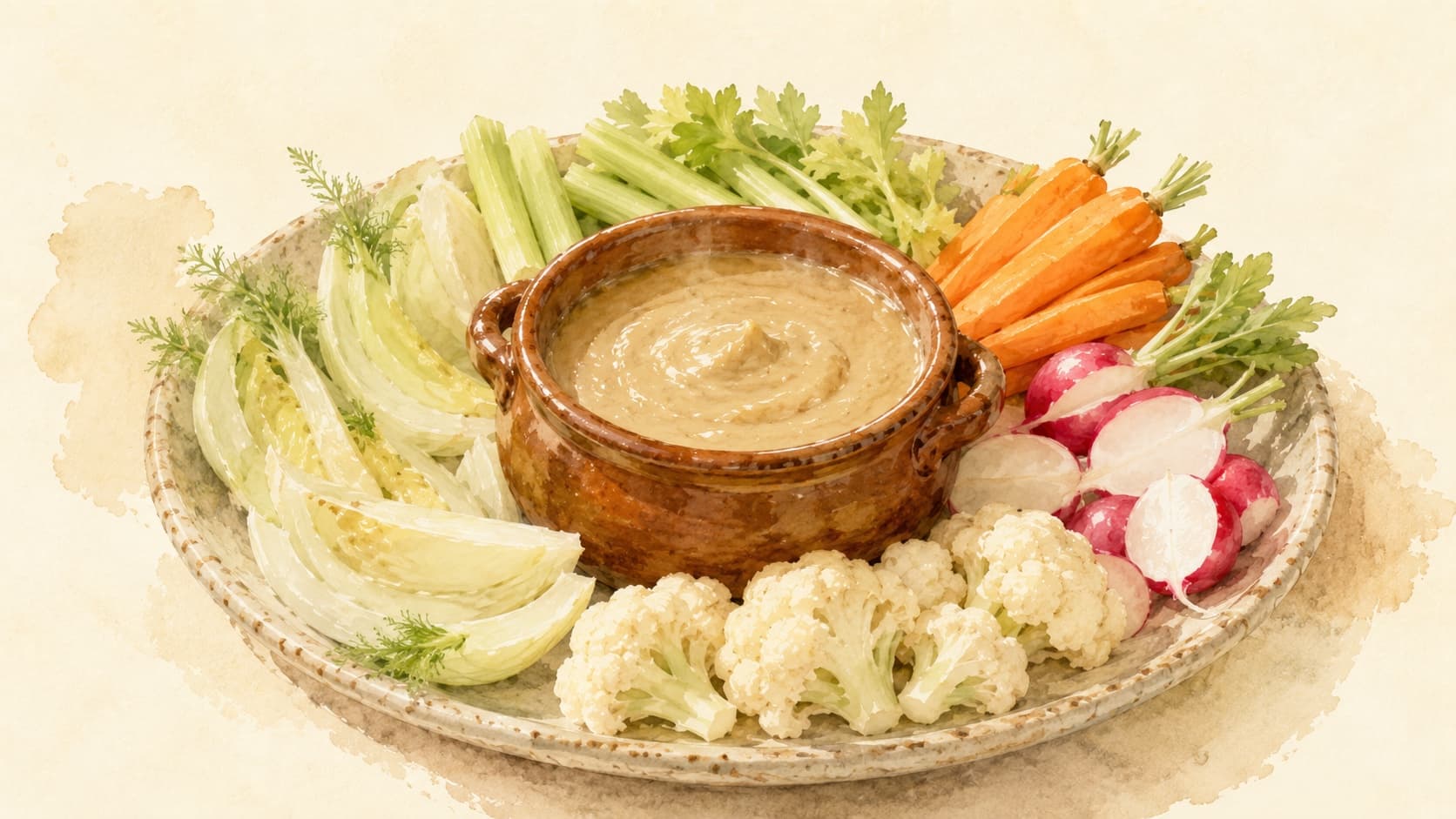
Ingredients
- 6 clove(s) garlic, peeled
- 8 anchovy fillets, packed in oil
- 200 ml olive oil
- 100 ml butter
- black pepper, to taste
- assorted fresh vegetables, for dipping (e.g., bell peppers, carrots, celery)
Steps
In a saucepan over low heat, combine the garlic cloves and olive oil, cooking gently for about 10 minutes until the garlic is softened but not browned.
Add the anchovy fillets to the saucepan, stirring them into the oil until they dissolve completely, about 5 minutes.
Stir in the butter until melted and fully incorporated, then season with black pepper to taste.
Transfer the mixture to a serving bowl and serve warm with assorted fresh vegetables for dipping.
Why this works
The essence of Bagna Cauda lies in the harmonious blend of garlic and anchovies (small salt-cured fish that melt into a deep savory flavor), creating a rich umami (the savory, mouth-filling "fifth taste") base. Cooking garlic gently in olive oil prevents it from becoming bitter, while the low heat allows the flavors to infuse without burning. If the oil seems too thick, thin it out with a little more warm olive oil; conversely, if it appears too runny, let it simmer a minute longer to emulsify (whisk fat and liquid into one smooth, unified sauce). The butter adds creaminess, balancing the pungency of the anchovies. This dip is meant to be enjoyed warm, which enhances the aromatic qualities, making it a perfect winter appetizer. Just ensure to keep it warm during serving for the best experience.
Common mistakes
Browning the garlic.
Target: Garlic poached (cooked gently submerged in liquid or oil that never boils) soft and pale in the oil over low heat — never colored.
Why it matters: The whole point of cooking the garlic gently is to tame its raw sharpness while keeping it sweet. The moment it takes on brown edges it turns bitter and acrid, and that bitterness carries straight through the finished dip.
What to do: Keep the heat genuinely low and the garlic submerged in the oil. If you see any color starting, pull the pan off the heat immediately and let it coast.
Letting it boil or fry instead of barely simmering.
Target: The gentlest possible heat — the oil should shimmer, not bubble hard.
Why it matters: Bagna cauda is an emulsion of oil, butter, and the proteins from the anchovies. A hard boil overheats the fat, scorches the solids, and breaks the sauce so the oil separates out and pools.
What to do: Cook low and slow throughout. If the mix looks oily and split, take it off the heat and stir in a little warm olive oil to bring it back together.
Not dissolving the anchovies fully.
Target: Anchovies melted completely into the oil, leaving no visible fillets.
Why it matters: Anchovies are the umami backbone here. Left in pieces, they give salty bursts in some bites and nothing in others instead of the even, savory depth the dip is built on.
What to do: Stir patiently over low heat and press the fillets against the pan; they break down into the oil within a few minutes.
Serving it cold, or letting it cool at the table.
Target: Served and kept warm throughout the meal.
Why it matters: Bagna càuda literally means "hot bath." As it cools, the butter and oil thicken and congeal, the aroma fades, and it stops clinging to the vegetables.
What to do: Bring it to the table warm and set it over a small flame or warmer so it stays fluid while you dip.
What to look for
- Garlic in the oil: soft, pale, and yielding — no brown edges. It should smell sweet and mellow, not sharp or scorched.
- After the anchovies go in: the fillets dissolve into a smooth, cloudy oil with a deep savory smell and no solid pieces left.
- The finished dip: warm, fluid, lightly thickened, and unified — the oil and butter glossy together rather than separated into a clear layer.
- At the table: still warm and pourable, coating a dipped vegetable in a thin even film. If it turns thick and greasy, it has cooled too far.
A note on history
Bagna càuda — Piedmontese for "hot bath" — is a communal winter dish from the Piedmont region of northwest Italy, traditionally shared by farmers and winemakers around a warm pot. Its anchovies, surprising for a landlocked region, reflect old trade ties between Piedmont and the coast under the historic Duchy of Savoy. It remains so central to northern Italian food culture that it is celebrated each November on Bagna Cauda Day.
Get the essays in your inbox — free
Weekly notes on flavor, fermentation, and food history — the writing behind the Atlas of Flavor. No spam; unsubscribe anytime.