
Aglio e Olio
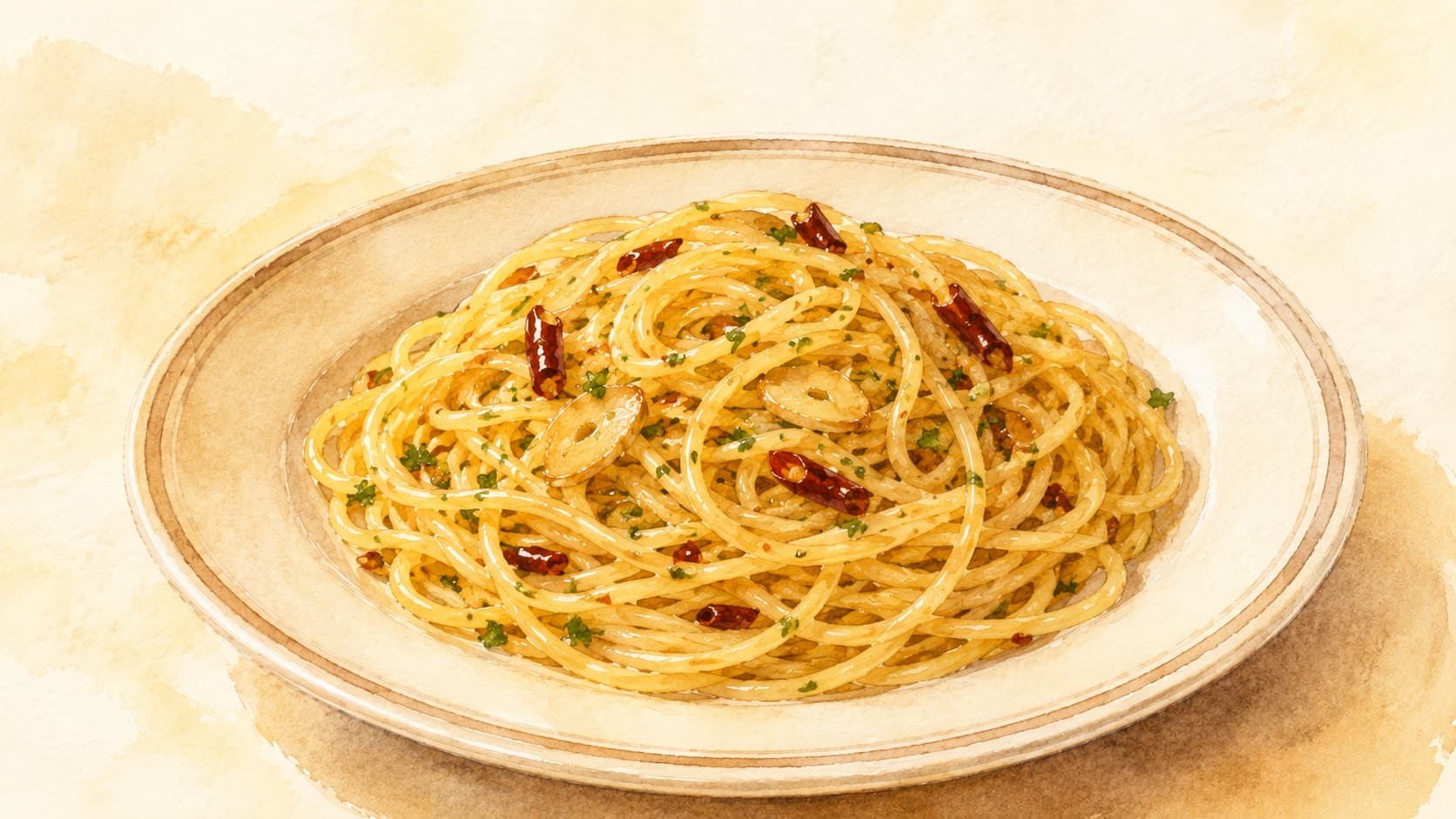
Aglio e Olio is a simple yet flavorful Italian pasta dish made with just four ingredients: spaghetti, garlic, olive oil, and chili flakes.
Contents (5 sections)▾
Ingredients
- 200 g spaghetti
- 4 cloves garlic, thinly sliced
- 60 ml extra virgin olive oil
- 1 tsp red chili flakes
- salt to taste
- fresh parsley, chopped for garnish
Steps
Bring a large pot of salted water to a boil. Cook the spaghetti according to package instructions until al dente, usually about 8-10 minutes.
While the pasta cooks, heat the olive oil in a large skillet over medium heat. Add the sliced garlic and sauté until golden brown, about 2-3 minutes. Be careful not to burn it, as burnt garlic can taste bitter.
Once the spaghetti is cooked, reserve about 1 cup of pasta water, then drain the pasta. Add the drained spaghetti to the skillet with the sautéed garlic.
Stir in the red chili flakes and toss everything together. Gradually add reserved pasta water, a little at a time, to create an emulsion that coats the pasta, about 1/4 cup initially.
Taste and adjust seasoning with salt as needed. Remove from heat and garnish with chopped parsley before serving.
Why this works
The beauty of Aglio e Olio lies in its simplicity, emphasizing the technique of emulsifying (whisking or tossing two liquids that don't normally mix, like oil and water, into one smooth, creamy sauce) the olive oil and pasta water to create a rich, cohesive sauce. When the pasta is added to the skillet, the starch from the pasta water acts as a natural emulsifier, helping the oil cling to the noodles and infuse them with flavor. If the sauce seems too oily or thin, adding more pasta water gradually can rescue it; if it breaks or separates, simply toss it with a bit more water off the heat to bring it back together. The balance of garlic and chili adds depth and enhances the dish's overall richness. By maintaining control of heat and timing, you ensure that the garlic becomes fragrant and golden without crossing into bitterness.
Common mistakes
Burning the garlic.
Target: Pale gold, fragrant — pulled off the heat the moment the edges color.
Why it matters: This dish is garlic and oil; if the garlic scorches, the whole plate tastes acrid and there is nothing else to hide behind. Browned garlic keeps going to bitter in the residual heat of the oil even after you lower the flame.
What to do: Keep the heat at medium, not high, and start the garlic in oil that is barely warm rather than ripping hot. The instant it turns straw-gold, kill the heat or add a splash of pasta water to drop the oil temperature.
Skipping the pasta water — or using unsalted water.
Target: A loose, glossy sauce that coats each strand, built from starchy, well-salted pasta water.
Why it matters: The starch in the cooking water is what lets the oil and water hold together into a sauce instead of sitting as a greasy slick. Plain tap water won't emulsify the same way, and unsalted water leaves the dish flat no matter how much you season at the end.
What to do: Salt the boiling water until it tastes like mild seawater, and scoop out a cup before draining. Add it to the pan a little at a time while tossing, until the sauce turns creamy and clings.
Draining the pasta too dry, then walking away.
Target: Spaghetti moved to the pan still dripping, tossed hard for a minute or two off direct high heat.
Why it matters: The emulsion forms through agitation — tossing forces the oil into the starchy water. A static pan of drained pasta and oil will separate; the sauce never comes together and pools at the bottom of the bowl.
What to do: Keep the pasta slightly wet, add it to the garlic oil, and toss continuously, adding pasta water in splashes until it looks like a sauce rather than oil.
Overcooking the spaghetti.
Target: Al dente — drained a minute before the package time, since it keeps cooking in the pan.
Why it matters: Soft pasta releases too much starch and turns gummy when tossed in the oil, and the sauce loses the clean, slick coating that defines the dish.
What to do: Taste a strand early. Pull it while there is still a faint firm core, and let the final toss in the pan finish the cooking.
What to look for
- Garlic in the oil: pale straw-gold, gently sizzling, sharply fragrant. Not browning at the edges, not silent and pale — that golden moment is when you add the chili and move fast.
- The sauce as it forms: cloudy and slightly thickened, clinging to the spoon, no clear oil pooling. When you see the oil and water turn into one creamy, glossy liquid, the emulsion has taken.
- The finished toss: each strand coated and shiny, a thin sauce gathering at the bottom — not a puddle of oil, not dry. Lift a forkful: it should look lacquered, with parsley and chili flecks stuck to the pasta.
- On the plate: glossy, just-loose, smelling of warm garlic and grassy oil. It should look moist a minute after plating, not seized or oily.
A note on history
Aglio e olio belongs to Italy's cucina povera — the resourceful cooking of those who made a satisfying meal from a nearly bare pantry. It is generally traced to Naples and the Campania region, where home cooks who could not afford clams for spaghetti alle vongole dressed their pasta with the garlic and locally pressed olive oil they did have. References to the dish in southern Italy go back at least to the 19th century, when a version was reportedly known as vermicelli alla Borbonica under the Bourbon era. (Wikipedia, Eataly)
Get the essays in your inbox — free
Weekly notes on flavor, fermentation, and food history — the writing behind the Atlas of Flavor. No spam; unsubscribe anytime.