
Zaru Soba
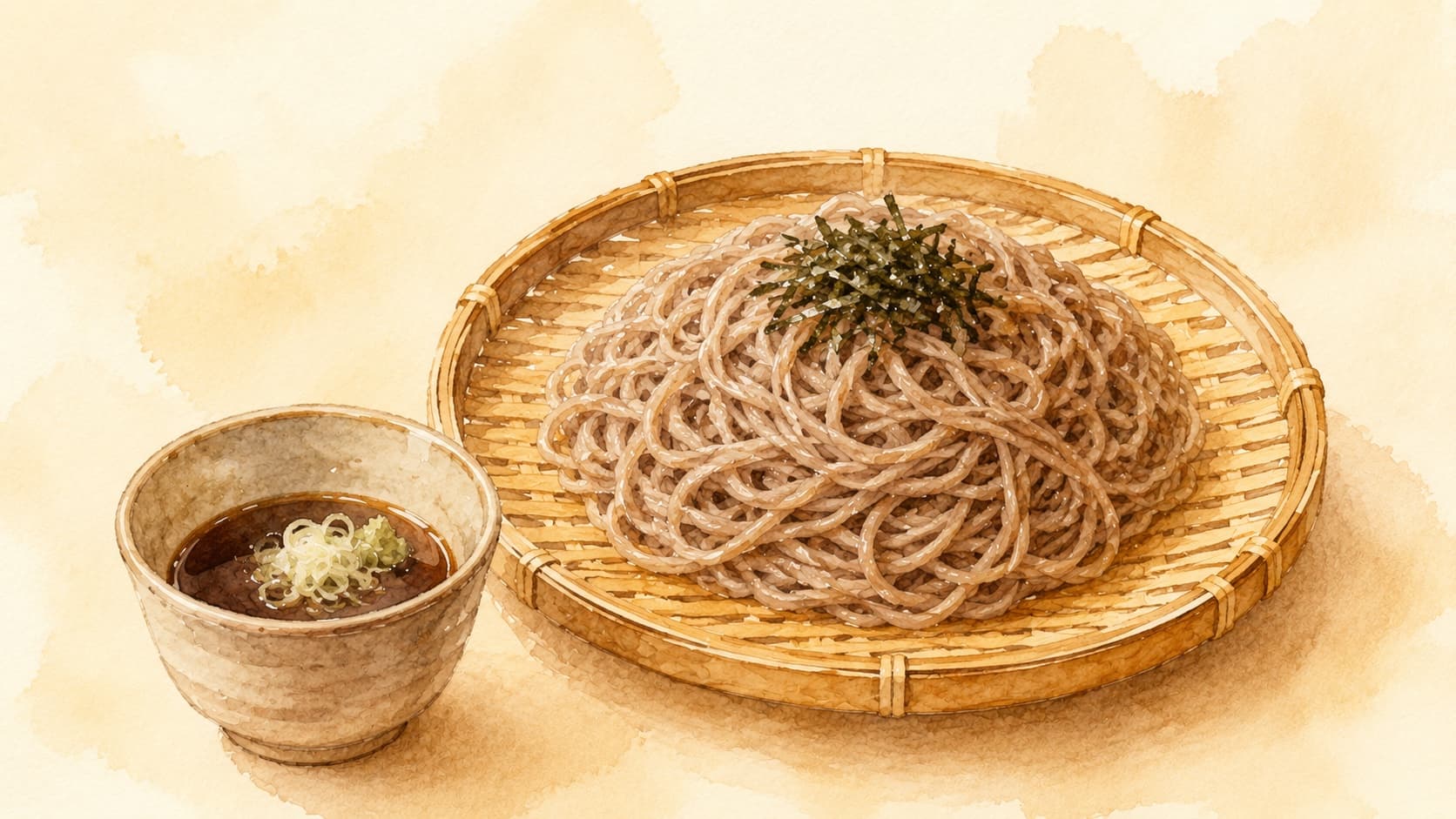
Zaru Soba is a refreshing Japanese dish featuring chilled buckwheat noodles served with a savory dipping sauce.
Contents (5 sections)▾
Ingredients
- 200 g soba noodles
- 500 ml water
- 60 ml mentsuyu
- 2 green onions, finely sliced
- wasabi, to taste
- nori seaweed, for garnish
Steps
Bring 500 ml of water to a boil in a pot over medium heat.
Add 200 g of soba noodles to the boiling water and cook for 5-7 minutes, stirring occasionally to prevent sticking.
Once cooked, drain the noodles in a colander and rinse under cold running water for 2-3 minutes to stop the cooking process and cool them down.
To serve, arrange the chilled noodles on a bamboo mat (zaru) or a plate.
In a small bowl, pour 60 ml of mentsuyu as a dipping sauce, adding wasabi and sliced green onions to taste.
Garnish the soba with nori seaweed strips before serving.
Why this works
Zaru Soba is a quintessential summer dish in Japan, celebrated for its simplicity and refreshing qualities. The technique of cooling the soba noodles is crucial; rinsing them under cold water halts the cooking process and removes excess starch, preventing them from becoming gummy. The balance of flavors in mentsuyu, a concentrated dipping sauce made from dashi, soy sauce, and mirin, complements the nutty flavor of the buckwheat noodles beautifully. If the noodles seem too sticky after cooking, rinse them longer under cold water to ensure they are perfectly separated. This dish showcases the delicate texture of soba, allowing it to shine with minimal accompaniments, making it ideal for hot days when a light meal is preferred.
Common mistakes
-
Skimping on the cooking water.
- Target: At least 1.5-2 L per 200 g of dry soba, at a full rolling boil before the noodles drop in.
- Why it matters: Soba sheds a lot of buckwheat starch. In too little water, the temperature crashes when noodles enter, the water turns gluey, and the strands cook unevenly and stick.
- What to do: Use a tall pot, bring to a hard boil, and stir gently with chopsticks the moment the noodles go in to keep them moving.
-
Rinsing too briefly after draining.
- Target: Cold water until the noodles feel cool to the touch and no longer slippery with starch — usually 30-60 seconds with active hand-rubbing.
- Why it matters: Hot soba keeps cooking from residual heat and stays coated in starch, which is what makes them gummy in the bowl and dull on the tongue.
- What to do: Drain into a colander, plunge into ice water or run cold tap water, and gently rub the strands between your palms until the water runs clear.
-
Dipping the whole noodle bundle in mentsuyu.
- Target: Dip only the tip — roughly the bottom third — of each pickup.
- Why it matters: Mentsuyu (concentrated dashi-soy-mirin dipping base) is concentrated; full-submerging turns every bite salty and buries the buckwheat aroma the dish is built around.
- What to do: Lift a small bundle, dip the lower end, eat in one motion. Adjust mentsuyu dilution to taste before you start, not by drowning the noodles.
-
Serving warm soba on the zaru.
- Target: Noodles fully cooled and well-drained before they touch the bamboo.
- Why it matters: Residual warmth releases steam under the noodles, which then puddles into the dipping sauce when you lift a bite. The zaru (flat bamboo draining basket the dish is named after) reads watery instead of clean.
- What to do: After the cold rinse, drain hard, blot the bottom of the colander on a clean towel, then arrange on the zaru just before serving.
What to look for
- Strands that separate cleanly when you lift the bundle — no clumping at the base.
- A faintly grey-brown, matte surface on the noodles, not shiny or sticky.
- Dipping sauce that stays clear as you eat, without a milky starch cloud building up.
- A nutty buckwheat scent that rises when you lean over the zaru, sharpening when you bring a bite to your mouth.
A note on history
Zaru soba (chilled buckwheat noodles served on a bamboo basket, ざるそば) emerged in the mid-Edo period, when a Tokyo soba shop began serving boiled noodles on a draining bamboo basket — the zaru — instead of in broth. The basket let excess water run off so the noodles stayed firm to the last bite, and the format spread quickly through Edo's soba culture. In the Meiji era, shops began distinguishing "zaru soba" from plain "mori soba" by serving it with a slightly richer mentsuyu and a topping of shredded nori (sheet of dried seaweed), a convention that largely holds today.
Get the essays in your inbox — free
Weekly notes on flavor, fermentation, and food history — the writing behind the Atlas of Flavor. No spam; unsubscribe anytime.