
Tiroler Gröstl
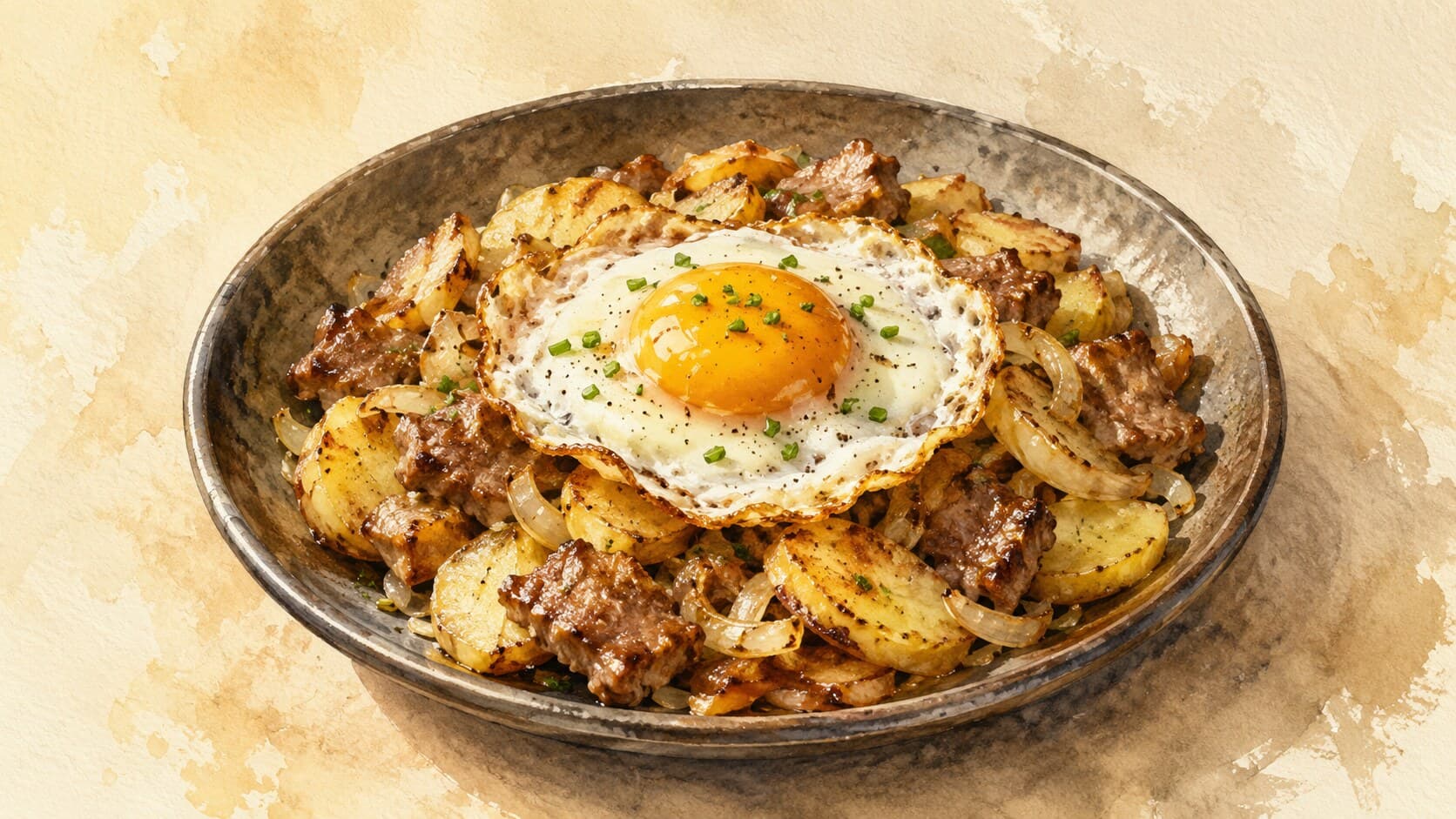
Tiroler Gröstl is an Austrian dish made by sautéing cooked potatoes, beef, and onions together, utilizing leftover ingredients.
Contents (5 sections)▾
Ingredients
- 400 g cooked potatoes, diced
- 200 g cooked beef, shredded
- 1 large onion, sliced
- 2 tbsp vegetable oil
- 2 eggs
- Salt to taste
- Black pepper to taste
- Fresh parsley, chopped for garnish
Steps
Heat 1 tablespoon of vegetable oil in a large skillet over medium heat. This helps to create a crispy texture on the potatoes.
Add the diced potatoes to the skillet and cook for about 5-7 minutes, stirring occasionally, until they are golden brown.
Add the sliced onions and cook for an additional 3 minutes until they are translucent. Onions add sweetness and depth to the dish.
Stir in the shredded beef and season with salt and black pepper. Cook for another 3-5 minutes until everything is heated through.
In another pan, fry the eggs sunny-side up in the remaining tablespoon of oil. For ordinary (non-pasteurized) eggs, cook until the yolks are fully set; for a soft, runny yolk, use eggs pasteurized in the shell (through to the contents) — for everyone, not only high-risk diners.
Serve the potato and beef mixture on plates, topped with a fried egg and garnished with chopped parsley.
Why this works
Tiroler Gröstl cleverly repurposes leftover potatoes and beef, making it a practical and delicious dish. The key to achieving the perfect texture lies in the frying process; by using previously cooked potatoes, you ensure they crisp up nicely in the skillet. The combination of beef and onions enhances the flavor and adds a satisfying heartiness. If your potatoes seem too mushy when frying, consider increasing the heat slightly to allow for a better sear. Additionally, keeping the beef in larger shreds prevents it from overcooking and drying out, ensuring each bite is tender. The fried egg on top not only adds richness but also creates a lovely visual contrast, making the dish inviting. Overall, Tiroler Gröstl exemplifies the philosophy of utilizing leftovers while providing a comforting, hearty meal that embodies the spirit of the Austrian Alps.
Common mistakes
- Using freshly boiled, still-hot potatoes instead of cold ones.
- Target: Potatoes that have rested at least a few hours (ideally overnight) in the fridge.
- Why it matters: Hot potatoes carry too much surface moisture and collapse into mush when they hit the pan; cold, firmed-up ones hold their edges and brown.
- What to do: Cook the potatoes the day before, cool them uncovered, then dice and fry from cold.
- Crowding the skillet so the hash steams instead of browning.
- Target: A single layer with visible space between most pieces.
- Why it matters: Too much in the pan drops the temperature and traps steam, which prevents the crust from forming.
- What to do: Use a wide skillet, or fry the potatoes in two batches and combine at the end.
- Stirring constantly instead of letting the bottom set.
- Target: Each face of the potato gets 2-3 minutes of undisturbed contact with the hot pan.
- Why it matters: Frequent stirring keeps Maillard browning (the savoury, deeply colored crust that forms when proteins and sugars meet a hot dry pan) from developing — you end up with pale, soft hash (a pan of chopped cooked potatoes and other leftovers fried together until crisp).
- What to do: Press the potatoes down with a spatula, wait, then turn in sections rather than tossing.
- Adding the onions at the same time as the potatoes.
- Target: Onions go in once the potatoes already have a starting color.
- Why it matters: Onions release water early and slow the potatoes' browning; added later, they soften in the rendered fat and pick up color from the pan.
- What to do: Crisp the potatoes first, then push to the side or stir in the onions for the last few minutes.
Safety note (fried egg). The sunny-side-up egg has a runny yolk, which is undercooked — set whites, cooking time, and residual heat do not by themselves make it safe, and there is no validated Salmonella kill step here. To keep the yolk soft, use an egg pasteurized in the shell (treated through to the contents); ordinary freshness or a "raw-eating" (生食用) label is not the same. Otherwise cook the yolk through. High-risk diners (pregnancy, immunocompromised, very young or old) should use a pasteurized egg or a fully cooked yolk.
What to look for
- deep golden, almost mahogany edges on the diced potatoes
- rendered fat that pools and shimmers around the hash instead of pooling at the surface
- onions gone translucent and faintly caramelized, not raw-sharp
- a clean release from the pan when you slide the spatula underneath
A note on history
Tiroler Gröstl comes from the Austrian region of Tyrol (the Alpine province in western Austria, home to a mountain-cooking tradition shared with Bavaria and northern Italy), where it began as a frugal farmer's and innkeeper's dish — a way to turn yesterday's boiled potatoes and leftover meat from the previous day's roast into a hot pan-fried meal. The format is consistent across Alpine kitchens: cooked potatoes, onions, meat, and traditionally a fried egg on top. Beyond that, dating and specific origin stories vary between sources, so I won't pin it to a year.
Get the essays in your inbox — free
Weekly notes on flavor, fermentation, and food history — the writing behind the Atlas of Flavor. No spam; unsubscribe anytime.