
Tai-Meshi
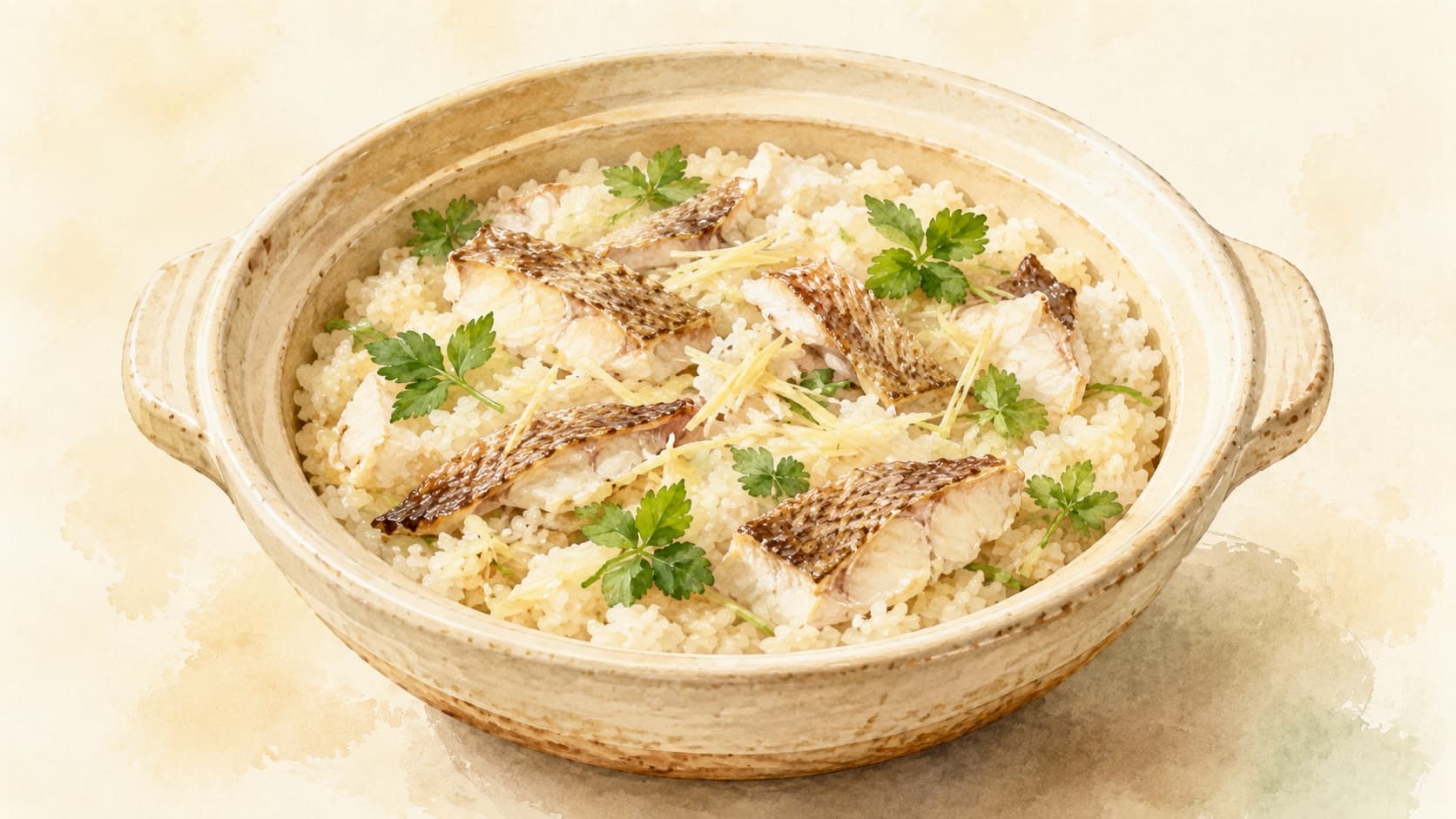
Tai-Meshi is a Japanese rice dish cooked with seasonal sea bream, incorporating flavors from the fish and other ingredients for enhanced taste.
Contents (5 sections)▾
Ingredients
- 300 g short-grain rice
- 400 ml dashi stock
- 200 g tai (sea bream), cleaned and filleted
- 2 tbsp soy sauce
- 1 tbsp mirin
- 1 tsp sake
- 1 small piece of ginger, sliced
- 2 green onions, chopped
- shiso leaves for garnish
- salt to taste
Steps
Rinse the rice under cold water until the water runs clear, then soak it in water for 30 minutes before draining.
In a donabe or heavy pot, combine the drained rice and dashi stock, then add the soy sauce, mirin, sake, and ginger slices. Stir gently.
Place the tai fillets on top of the rice mixture. Bring the pot to a boil over medium heat, then reduce to low, cover, and simmer for 15 minutes.
After 15 minutes, remove the pot from heat and let it sit, covered, for 10 minutes to allow the flavors to meld.
Fluff the rice gently with a fork, season with salt to taste, and serve garnished with chopped green onions and shiso leaves.
Tools you'll want
Why this works
The technique of cooking rice with dashi enhances the umami flavor, making each grain more compelling. The seasonal tai adds not just flavor, but also a beautiful presentation, honoring the spring. The dashi is crucial as it provides a depth of flavor that complements the delicate fish. If the rice seems too dry after cooking, adding a little more dashi or water and simmering briefly can help. Conversely, if it’s too wet, allow the lid to remain off for a few minutes to evaporate excess moisture. Achieving the right texture is vital; using short-grain rice ensures a sticky, cohesive dish that holds the flavors well. This dish is perfect for omotenashi, as it showcases seasonal ingredients artfully.
Common mistakes
- Skipping the soak and the drain. Rinsed-and-rushed rice cooks unevenly under a fish.
- Target: rinse until the water runs clear, soak 30 minutes, then drain in a colander for 10 minutes so the surface starch dries.
- Why it matters: with a fillet sitting on top, steam circulation is partially blocked. Under-soaked grains stay chalky in the center, and wet surface starch sticks to the donabe (Japanese clay pot for tabletop rice and stews) and burns.
- What to do: Time the soak. If your kitchen is cold, push it to 40 minutes; in summer, 30 is enough. Let the rice drain in the colander while you portion the fish.
- Putting the tai on raw, skin-down, without salting first. The fillet leaches blood-water into the rice and finishes flabby.
- Target: salt the fillet lightly 10 minutes ahead, pat dry, and either lay it skin-up or briefly sear the skin in a dry pan before placing.
- Why it matters: that 10-minute salt step pulls surface moisture and the off-notes that come with it, and a quick skin-sear adds Maillard (the browning reaction between heat, proteins, and sugars that builds toasty flavor) depth to a dish that is otherwise gentle. Skin-up while cooking also stops the skin from sticking to the pot.
- What to do: Salt, wipe, sear skin only for 30 seconds if you want the extra layer, then place on top of the rice as the dashi comes to a boil.
- Cooking the tai too long. The fish is on the rice for the full 15 minutes; if it was thick to begin with, it overshoots and goes dry.
- Target: a fillet about 1.5–2 cm at its thickest; internal temperature reaches 63°C / 145°F by the end of the rest.
- Why it matters: sea bream is a lean white fish that turns from tender to cottony fast. The 10-minute lid-on rest after the heat is off finishes the cook gently, so the active boil-and-simmer phase only needs to get the fish 80 % of the way there.
- What to do: Butterfly or split a thick loin so it sits flat at 1.5 cm. If your fillet is much thicker, cut it in half horizontally rather than extending the cook time.
- Lifting the lid during the simmer or the rest. Every peek drops the pot temperature and ruins the steam.
- Target: lid stays on from boil through the 10-minute off-heat rest — that's 25 minutes untouched.
- Why it matters: the rest is when the bottom layer finishes absorbing dashi and the top layer firms up. Open the lid early and the top grains stay wet while the bottom turns to scorch.
- What to do: Use a glass-lidded donabe or a heavy pot you trust. Set a timer for the full 25-minute window and walk away.
What to look for
- A clear, fragrant steam when you finally lift the lid — kelp-sweet from the dashi, with a thin breath of sea bream behind it.
- Fish that flakes cleanly into large petals when pressed with a fork, opaque all the way through and just barely glossy.
- Rice that holds its shape when you scoop it but is still tender enough that an individual grain gives between your teeth without crunch.
- A thin pale-gold film on the bottom of the pot — okoge (the thin, intentionally toasted rice crust prized at the bottom of clay-pot rice), not scorch; it should smell like toasted rice, not burnt rice.
A note on history
Taimeshi is a celebration dish of Ehime, on Shikoku, and there are two distinct lineages with the same name. The Matsuyama style cooks the fish whole or in fillets together with the rice — the version this recipe follows — and was traditionally served at festive occasions because the word tai (Japanese red sea bream, a lean white fish prized for celebrations) puns on medetai, "auspicious". The Uwajima or Nanyo style is a different dish entirely: raw sashimi-grade tai over hot rice with a raw-egg-and-soy sauce, traced back to the kaizoku-meshi or "pirate rice" of the Iyo naval clans in southern Ehime. Both are recognized regional cuisines of Ehime Prefecture.
Get the essays in your inbox — free
Weekly notes on flavor, fermentation, and food history — the writing behind the Atlas of Flavor. No spam; unsubscribe anytime.