
Cantonese Steamed Fish
A delicate Cantonese steamed fish recipe featuring fresh ingredients and simple techniques for a flawless dish.
Contents (5 sections)▾
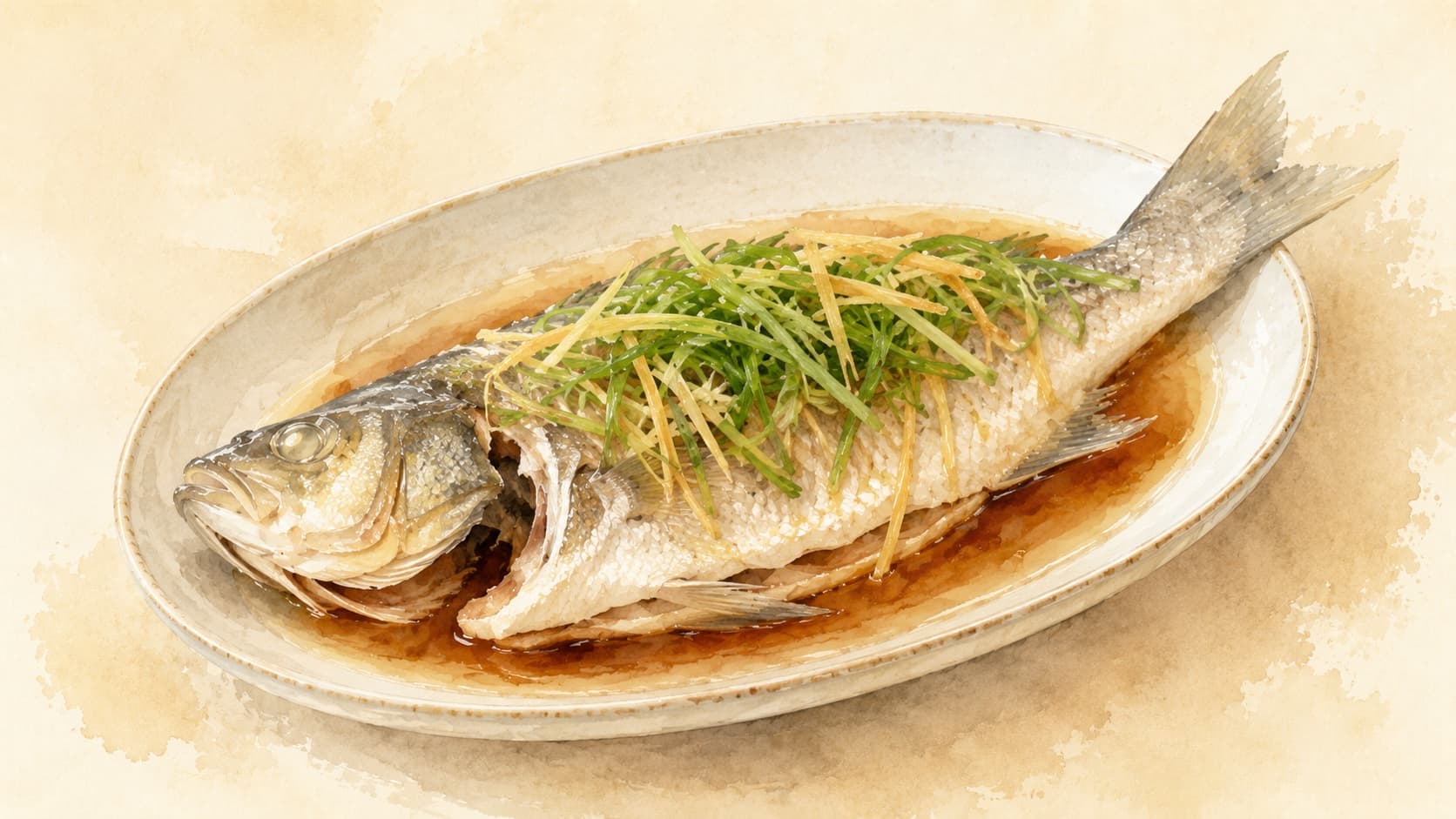
Ingredients
- 1 whole fish (about 500g, such as snapper or tilapia)
- 1 tablespoon soy sauce
- 2 tablespoons rice wine (or sake)
- 2 tablespoons scallions, finely chopped
- 3 slices fresh ginger
- 1 tablespoon sesame oil
- Salt to taste
- Water for steaming
Steps
1. Clean the fish thoroughly, removing scales and innards. Pat dry with paper towels to ensure the skin crisps during steaming.
2. Season the fish with 1 teaspoon of salt inside and out. Place 3-4 ginger slices inside the fish cavity for aromatic flavor.
3. Prepare a steaming setup by bringing water to a boil in a steamer or a pot with a steaming rack, ensuring the water reaches a temperature of 100°C (212°F). The water should not touch the fish.
4. Place the fish on a heatproof plate, drizzle with 2 tablespoons of rice wine, and top with half the scallions and half the soy sauce.
5. Once the water is boiling, place the plate with the fish in the steamer, cover, and steam for 12-15 minutes, or until the internal temperature of the fish reaches 63°C (145°F) and the flesh is opaque.
6. Carefully remove the plate from the steamer. Drizzle with 1 tablespoon of sesame oil and the remaining soy sauce, and garnish with the remaining scallions before serving.
Why this works
Steaming is a traditional cooking method that preserves the delicate texture and flavor of the fish without the need for excessive oils or fats. The key to achieving a perfectly steamed fish is controlling the cooking time and ensuring it is not overcooked, which can make the flesh dry and tough. The addition of ginger and scallions enhances the flavor and helps counteract any potential fishy odor. If the fish seems too dry after cooking, serve it with a drizzle of additional soy sauce or a splash of sesame oil for added moisture. The steaming process allows for even cooking, while the gentle heat ensures the fish remains tender. Fresh fish is ideal for this dish, as it has a firmer texture, while frozen fish may release excess moisture, affecting the final dish. If the fish breaks during handling, serve it as is; the flavors will still be vibrant, and the presentation can still be appealing with careful garnishing. Proper timing and temperature are essential; an internal temperature of 63°C (145°F) indicates that the fish is fully cooked and safe to eat, ensuring a delightful dining experience.
Common mistakes
-
Starting before the steam is at full force.
- Target: rolling boil, dense visible steam, lid sealed before the plate goes in.
- Why it matters: a slow climb stretches the cook window, so the surface dries while the centre lags. The Cantonese style relies on a hard, fast burst of steam to set the skin and protein almost on contact.
- What to do: boil the water vigorously first, then slide the plate in. Don't open the lid in the first 8 minutes.
-
Steaming a fish that isn't fresh enough.
- Target: clear eyes, bright red gills, firm flesh that springs back, no ammonia smell.
- Why it matters: this dish has nowhere to hide weak fish. There's no browning, no spice cover, no long sauce. Stale fish steams into a flat, slightly metallic plate no matter what you pour on top.
- What to do: buy the fish the same day, or skip this recipe and cook it another way.
-
Under-steaming the thickest part of the fish.
- Target: flesh opaque all the way to the bone-line, internal temperature 63°C (145°F) at the spine behind the head.
- Why it matters: a whole fish is uneven — the shoulder behind the head is the slowest zone. Translucent flesh there isn't "delicate," it's undercooked, and for sea fish that's an anisakis (a thin parasitic worm sometimes present in raw or undercooked marine fish — killed only by full cooking or proper freezing) risk.
- What to do: check the thickest part with a probe or by lifting the flesh off the bone with chopsticks. If it still clings, give it 2-3 more minutes.
-
Pouring soy and hot oil over a cold fish.
- Target: plate, oil, and soy hit the fish within 30 seconds of leaving the steamer.
- Why it matters: the sizzling oil over raw scallion and ginger is what releases the aromatic top note. On a cooled fish it just sits there, greasy and flat.
- What to do: have the soy mix ready and the oil on a high flame before you lift the lid. Finish at the table if you can.
What to look for
- Steam billows out in a thick white cloud the moment you lift the lid — not a thin wisp.
- Flesh behind the head pulls cleanly from the spine in flat, white flakes.
- A small pool of clear liquid on the plate, not cloudy and not gelatinous.
- The scallion and ginger curl and brighten the instant the hot oil hits them, with a sharp, almost grassy aroma.
A note on history
Cantonese steamed fish (清蒸魚 — qīng zhēng yú, literally "pure-steamed fish": a whole fish steamed plain and finished with scallion, ginger, soy, and hot oil) is one of the clearest expressions of the southern Chinese cooking philosophy of preserving 原味 — the "original flavor" of a fresh ingredient. The whole fish, steamed and finished with scallion, ginger, soy, and sizzling oil, has long been a centrepiece of Cantonese banquets and Lunar New Year tables, where the word for fish (魚) puns on "surplus" (餘). The freshness of the fish is treated as the dish itself; the seasoning is there to frame it, not to cover for it.
Get the essays in your inbox — free
Weekly notes on flavor, fermentation, and food history — the writing behind the Atlas of Flavor. No spam; unsubscribe anytime.