
Soubise Sauce
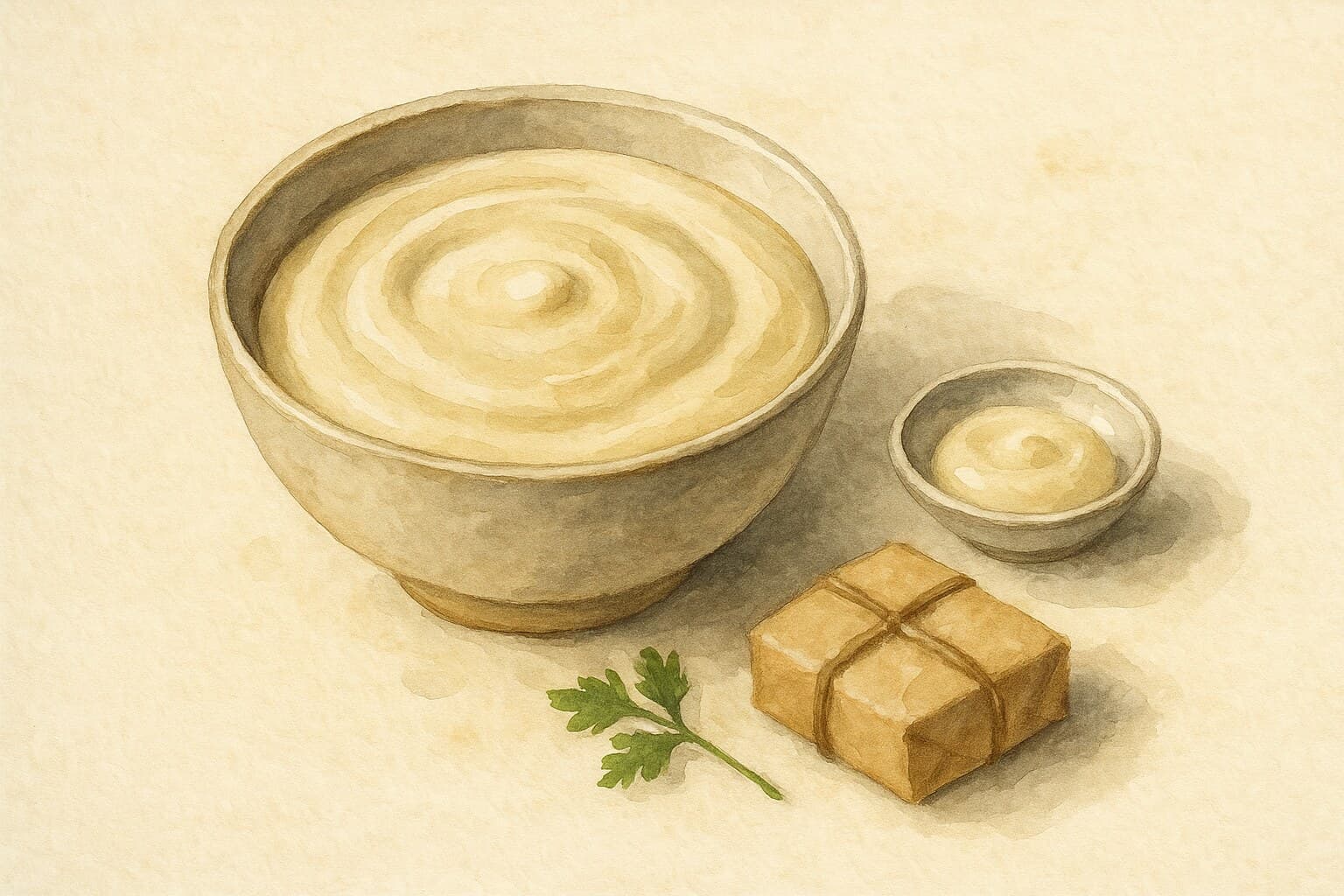
Soubise sauce is a French sauce made by caramelizing onions and combining them with béchamel, enhancing the dish’s flavor profile.
Contents (5 sections)▾
Ingredients
- 2 medium onions, finely chopped
- 50 g unsalted butter
- 100 g all-purpose flour
- 1 liter milk
- Salt, to taste
- White pepper, to taste
- Nutmeg, to taste
Steps
In a saucepan, melt 50 g of unsalted butter over medium heat, then add the finely chopped onions and cook for about 10 minutes until they are soft and translucent.
While the onions are cooking, prepare a béchamel sauce by melting the remaining butter in another saucepan, adding 100 g of flour, and cooking for 2 minutes to form a roux.
Gradually whisk in 1 liter of milk, cooking over medium heat until the sauce thickens, which should take about 5 minutes.
Combine the cooked onions with the béchamel sauce, seasoning with salt, white pepper, and a pinch of nutmeg to taste.
Simmer the combined mixture on low heat for an additional 5 minutes, allowing the flavors to meld.
Why this works
Soubise sauce combines the sweetness of slowly cooked onions with a creamy béchamel, creating a luxurious texture that enhances any dish. The technique of cooking onions until translucent is crucial; it releases their natural sweetness, which balances the richness of the béchamel. If the sauce seems too thick, you can add a little more milk to reach your desired consistency. Conversely, if it appears too runny, continue to simmer on low heat to reduce and thicken. This layering of flavors builds a depth that is characteristic of classic French cuisine, making it an excellent accompaniment to meats, vegetables, or as a base for other sauces.
Common mistakes
-
Browning the onions instead of sweating them (cooking gently with no colour, just to release moisture).
- Target: soft, translucent, almost dissolving — no colour beyond very pale ivory.
- Why it matters: Soubise is supposed to taste sweet and clean, with the onion almost disappearing into the dairy. Brown bits introduce a roasted, almost caramel note that fights the béchamel and turns the finished sauce grey-beige instead of pale.
- What to do: cook onions low and slow with a pinch of salt; if the pan starts to colour, drop the heat and add a splash of water or milk.
-
A raw-flour roux (the French butter-and-flour paste used to thicken sauces).
- Target: cook the butter-flour roux for at least 2 minutes over medium heat until it smells nutty, not pasty.
- Why it matters: an under-cooked roux gives the sauce a chalky, "wallpaper-paste" mouthfeel that no amount of seasoning can mask.
- What to do: keep stirring until the roux looks slightly foamy and stops smelling raw; only then start adding milk.
-
Pouring cold milk into a hot roux all at once.
- Target: add milk in three additions, whisking smooth after each.
- Why it matters: a single dump cools the roux instantly and the starch seizes into lumps. Sieving fixes the look but not the texture.
- What to do: warm the milk if you can; add a quarter first, whisk to a paste, then add the rest gradually as it loosens.
-
Skipping the sieve at the end.
- Target: pass the finished sauce through a fine-mesh strainer before serving.
- Why it matters: even slow-cooked onions leave fibrous shreds that catch on the tongue and break the velvety mouthfeel that defines soubise.
- What to do: push the sauce through with the back of a ladle; it's the small step that turns a good sauce into a French-class one.
What to look for
- onions collapsing into a pale, almost glassy slump in the pan — fully sweated, no colour, ready for the béchamel.
- the roux smelling like warm toasted almonds, not raw paste — cooked enough to bind cleanly.
- a sauce that coats the back of a spoon and lets a finger-drawn line hold for a second or two — the napper consistency the classics call for.
- a uniform pale ivory shine, with no visible onion shreds after straining — the surface tells you the texture below it.
A note on history
Soubise sauce (the classic French onion sauce, bound with béchamel — the milk-based white "mother sauce" of French cuisine) takes its name from Charles de Rohan, Prince de Soubise (1715-1787), a French nobleman and military commander of Louis XV's court. He did not invent the sauce; rather, his name became attached to the cream-and-onion preparation that emerged from his household kitchens and the broader 18th-century French repertoire. The version most home cooks recognise today — onion purée bound with béchamel — was later codified by Auguste Escoffier in Le Guide Culinaire (1903), where he listed both a cream-enriched and a béchamel-bound form.
Get the essays in your inbox — free
Weekly notes on flavor, fermentation, and food history — the writing behind the Atlas of Flavor. No spam; unsubscribe anytime.