
Salsa Verde
Salsa Verde is an Italian condiment made from herbs, acid, and salt. It enhances the flavor of roasted meats and vegetables.
Contents (6 sections)▾
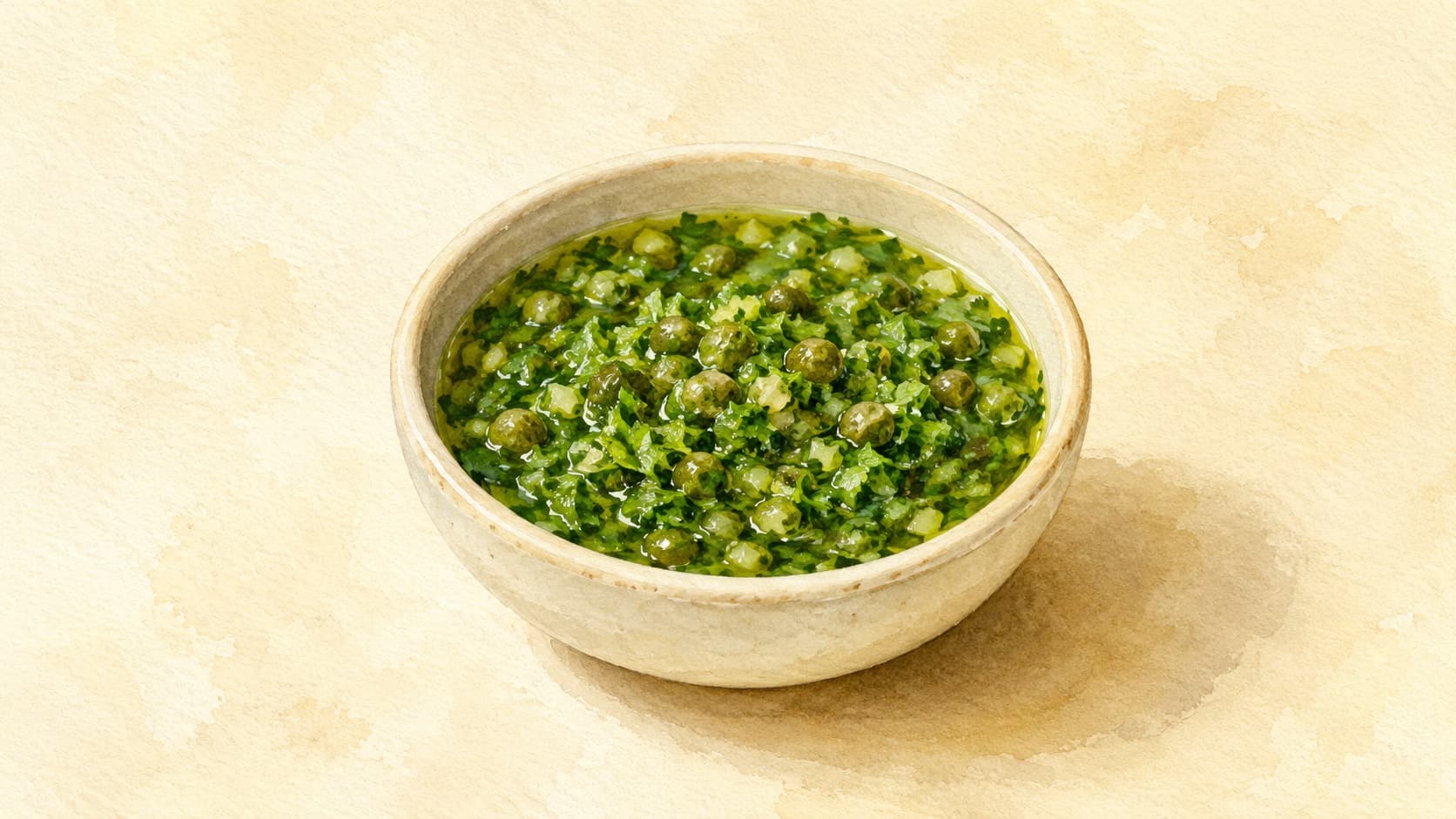
Ingredients
- 100 g fresh parsley, packed
- 50 g fresh basil, packed
- 30 g capers, rinsed
- 1 clove garlic, minced
- 120 ml extra virgin olive oil
- 2 tbsp red wine vinegar
- Salt to taste
- Pepper to taste
Steps
In a food processor, combine the parsley, basil, capers, and minced garlic. Pulse until finely chopped, about 10-15 seconds.
With the processor running, slowly drizzle in the olive oil until the mixture is emulsified and smooth, approximately 30 seconds.
Add the red wine vinegar, salt, and pepper. Pulse a few more times to combine. Taste and adjust seasoning if necessary.
Why this works
Salsa Verde’s vibrant flavor comes from the fresh herbs, which contribute both brightness and depth. The combination of parsley and basil offers a harmonious balance of earthiness and aromatic notes, while capers add a unique briny umami that enhances the overall taste. The olive oil serves as a rich base, providing smoothness and allowing the flavors to meld beautifully. Vinegar introduces acidity, brightening the sauce and cutting through fatty dishes. If the salsa seems too thick, you can adjust the consistency by adding a bit more olive oil or vinegar until it reaches your desired texture. This technique ensures that you can tailor the salsa to complement your specific dish, whether it be grilled meats or roasted vegetables.
Common mistakes
- Blender pulverizes it to baby food. Italian salsa verde (the Italian green herb sauce — distinct from Mexican tomatillo salsa verde) is chopped, not blended. Knife or mortar only. Blender turns it into pesto's bitter cousin — too smooth, too compressed.
- Garlic too aggressive. Raw garlic in any quantity bites hard. Use one small clove, microplane it (not chop), and let the oil mellow it for 10 minutes before adding herbs.
- Wrong vinegar moment. Vinegar added too early discolors the parsley; added too late and it sits as a separate top layer. Add halfway through resting, after the salt has dissolved.
- Anchovy paste instead of fillet. Anchovy paste is more salt than fish. A real fillet (a whole small salt-cured anchovy strip, rinsed, patted dry, minced) gives the deep umami salsa verde wants.
What to look for
- Parsley: flat-leaf only, leaves only (stems are bitter and stringy), chopped fine but not paste — small distinct flecks.
- Capers (the small green pickled or salted flower buds that bring a sharp briny pop): rinsed if they're in brine, soaked 10 minutes if they're salt-packed. Always squeeze dry before chopping.
- Oil ratio: the sauce should be a loose chunky suspension — herbs visible, oil pooling slightly, not a uniform purée.
- Rest: 15 minutes to integrate flavors; the color stays bright if the proportions and timing are right.
Substitutions
- Parsley → 70% parsley + 30% mint or basil. Mint version is brilliant with lamb; basil version reads more Provençal.
- Capers → cornichons (chopped fine). Same vinegary-sharp role; slightly sweeter.
- Anchovy → 1/2 tsp white miso. Functional vegetarian swap that keeps the umami depth. Different flavor but a working salsa verde.
- Red wine vinegar → lemon juice + 1/4 tsp white wine vinegar. Brighter, more citrusy register; pairs especially well with fish.
Make-ahead and storage
- Best within 1–2 hours of making. Color and aroma peak right after the rest.
- Refrigerate up to 3 days in a glass jar with a 5 mm oil cap on the surface. The oil cap is the seal — without it, the surface darkens within 4 hours.
- Freeze in ice-cube trays, 2 months. Pop out frozen cubes into a freezer bag; one cube goes onto a piece of grilled fish or stirred into a sauce at the very end.
- Do not heat directly. Salsa verde finishes a hot dish; it never enters the pan. Heat dulls the herbs and breaks the oil emulsion.
- Safety note: Salsa verde is not a room-temperature condiment. Refrigerate after each use and discard rather than judge by smell alone if the surface darkens significantly or develops a sharp / fizzy aroma.
Get the essays in your inbox — free
Weekly notes on flavor, fermentation, and food history — the writing behind the Atlas of Flavor. No spam; unsubscribe anytime.