
Ribollita
Ribollita is an Italian soup made with a mix of vegetables, beans, and stale bread, emphasizing flavor layering and acidity balance.
Contents (5 sections)▾
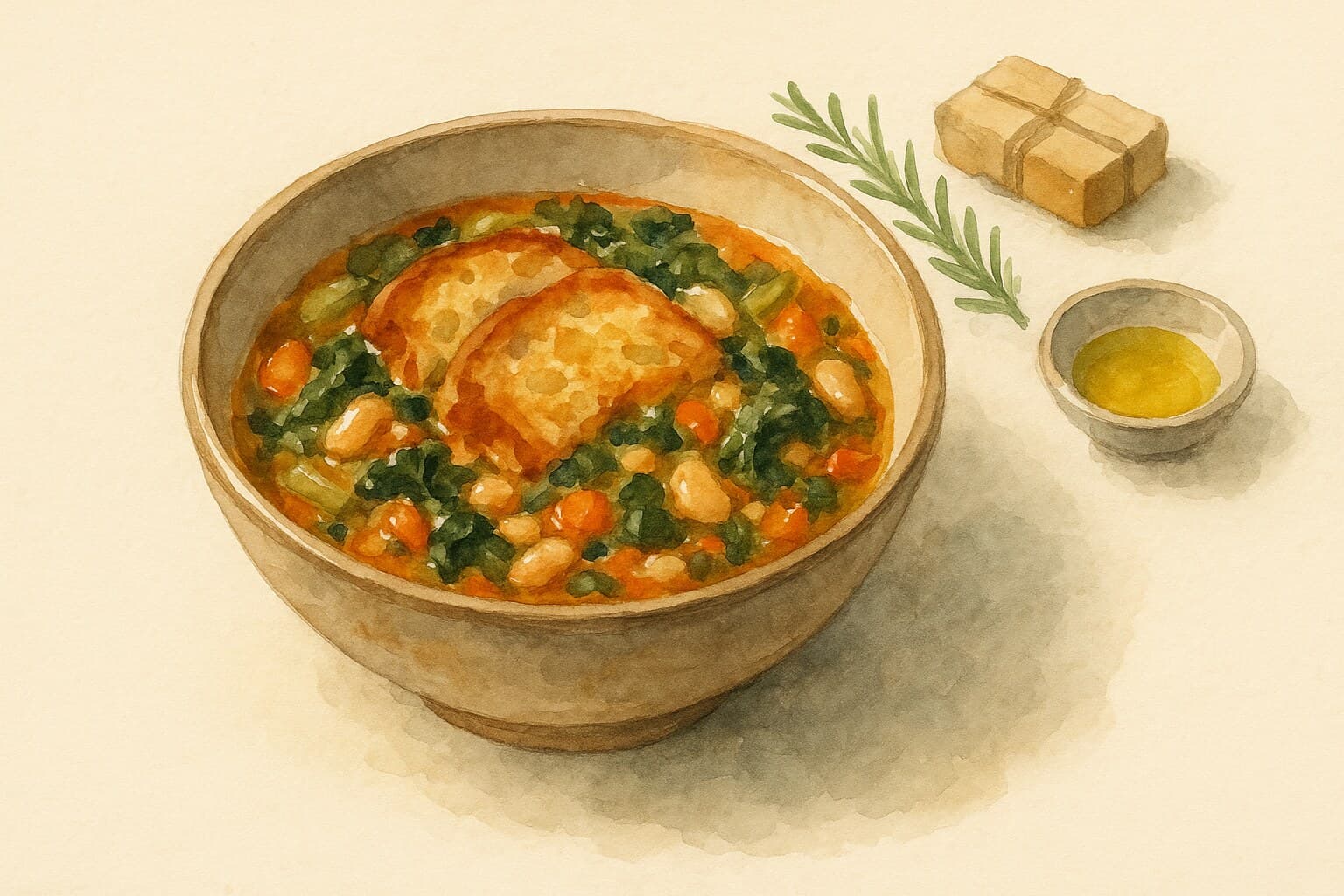
Ingredients
- 200 g stale bread, preferably Tuscan
- 500 ml vegetable broth
- 200 g canned cannellini beans, drained and rinsed
- 150 g kale, chopped
- 100 g carrots, diced
- 100 g celery, diced
- 1 medium onion, chopped
- 2 cloves garlic, minced
- 4 tbsp olive oil
- 1 tsp dried thyme
- Salt to taste
- Black pepper to taste
Steps
In a large pot, heat 2 tablespoons of olive oil over medium heat. Add the chopped onion, carrots, and celery, and sauté for about 5 minutes until softened.
Add the minced garlic and dried thyme, and cook for an additional minute until fragrant, stirring constantly to prevent burning.
Pour in the vegetable broth and bring to a boil. Add the chopped kale and cannellini beans, then reduce the heat and simmer for 20 minutes.
Stir in the stale bread, breaking it into smaller pieces as you add it, and cook for another 10 minutes until the bread has absorbed the broth and the soup thickens.
Season with salt and black pepper to taste. Drizzle with the remaining olive oil before serving.
Why this works
Ribollita is a prime example of how simple ingredients can create deep flavors through the technique of simmering. The combination of sautéed vegetables forms a flavorful base, while the addition of kale (a sturdy dark-green leafy brassica) and cannellini beans (creamy white Italian kidney-shaped beans) contributes to the dish's heartiness and nutrition. The use of stale bread prevents waste and enhances the texture and richness of the soup, transforming it from a thin broth into a comforting stew. If the soup seems too thick after adding the bread, simply add a bit more vegetable broth to reach your desired consistency. This method of using stale bread is traditional in Tuscan cuisine, a "twice-cooked" peasant soup (ribollita literally means "re-boiled" — the dish is meant to be made one day and gently re-simmered the next), showcasing the resourcefulness in cooking and the importance of maximizing flavor from every ingredient.
Common mistakes
Using under-cooked or barely simmered beans. Target: beans fully tender — you can crush one cleanly between two fingertips, no chalky core; if you started from dried beans, simmer them gently until they yield with no resistance before adding to the soup. Why it matters: dried legumes (including cannellini) contain lectins (plant defence proteins) and oligosaccharides that are uncomfortable raw or undercooked; full cooking destroys the lectins and breaks down the indigestible sugars. Even when starting from canned beans, the soup itself needs to come to a real, sustained simmer (small bubbles breaking the surface, never just steaming) so the entire pot is properly hot and any starch from the beans gelatinises into the broth, helping the body. A soup that's only kept warm reheats unevenly and the beans stay grainy. What to do: if using canned beans, drain, rinse, then simmer them in the broth for at least 15 minutes before the bread goes in. If reheating leftover ribollita, bring the whole pot back to a real, gentle boil and hold it there for 1–2 minutes — that's also the "re-boil" (ri-bollita) the dish is named after.
Cooking onion, carrot and celery too fast and too short. Target: sweat the soffritto (the Italian onion-carrot-celery base) over medium-low heat with the lid mostly off for 10–12 minutes, until everything looks translucent and the bottom of the pan smells sweet, not raw. Why it matters: the depth of a ribollita lives almost entirely in the soffritto. Onion, carrot and celery are full of water and sulphurous, pungent compounds; the long, gentle render drives off the harsh notes and slowly browns natural sugars (a controlled Maillard reaction — the same heat-and-protein browning that gives roast meat its crust). Rush this and the soup tastes thin and grassy, no matter how long you simmer it later. What to do: start with a generous pour of olive oil, a pinch of salt to draw water out of the vegetables, and don't crowd the pan. If you see fast browning at the edges, lower the heat — you want slow translucence, not quick gold.
Adding the bread too early, then complaining the soup is gluey. Target: the bread goes in at the very end, off the heat or on the lowest heat, and only sits in the soup 10–15 minutes before serving. Why it matters: stale Tuscan-style bread is what gives ribollita its body. When the dry crumb meets hot broth, the starch swells and breaks down into the liquid (starch gelatinisation), which is what thickens the soup. Stir it in over high heat for too long and the starch overworks into a gluey paste; not long enough and the bread is dry rocks at the bottom of the bowl. What to do: tear the bread into rough pieces (don't cube it neatly), fold it in once the vegetables and beans are tender and the broth is properly tasty, then let the residual heat do the work. The dish's authentic, re-boiled version actually expects this to happen overnight — see the next bullet.
Treating ribollita like fresh minestrone. Target: the soup is meant to be made one day, rested overnight, and reheated to a gentle, full boil the next day — that re-boil is the dish. Why it matters: as ribollita sits, the bread continues to break down into the broth, the starches set, and the soup turns into something between a stew and a moist bread pudding — the classic dense, spoon-standing-up texture. The Tuscan name itself, ri-bollita ("re-boiled"), names this step. Serving it the moment the bread goes in gets you a different, lighter dish — perfectly fine, but not ribollita in the traditional sense. What to do: if you have time, cool the pot, refrigerate overnight covered, then reheat slowly to a gentle full boil the next day, adding a splash of broth or water only if it's gone past a thick stew into something solid.
What to look for
- A soffritto that smells sweet, with the onion gone from white to pale gold. Lift the lid — if you still smell raw onion or sharp celery, keep going on low heat. The sweetness here sets the floor of the whole soup.
- A broth that turns from clear to cloudy as the bread breaks down. Once the bread starts giving up its starch into the liquid, the broth goes from transparent to softly opaque — that's the visible signal the soup is thickening from within, not just from added flour or starch.
- A spoon that stands up the next day. Push a wooden spoon into the centre of the cold pot the next morning; if it stays upright for a second before tipping, the bread has fully integrated and you're holding a true ribollita.
- Dark, glossy strands of cavolo nero / kale that have lost their squeak. If the leaves still squeak between your teeth, they need another 5–10 minutes of simmer; tender, melting strands are the texture cue you're after.
A note on history
Ribollita has humble roots in medieval Tuscany; the word literally means "re-boiled," and the dish began as a way for peasant households to stretch the previous day's minestrone by reheating it and bulking it out with stale Tuscan bread — part of the broader Italian cucina povera tradition of letting no leftovers go to waste (Wikipedia, La Cucina Italiana). Some accounts trace the practice further back to the Middle Ages, when servants gathered up bread trenchers soaked in the juices of feudal lords' banquets and re-boiled them for their own dinners (Italy Food History). Pellegrino Artusi included a cannellini bean and bread soup in his foundational 1891 cookbook La scienza in cucina e l'arte di mangiar bene, which helped move the dish from peasant kitchen into documented Italian culinary tradition (Devour Tours).
Get the essays in your inbox — free
Weekly notes on flavor, fermentation, and food history — the writing behind the Atlas of Flavor. No spam; unsubscribe anytime.