
Passata
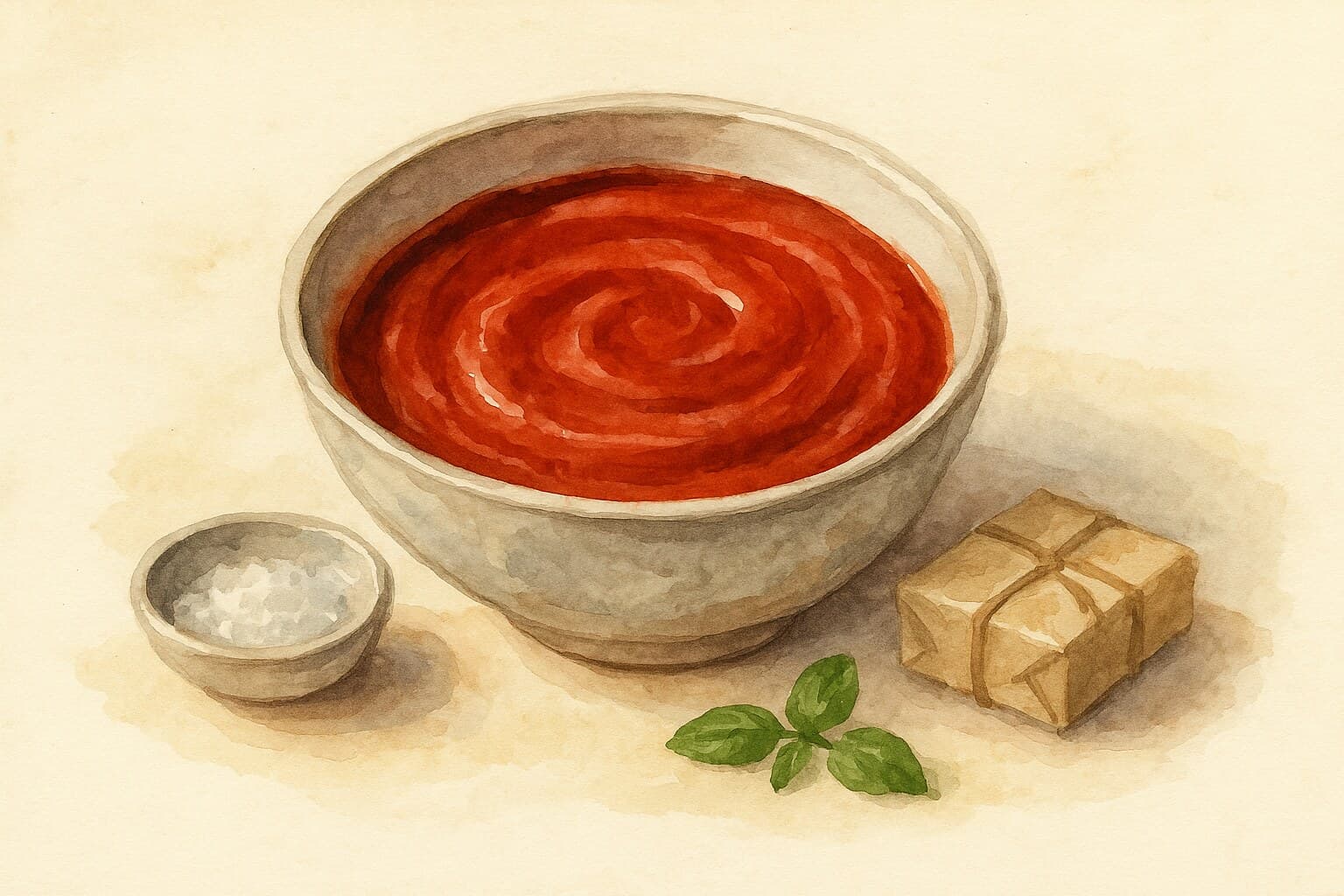
Passata is a smooth tomato puree made by cooking and blending ripe tomatoes, often used as a base in various Italian dishes.
Contents (5 sections)▾
Ingredients
- 1 kg ripe tomatoes
- 1 medium onion, chopped
- 2 cloves garlic, minced
- 30 ml extra virgin olive oil
- 1 tsp salt
- 1/2 tsp black pepper
- 1 tsp sugar
- 1 sprig fresh basil
Steps
Begin by washing the tomatoes thoroughly, then score the bottom of each with a small 'X' to help with peeling after boiling.
Bring a large pot of water to a boil and carefully add the tomatoes. Blanch them for about 30 seconds, then transfer immediately to an ice bath to cool.
Peel the tomatoes once cool, remove the cores, and chop them coarsely.
In a large saucepan, heat the olive oil over medium heat. Add the chopped onions and sauté until translucent, about 5 minutes.
Add the minced garlic and sauté for another minute until fragrant, ensuring not to burn it.
Stir in the chopped tomatoes, salt, black pepper, and sugar. Simmer for 10-15 minutes, stirring occasionally, until the mixture thickens.
Once thickened, remove from heat and stir in the fresh basil. Use an immersion blender for a smooth consistency, if desired.
Tools you'll want
Why this works
Making passata is a fundamental technique in Italian cuisine that allows the natural sweetness of tomatoes to shine through. The initial blanching step ensures that the skins are easily removable, resulting in a smoother texture. Sautéing the onions and garlic first enhances the overall flavor by infusing the oil with aromatic compounds. The addition of sugar balances the acidity of the tomatoes, creating a harmonious sauce. If the passata seems too acidic, add a touch more sugar to balance it out. If it breaks (separates), blending it again can help to unify the mixture, ensuring a silky consistency ideal for pasta dishes or as a base for stews. This method captures the essence of sun-ripened tomatoes, embodying the umami characteristic that defines Italian cooking.
Common mistakes
- Reducing the passata over high heat until it scorches. A hot, fast reduce caramelises the natural sugars too aggressively, and once a brown crust forms on the bottom of the pan, that burnt note travels through the whole batch. Target: a low, lazy simmer with only the occasional bubble breaking the surface, not a rolling boil. Why it matters: tomato passata (the strained tomato base) contains fructose and glucose that brown via Maillard reactions (the chemistry that turns roasted food brown and savoury) and caramelisation reactions. Done slowly, you concentrate sweetness; done fast, you get bitterness and a scorched-pan flavour you can't lift back out. What to do: keep the heat at "barely-simmer," stir every couple of minutes scraping the bottom, and stop when the volume has reduced by roughly a third — not half.
- Burning the garlic in step one. Garlic added at the start, with the onion already softening, will hit oil that's already warm and go from fragrant to acrid in 60 seconds. Target: garlic that turns just translucent and smells sweet, never brown. Why it matters: burnt garlic releases bitter sulfur compounds that no amount of sugar can hide. They're the single most common reason a home tomato sauce tastes "off." What to do: add garlic AFTER the onion has softened (5+ minutes), keep heat at medium, and pull the pan from the heat the moment the garlic smells fragrant — the residual heat finishes it.
- Treating home-made passata as shelf-stable (food-safety BLOCK). A jar of homemade passata cooling on the counter is NOT a preserved product just because it was hot when it went in. Target: refrigerate within 2 hours of cooking; use within 3–4 days, or freeze in portioned containers for up to 3 months. Why it matters: tomato is borderline acidic — usually around pH 4.3–4.7 — which is enough to slow but NOT stop pathogens like Clostridium botulinum (the soil bacterium that produces botulism toxin in low-acid, oxygen-free conditions) in an oxygen-free jar at room temperature. True shelf-stable canning needs a tested recipe, calibrated acidification (often added lemon juice or citric acid), and either a boiling-water bath or pressure canner. Home cooks should NOT improvise this. What to do: for daily cooking, refrigerate or freeze. If you want shelf-stable jars, follow a tested home-canning method published by a food-safety authority (e.g. USDA / National Center for Home Food Preservation), not a casual recipe blog.
- Skipping the salt-and-sugar balance check. Tomato varieties vary wildly in acidity and sweetness; a fixed amount of sugar and salt for "1 kg tomatoes" only works if the tomatoes are average. Target: finished passata should taste savoury-sweet with a clean acid edge, not sharp or flat. Why it matters: salt and a touch of sugar don't make the passata "sweet" — they round out perceived acidity, much like the way salt makes coffee taste less bitter. What to do: taste at the end. If the back of your tongue puckers, add salt before adding more sugar; if it tastes flat, add a tiny pinch of salt first. Acid balance is mostly a salt problem.
What to look for
- A glossy, slack red, not a thick paste — well-reduced passata should coat a spoon lightly and slide off, not stand up in a peak. If it holds a peak, you've gone past passata and into concentrate territory.
- A clean, sweet-savoury aroma — no harsh tinned-tomato edge, no garlic burn, no acrid caramel. Smell first, taste second.
- Tiny droplets of orange-tinted olive oil at the surface — a sign that the fat has properly emulsified into the sauce and is now releasing again as the sauce settles. This is the texture you want as a pasta base.
- Bright, not brown — the colour stays a vivid red-orange. A dull brown surface means the sugars caramelised too far and you've cooked out the freshness.
A note on history
Tomato passata as a kitchen practice — strained, simmered tomato puree — is rooted in Italian late-summer preservation traditions, especially across Campania and southern Italy, where families processed bumper harvests of San Marzano, Roma or Piennolo tomatoes during a period known as "il tempo della passata" (the time of the passata) (Italy Magazine). Tomatoes themselves were viewed with suspicion when they arrived in Europe from the Americas in the 16th century and were not widely cooked into sauces until the late 1700s and 1800s (DeLallo). The name itself comes from the Italian verb "passare" — to pass through — describing the mill or sieve step at the heart of the technique (Nonna Box).
Get the essays in your inbox — free
Weekly notes on flavor, fermentation, and food history — the writing behind the Atlas of Flavor. No spam; unsubscribe anytime.