
Miso Eggplant
Miso eggplant is a savory side dish showcasing the rich umami of miso paired with tender eggplant.
Contents (5 sections)▾
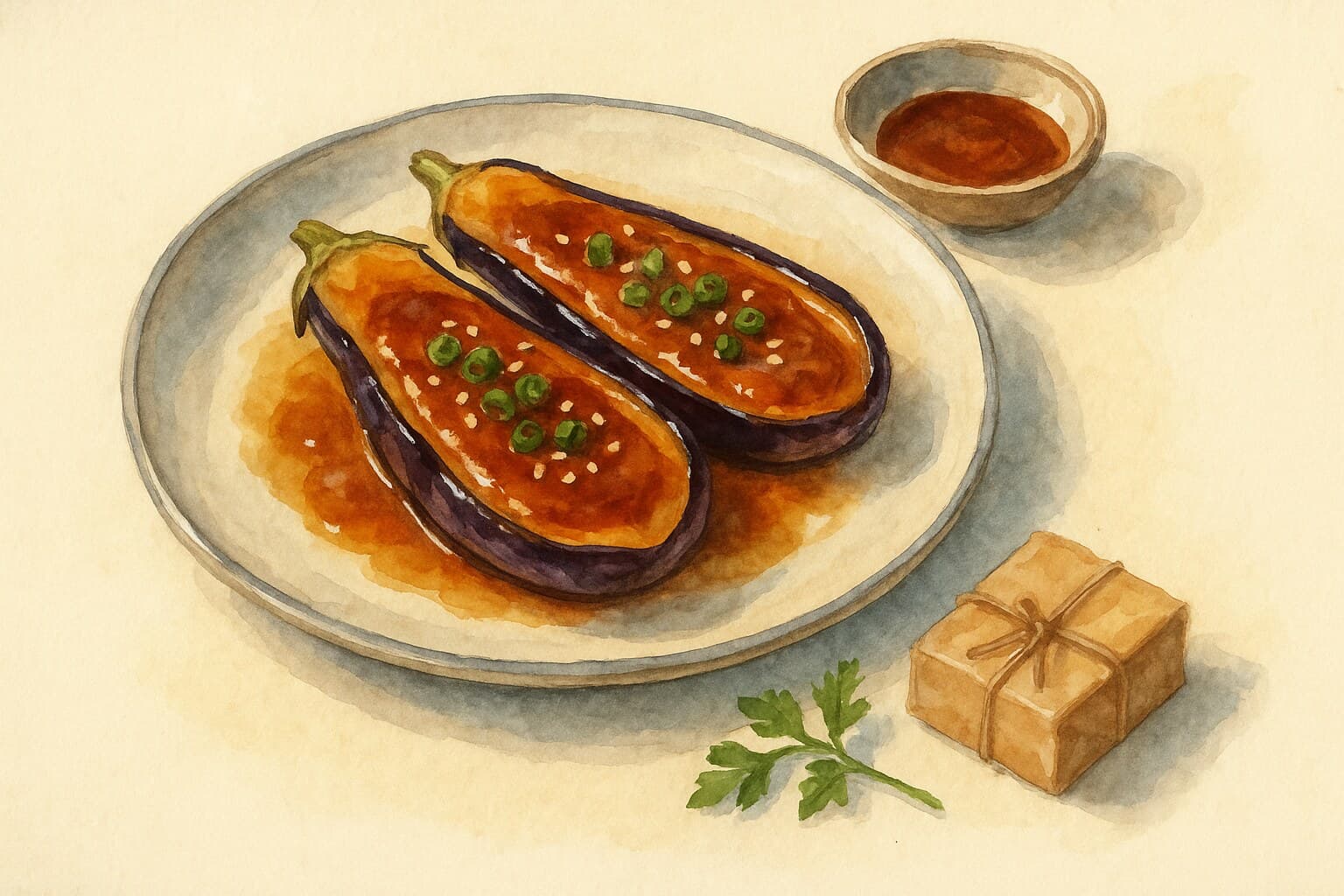
Ingredients
- 2 medium eggplants
- 3 tbsp white miso paste
- 2 tbsp mirin
- 1 tbsp soy sauce
- 1 tbsp sesame oil
- 1 tsp sugar
- 1 tbsp chopped green onions
- Sesame seeds for garnish to taste
Steps
Preheat the oven to 200°C (400°F). This temperature will help the eggplant to roast evenly, developing a nice texture.
Slice the eggplants in half lengthwise, and score the flesh in a crosshatch pattern to allow the miso mixture to penetrate while cooking.
In a bowl, mix the miso paste, mirin, soy sauce, sesame oil, and sugar until smooth. This combination creates a complex flavor profile with a touch of sweetness.
Spread the miso mixture generously over the cut sides of the eggplants.
Place the eggplants on a baking sheet, cut side up, and roast in the preheated oven for 15 minutes until tender and caramelized.
Remove from the oven, sprinkle with chopped green onions and sesame seeds before serving.
Why this works
The combination of miso (a Japanese fermented soybean paste with deep savory-salty flavor), mirin (a fermented sweet rice wine used in Japanese cooking), and soy sauce creates a harmonious balance of umami (the savory "fifth taste" produced by glutamates and other amino acids) and sweetness that complements the natural richness of eggplant. Roasting at a high temperature ensures that the eggplant softens while the miso glaze caramelizes (the browning of sugars under heat that builds deep flavor), enhancing the flavor depth. If the eggplant seems too firm after 15 minutes, you can extend the roasting time in 5-minute increments until it reaches the desired tenderness. Scoring the eggplant helps the glaze to absorb more flavor and ensures even cooking, preventing any burnt edges while creating an appealing texture. This technique is key to achieving that glossy finish and making the dish visually striking.
Common mistakes
Glazing before the eggplant has softened. Target: par-cook the cut sides until they begin to collapse — about 8–10 minutes in a 200°C oven — before painting on the miso mixture. Why it matters: Miso paste contains sugar (from mirin, added sugar, and the koji starches that have already broken down) and protein. Once you brush it onto raw eggplant and put it under direct heat, the sugars start browning long before the eggplant flesh has had time to soften. You end up with a darkened, slightly bitter crust over chalky-firm flesh — the glaze burns before the eggplant cooks. What to do: Score the cut sides in a crosshatch, brush lightly with sesame oil, and roast face-up at 200°C until the flesh visibly slumps and a fork slides in without resistance. Only then add the miso glaze and finish under heat just long enough to caramelize the surface — 2–4 minutes is usually plenty.
Skipping the salt-and-drain step on watery eggplants. Target: if the eggplant feels heavy and soft to the squeeze (a sign of high water content), salt the cut faces and rest 15–20 minutes before cooking. Why it matters: Eggplant is roughly 92% water. Excess moisture trapped under the glaze steams the surface instead of letting the sugars caramelize, so you get a wet, beige top rather than the glossy, lacquered finish you are aiming for. Salting pulls water out via osmosis and also collapses some of the spongy air pockets that otherwise soak up oil like a sponge. What to do: Sprinkle 1/4 tsp fine salt over each scored half, wait 15 minutes for beads of water to appear, then blot with paper towels before brushing with oil. Skip this step only for small, firm eggplants — Japanese, Chinese, or fairy varieties — which hold less water by nature.
Using a raw, dark-red miso for the glaze. Target: white (shiro) or yellow (shinshu) miso for this dish, not red (aka) or aged hatcho. Why it matters: Darker, aged miso has had more time for protein breakdown via Maillard browning (the same chemistry that browns toast) in the paste itself — it tastes deep and salty but has less sugar left to caramelize on the eggplant. Worse, its higher protein density and lower sugar means it scorches into a bitter crust under the broiler rather than glazing smoothly. Shiro and shinshu miso, lighter and sweeter from a higher rice-koji ratio, glaze properly. What to do: Reach for white or yellow miso for any dengaku-style preparation. If all you have is red miso, cut it 50/50 with extra mirin and a teaspoon of sugar to push it back toward a glazing balance.
Storing leftovers at room temperature. Target: refrigerate within 2 hours of cooking; eat within 3 days. Why it matters: Cooked eggplant with a miso glaze is a moist, protein-rich, mildly-acidic food — a comfortable substrate for bacterial growth at room temperature. The glaze's salt content slows but does not stop spoilage. What to do: Cool quickly, cover, and refrigerate. Reheat to steaming hot before serving. Discard if the glaze develops off odors, a slick film, or visible mold.
What to look for
- Flesh that yields completely under a fork. Properly cooked eggplant has the texture of soft custard inside the skin — a fork should slide through with zero resistance and the flesh should look translucent rather than opaque white. If it still feels firm at the center, it is undercooked, and the glaze cannot rescue it.
- A glossy, lacquered surface, not a matte one. A correctly caramelized miso glaze catches the light and looks slightly wet even after cooking — that sheen is dissolved sugar that has re-set on the surface. A dull, matte finish means the surface stayed too wet or the heat wasn't strong enough in the final minutes; finish with another minute under the broiler with the rack moved up.
- Even browning across the cut face, no isolated black spots. The crosshatch scoring should brown uniformly, with darker color collecting in the score lines themselves. Patches of charred black mean the glaze pooled there and burned before the rest had a chance to color — spread the next batch more thinly with a brush, not a spoon.
- A clean miso aroma when it comes out of the oven, not a sharp burnt-soy smell. The smell should be sweet and savory with a faint nutty edge. If it smells aggressive and acrid, the glaze has gone past caramelized into burnt; pull the dish immediately, scrape off the darkest crust, and serve what is underneath.
A note on history
The miso-glazed eggplant tradition descends from a much older Japanese technique called dengaku, in which tofu, vegetables, or fish were skewered, grilled, and brushed with a miso glaze. The word "dengaku" comes from a stilt-dancing rice-planting ritual of the Heian period (794–1185), and the cooking style itself dates to roughly that era. Tofu dengaku was the original form; eggplant joined the family in the early Edo period (1600s–1800s), when cookbooks began recording vegetable variants and miso glazes diversified by region (Food in Japan, Just One Cookbook).
Get the essays in your inbox — free
Weekly notes on flavor, fermentation, and food history — the writing behind the Atlas of Flavor. No spam; unsubscribe anytime.