
Masala Dosa
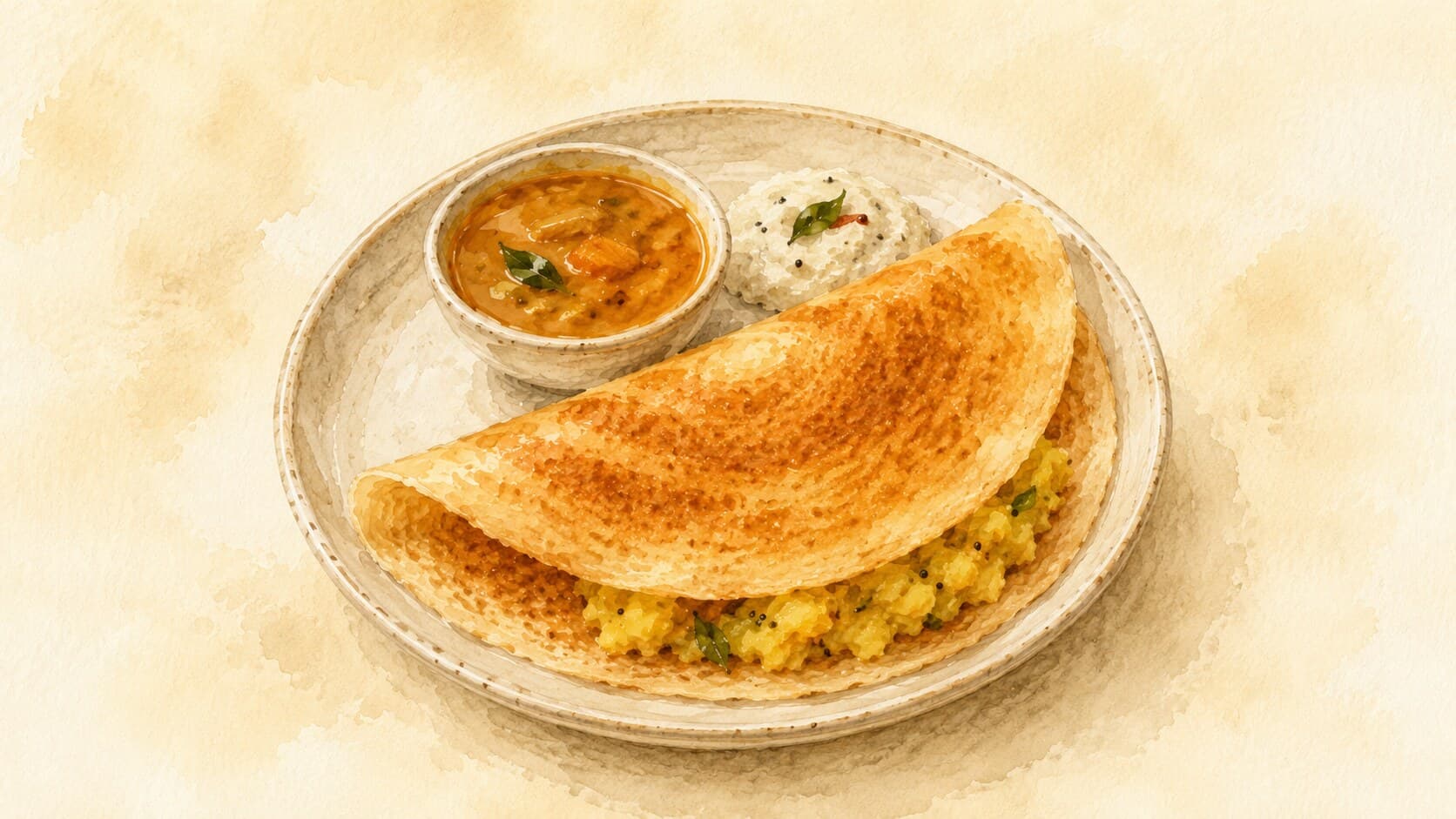
Masala Dosa is a crispy South Indian crepe filled with spiced potato, served with sambar and coconut chutney.
Contents (5 sections)▾
Ingredients
- 200 g rice
- 100 g split urad dal (black gram)
- 1/2 tsp fenugreek seeds
- 1 tsp salt
- 1/2 tsp turmeric powder
- 300 g potatoes, boiled and mashed
- 1 onion, finely chopped
- 2 green chilies, chopped
- 1/4 cup fresh coriander leaves, chopped
- oil for cooking
- sambar and coconut chutney for serving
Steps
Soak the rice, urad dal, and fenugreek seeds in water for 6-8 hours. This fermentation process enhances flavor and aids in digestion.
Drain and blend the soaked mixture with a little water until smooth. The batter should be of pouring consistency.
Add salt and allow the batter to ferment for 4-6 hours at room temperature. A well-fermented batter gives a light and airy texture to the dosa.
In a bowl, mix the mashed potatoes with turmeric, chopped onion, green chilies, and coriander. This creates a spiced filling.
Heat a non-stick skillet or tawa over medium heat. Pour a ladleful of fermented batter onto the skillet, spreading it in a circular motion to form a thin crepe.
Drizzle oil around the edges and cook for about 2-3 minutes until the dosa turns golden brown and crispy.
Place a portion of the potato filling in the center of the dosa, fold it over, and serve hot with sambar and coconut chutney.
Why this works
The key to a successful masala dosa (a thin South Indian fermented rice-and-lentil crepe filled with spiced potato) lies in the fermentation of the batter. Soaking rice and urad dal (split black gram lentils) activates beneficial bacteria, which helps in fermentation, resulting in a batter that is flavorful, light, and crispy when cooked. The fenugreek seeds add a subtle tanginess and assist in fermentation. If the batter seems too thick after blending, adjust the consistency by adding a little water until it flows easily from the ladle. If the dosa breaks while flipping, it may be too thick; ensure it's thinly spread and well-cooked before attempting to flip. The combination of spices in the potato filling complements the crispy dosa and provides a delightful contrast in textures, making this a South Indian dish.
Common mistakes
Skipping or rushing the fermentation. Target: 8–12 hours after blending, in a warm spot (24–28°C). The batter should rise visibly and smell pleasantly sour. Why it matters: wild lactic-acid bacteria and yeasts on the rice and dal produce both the lightness (CO₂ bubbles) and the tang that defines a dosa. A short or cold ferment gives you a flat batter that fries into a tough, doughy pancake instead of a crisp lace. What to do: if your kitchen is cold, set the bowl inside an oven with only the light on, or near a warm appliance. Look for at least a 30–50% volume increase.
Spreading the batter on a cold or sticky pan. Target: a moderately hot pan (around medium-high heat), wiped with a thin film of oil before the first dosa. Why it matters: dosa thins by the Leidenfrost effect — when the batter hits a properly heated surface, it sets instantly into a thin sheet. A cold pan lets the batter pool and stick; a too-hot pan scorches the underside before the top dries. What to do: flick a few drops of water on the pan — they should skitter and evaporate in 2–3 seconds. If they explode and disappear instantly, the pan is too hot; cool it briefly with a damp cloth before pouring.
Pouring the batter at the center and pushing outward in one go. Target: start at the center and spread in a spiral, working outward in one smooth motion. Why it matters: once a layer of batter touches the pan it begins to set in under a second. If you drag back over a set patch, you tear the sheet and end up with thick spots that won't crisp. What to do: ladle, place the back of the ladle at the center, and spiral outward without lifting until you reach the edge.
Undercooking the batter — fermented rice and dal must be cooked through. Target: the dosa cooks until the surface is dry, the edges lift, and the underside is golden-brown — not pale. Why it matters: fermented batter is still raw starch and protein; eating it half-cooked is unpleasant and unsafe for sensitive stomachs. What to do: wait for the visual cues (dry top, lifting edges, golden underside) before folding. The filling can be hot or warm, but the dosa itself must be fully set.
What to look for
- A pleasantly sour, yeasty smell when you lift the lid of the batter bowl — like fresh sourdough starter. If it smells flat or alcoholic-sharp, the ferment is under- or over-done.
- Small craters opening across the surface within ten seconds of pouring — the CO₂ from fermentation is escaping; this is what creates the signature lace texture.
- Edges that curl up on their own and a deep golden-brown underside — the dosa is ready to fold. If the edges stay flat, give it another 30 seconds.
- A crisp, audible crackle when you press the folded dosa lightly with the spatula — moisture is gone from the underside and the starch has set into a brittle sheet.
A note on history
The plain dosa — a fermented rice-and-lentil crepe — has roots going back over 1,500 years to ancient Tamil Nadu, where it appears in Sangam-era literature. The masala dosa, however, is a much more recent invention: the spiced potato filling was developed in coastal Karnataka, in the Udupi region, during the 20th century. Potatoes had arrived with the Portuguese in the 16th century, and Udupi Brahmin cooks combined them with the older dosa form to create a single affordable, filling dish. From Karnataka it spread rapidly across South India and is now eaten worldwide. Sources: Slurrp: The Tale of the Dosas of South Canara, Adigas: The Journey of Masala Dosa.
Get the essays in your inbox — free
Weekly notes on flavor, fermentation, and food history — the writing behind the Atlas of Flavor. No spam; unsubscribe anytime.