
Leeks Vinaigrette (Poireaux Vinaigrette)
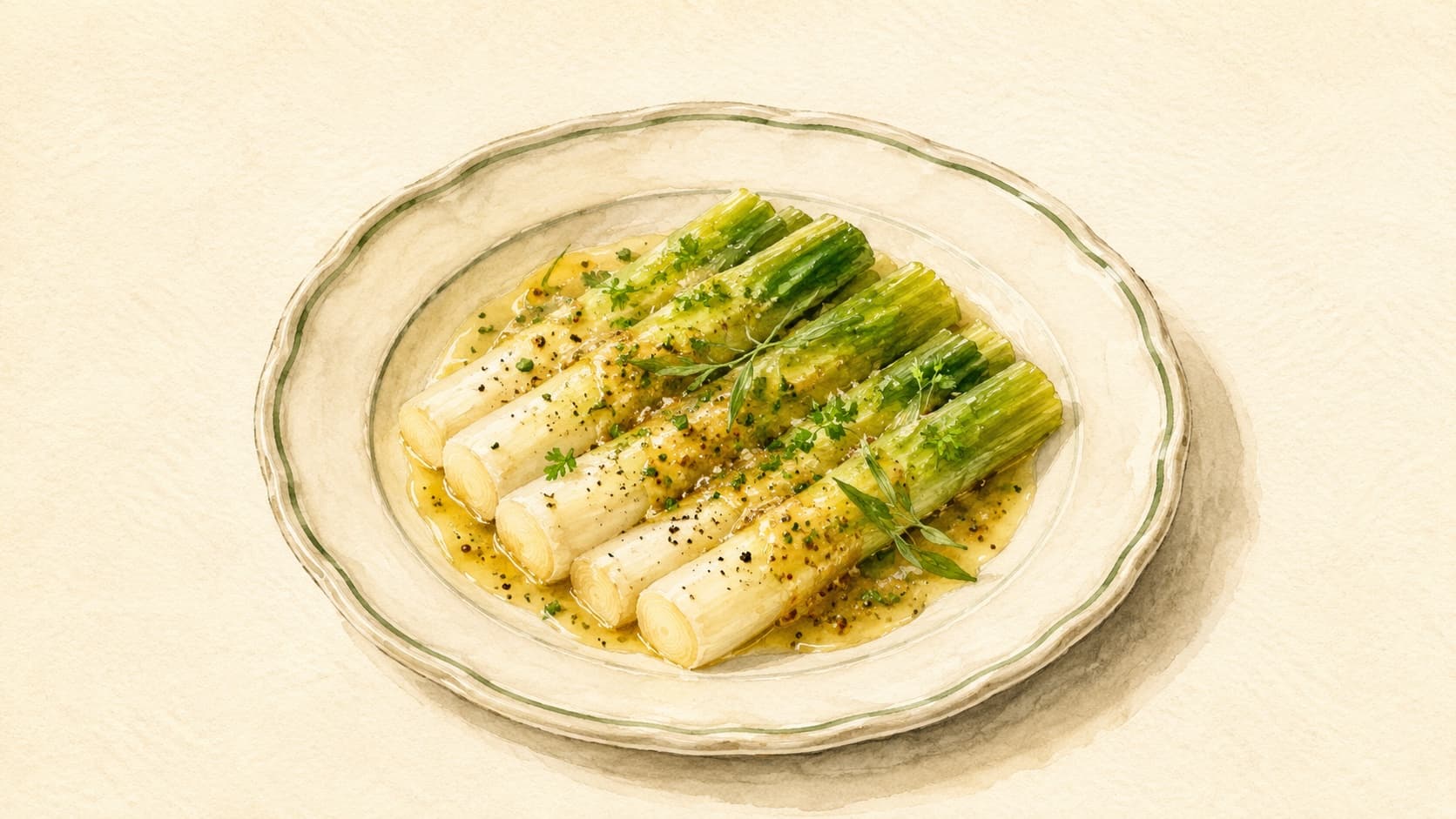
Leeks Vinaigrette is a classic French bistro dish featuring tender leeks dressed in a tangy vinaigrette.
Contents (5 sections)▾
Ingredients
- 4 medium leeks
- 1/4 cup white wine vinegar
- 1/2 cup extra virgin olive oil
- 1 teaspoon Dijon mustard
- Salt to taste
- Black pepper to taste
- Fresh herbs (such as chives or parsley) for garnish
Steps
Start by preparing the leeks: trim the roots and the tough dark green tops, leaving about 15 cm of the lighter green and white part. Rinse thoroughly to remove any dirt.
In a large pot, bring salted water to a boil. Add the leeks and cook for about 10-12 minutes until tender but still firm. Drain and cool under running water to stop cooking.
While the leeks cool, prepare the vinaigrette. In a bowl, whisk together the white wine vinegar, Dijon mustard, salt, and pepper. Gradually add the olive oil while whisking to create a stable emulsion.
Once the leeks are cool, cut them in half lengthwise and arrange them on a serving plate. Drizzle the vinaigrette generously over the leeks.
Garnish with fresh herbs and serve immediately or let the flavors meld for 30 minutes at room temperature before serving.
Why this works
The key to mastering Leeks Vinaigrette lies in the balance of textures and flavors. Cooking the leeks in salted water ensures they are tender and flavorful; however, be cautious not to overcook them, as they can become mushy. The vinaigrette, an emulsion of oil and vinegar, provides a zesty contrast that complements the leeks' mild sweetness. If the vinaigrette breaks and separates, simply whisk in a little more mustard or vinegar until it comes back together. This dish highlights the importance of fresh herbs, which add an aromatic finish, enhancing the overall experience. The vibrant colors and textures make it a visually appealing starter, embodying the essence of French bistro cuisine. Letting the dish sit for a while allows the vinaigrette to penetrate the leeks, intensifying the flavor.
Common mistakes
Leeks not poached fully tender (BLOCK-level texture safety). Target: Knife slides through the thickest part of the white with no resistance; leek bends limply when lifted by one end. Why it matters: Undercooked leeks are stringy and rubbery — the long parallel fibres (called vascular bundles, the tubes that carry water in the growing plant) need heat to soften. Crunch is not a virtue here; that texture reads as raw, not refined. Beyond texture, large pieces of resistant leek can be a choking risk for young children and older adults, so cook them generously through. What to do: Simmer 10–15 minutes in well-salted water (about 1 tbsp salt per litre) — taste a thick piece at 10 minutes and continue if it has any resistance at the centre. Then chill quickly in cold water to stop further cooking and keep the bright green colour.
Grit left between leek layers. Target: No visible sand or soil when you cut a poached leek in half lengthwise; the cooking liquid stays clean. Why it matters: Leeks grow with their stems mounded in soil to keep the white part pale; sand works deep between the tightly furled layers. If you skip thorough washing, the dish tastes faintly gritty — and grit is almost impossible to mask under any vinaigrette. What to do: Trim roots and dark green tops first. Split each leek lengthwise from root end up to (but not through) the base, then fan the layers under cold running water, working from inside out. Soak in a bowl of cold water for 5 minutes; lift out, leaving sediment behind. For wrapped service, leave the root intact so layers stay together.
Vinaigrette broken — oil and vinegar separated. Target: A creamy, opaque dressing that coats the back of a spoon and pools — not glistening oil drops over watery vinegar. Why it matters: A vinaigrette is an emulsion: tiny droplets of oil suspended in vinegar, held there by mustard (mustard contains natural emulsifiers — molecules that bridge oil and water). Without emulsification you get an oily slick on top of acid; the dish tastes harsh and unbalanced. What to do: Whisk the vinegar, mustard, salt, and pepper first, until smooth. Then drizzle the oil in a thin stream while whisking continuously — fast at first, slowing as it thickens. If it breaks, start fresh with a teaspoon of mustard, whisk in the broken sauce slowly, and the emulsion rebuilds.
Vinaigrette dressed onto hot leeks too soon. Target: Leeks at warm room temperature or slightly chilled when dressed. Why it matters: Hot leeks volatilise the vinegar's aroma (a sharp, hot smell rises off the plate) and dull the herbs. Cool leeks absorb the vinaigrette through their porous structure, which intensifies flavour without losing brightness. What to do: Let poached leeks cool fully — at least 20 minutes — before saucing. Spoon the vinaigrette over just before serving; resting too long in dressing softens further but loses sparkle.
What to look for
- A knife sliding through the white with the resistance of cooked pasta, not a raw carrot: the leek is poached to silkiness, not crunch.
- Cooking water gone slightly cloudy with a faint sweet aroma: the leeks have released natural sugars; this is the signal that flavour developed in the pot, not just texture.
- A vinaigrette that holds together for 30 seconds in the bowl before any separation: the mustard emulsion is stable; spoon it now.
- A faint, sweet, slightly sulphurous smell from a fresh-cut leek before cooking: that is normal — leeks share onion's sulphur compounds — and it mellows entirely with heat.
A note on history
Poireaux vinaigrette is a long-standing fixture of the French cuisine bourgeoise — cold, poached leeks bathed in mustard vinaigrette — and remains a classic starter in traditional cafes and bistros across France. The dish is sometimes garnished with chopped hard-boiled egg or smoked salmon. Leeks themselves are among the top five vegetables in French cooking, prized for a milder, sweeter character than their cousins onion and garlic. Sources: Poireaux vinaigrette (Wikipedia), Behind the French Menu: Poireaux – Leeks.
Get the essays in your inbox — free
Weekly notes on flavor, fermentation, and food history — the writing behind the Atlas of Flavor. No spam; unsubscribe anytime.