
Kenchin-jiru (Vegetable Tofu Soup)
Kenchin-jiru is a nourishing vegetable and tofu soup that embodies the essence of Japanese shojin cuisine.
Contents (5 sections)▾
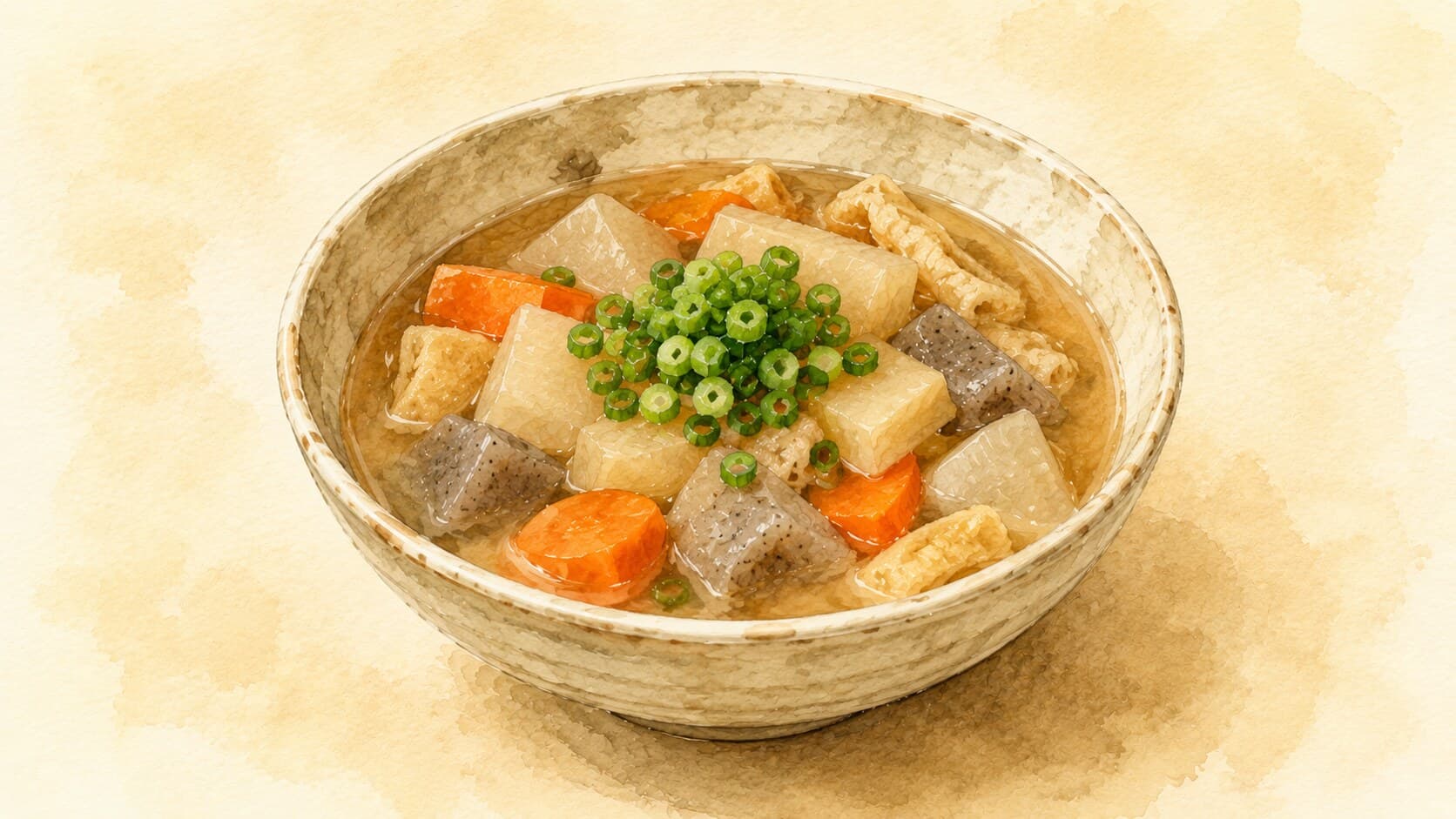
Ingredients
- 200 g daikon, sliced
- 100 g carrot, sliced
- 100 g gobo (burdock root), sliced
- 150 g konnyaku, sliced
- 200 g firm tofu, cubed
- 4 cups dashi broth
- 1 tbsp soy sauce
- 1 tbsp miso (optional)
- salt to taste
- green onions, chopped for garnish
Steps
Prepare the dashi broth by simmering kelp and bonito flakes for 15 minutes, then strain.
In a pot, add the dashi broth and bring to a gentle simmer over medium heat.
Add the sliced daikon, carrot, and gobo to the pot. Cook for about 10 minutes until the vegetables are tender.
Stir in the konnyaku and cubed tofu, cooking for an additional 5 minutes.
Season the soup with soy sauce and miso if using, adjusting the taste with salt as needed. Simmer for 2 more minutes.
Serve hot, garnished with chopped green onions.
Why this works
Kenchin-jiru showcases the harmony of flavors and textures found in shojin cuisine (Japanese Buddhist temple cooking, plant-based and rooted in not wasting any part of a vegetable). The balance of root vegetables like daikon and gobo provides a hearty base, while tofu adds a protein component that is both nutritious and satisfying. The use of dashi (a clear Japanese stock, usually kelp and dried bonito flakes) as a broth enriches the overall umami profile, making the soup comforting and enhancing its flavor complexity. If the vegetables seem too firm after simmering, simply extend the cooking time by a few minutes to ensure they soften adequately. The optional miso adds depth, but be careful not to boil after adding it, as high heat can alter its delicate flavor. This dish is warming and deeply satisfying, making it a perfect choice for a nourishing meal.
Common mistakes
Adding all the root vegetables at the same time.
Target: Stagger by density — daikon and burdock first, carrot a few minutes later, tofu and konnyaku (a firm, slightly chewy Japanese jelly made from konjac yam) last.
Why it matters: Daikon and gobo (burdock root) are denser and take 10–12 minutes to soften through; carrot finishes in 6–8; tofu only needs a few minutes of warming. Adding everything at once means either the daikon stays crunchy at the core or the carrot collapses. Each root cell wall softens at its own pace.
What to do: Cut all roots to similar thickness so timing depends on type, not size. Drop daikon and gobo into the warmed dashi first. After 4–5 minutes add the carrot, after another 4–5 minutes the tofu and konnyaku. Test with a toothpick — it should slide into daikon with steady pressure, not pierce instantly and not bounce off.
Skipping the gobo soak.
Target: Sliced or shaved gobo soaked in cold water 5 minutes, drained — water no longer brown.
Why it matters: Gobo's surface compounds (chlorogenic acid and related polyphenols) oxidize fast and turn the broth grey-brown with an astringent edge. A short cold-water soak rinses these off so the soup stays clear and the burdock's earthy sweetness shows through clean.
What to do: Shave gobo into thin strips. Drop straight into a bowl of cold water, swirl, leave 5 minutes, drain. Don't soak longer than 10 minutes — you start losing flavor too.
Boiling the soup after adding miso.
Target: Miso added off the heat or at the gentlest simmer, dissolved through a ladle, never returned to a hard boil.
Why it matters: Miso's distinctive aroma comes from volatile compounds that boil off quickly above 80°C. A hard boil after adding miso destroys the live ferment character and leaves only the salt — a flat, harsh version of what was supposed to be a fragrant finish.
What to do: Turn off the heat. Place miso in a small ladle, submerge halfway, and stir with chopsticks until it dissolves into the broth without lumps. Taste — adjust with a touch more if needed. Serve immediately.
Cubing the tofu too small, then stirring hard.
Target: 2–2.5 cm cubes of firm tofu, added late, stirred only gently.
Why it matters: Tofu is held together by loose protein gels; aggressive stirring or too-small cubes shred it into the broth. Kenchin-jiru's clean, country-style appeal depends on visible, distinct ingredients — daikon, carrot, gobo, tofu, konnyaku each recognizable in the bowl.
What to do: Cube tofu just before it goes in. Add to the pot, then push it around with the back of a ladle — no whisking, no fork. A few broken corners are fine; collapsed tofu fragments are not.
What to look for
- Dashi before vegetables go in: pale gold, faintly translucent, smells of sea and dried fish (or kelp + shiitake for the shojin version). Not yellow, not cloudy.
- Roots mid-simmer: edges have softened from sharp to rounded, color has deepened, broth picks up a light vegetal sweetness. No grey scum on the surface — skim if needed.
- Before final seasoning: toothpick passes through daikon with steady, even pressure. If it bounces, the daikon needs longer; if it falls through, you've gone too far.
- Finished bowl: clear-to-just-cloudy broth, visible chunks of each ingredient, green onion bright on top. Steam carries dashi aroma; aftertaste is clean, not salty-sharp.
A note on history
Kenchin-jiru takes its name from Kenchō-ji, the Rinzai Zen training temple founded in Kamakura in 1253 — the dish is said to have originated there as a way for monks to use up leftover trimmings of vegetables and tofu, and was originally called kenchō-jiru (Wikipedia; Nippon.com). One account credits the temple's founder, Zen master Rankei Doryū, with bringing the recipe from China (Local Cuisine MAFF). Because it grew out of shōjin ryōri — the Buddhist temple cooking tradition that uses no meat, fish, or animal-derived dashi — the original version is built on a kelp-and-shiitake broth rather than bonito (Japan Society — Eating Zen in Kamakura). It spread nationwide as monks trained at Kenchō-ji moved out to other temples; the home version that includes bonito dashi is a later, lay adaptation.
Get the essays in your inbox — free
Weekly notes on flavor, fermentation, and food history — the writing behind the Atlas of Flavor. No spam; unsubscribe anytime.