
Iwashi Nanban-zuke
Iwashi Nanban-zuke is a Japanese home dish of crisp fried sardines briefly marinated in a tangy rice-vinegar sauce. Best eaten within 2–3 days, kept cold throughout.
Contents (5 sections)▾
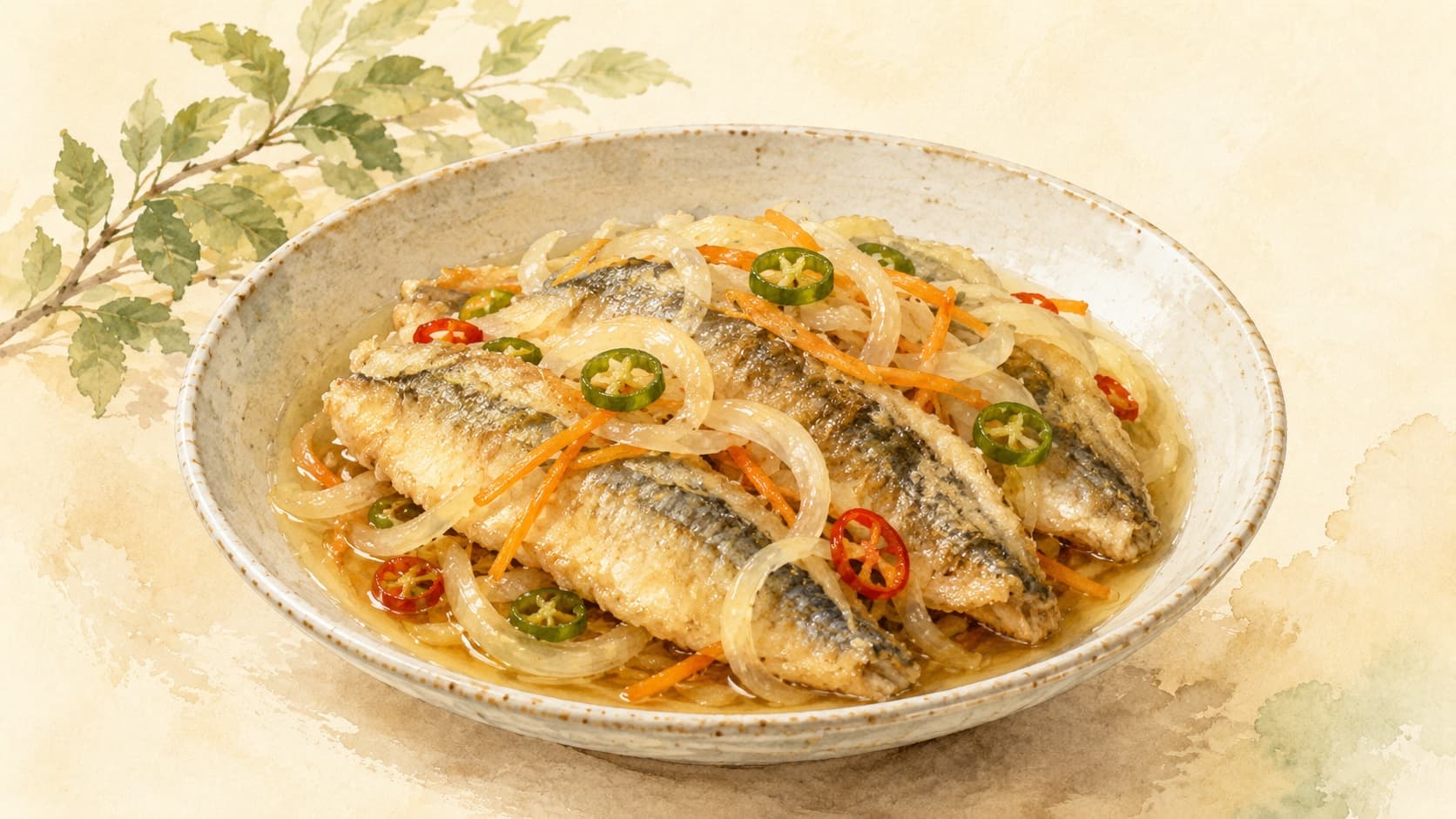
Ingredients
- 500 g sardines, cleaned and filleted
- 100 g flour, for dusting
- 2 eggs, beaten
- 150 g corn starch
- 200 ml vegetable oil, for frying
- 100 ml rice vinegar
- 50 ml soy sauce
- 30 g sugar
- 1 clove garlic, minced
- 1 piece ginger, thinly sliced
- 1 bell pepper, sliced
- 1 carrot, julienned
- 1 spring onion, chopped, for garnish
Steps
Begin by coating the cleaned sardine fillets in flour, then dip them into the beaten eggs, followed by a dusting of corn starch. This triple coating will create a crispy texture when fried.
Heat the vegetable oil in a deep pan to 180°C (350°F). Fry the coated sardine fillets for about 4-5 minutes until golden brown and crispy. Remove and drain on paper towels.
In a separate bowl, mix the rice vinegar, soy sauce, sugar, minced garlic, and sliced ginger to create the marinade. Stir until the sugar dissolves.
Add the fried sardines, sliced bell pepper, and julienned carrot into the marinade while it is still warm. Once the contents have cooled to room temperature, transfer to a clean covered container and refrigerate for at least 30 minutes before serving. Do not leave the marinating sardines at room temperature.
Serve chilled or briefly warmed, garnished with chopped spring onions.
Use fresh sardines and chill the dish promptly after cooking. Store only in the refrigerator and finish within 2–3 days. The vinegar marinade adds tang but does not make the fish safe at room temperature. Do not rely on smell, color, or taste alone to judge whether leftovers are still safe — when in doubt, discard.
Why this works
The technique of frying sardines before marinating them in a vinegar-based solution gives this dish its signature contrast — crisp golden crust against bright acid. The crispy outer layer holds its texture while absorbing the tangy marinade, and the vinegar adds a sharp flavor that cuts through the richness of blue-fish oil (small oily fish like sardines, mackerel, and horse mackerel). If the sardines seem too oily after frying, drain them well on paper towels. If the marinade tastes too sharp, balance it with a touch more sugar or soy sauce. A note on storage: the vinegar marinade adds flavor and a mild tang, but it does not preserve the fish indefinitely — use fresh sardines, cool the dish promptly after cooking, refrigerate in a clean covered container, and eat within 2–3 days. Do not leave at room temperature, and do not judge spoilage by smell, color, or taste alone — when in doubt, discard.
Common mistakes
Treating the vinegar marinade as a way to "cook" raw fish.
Target: Fry sardines all the way through until the flesh is opaque white at the thickest point — internal temperature 63°C / 145°F or above — before they ever touch the marinade.
Why it matters: Nanban-zuke (a Japanese fry-then-marinate-in-vinegar technique) is a cooked dish that is then flavored with vinegar, not a ceviche. Raw and undercooked sardines can carry the parasite Anisakis; cooking the fish through to opaqueness is the safety step. Vinegar does not kill Anisakis and does not make the fish food-safe — its job here is flavor and aroma, nothing more.
What to do: Fry at 170–180°C (340–355°F) for the full 4–5 minutes per side as the recipe calls for. Cut one fillet in half before moving the whole batch to the marinade and confirm there is no glassy, translucent core. Then pour the warm marinade over.
Frying oil too cool.
Target: 170–180°C (340–355°F). A wooden chopstick tip lowered into the oil should produce a brisk, continuous stream of fine bubbles within 1 second.
Why it matters: Below 160°C, the triple coating (flour → beaten egg → corn starch) absorbs oil instead of crisping, leaving the sardines greasy. Once the marinade hits a soft, oily crust, the crust collapses and the contrast that defines this dish disappears.
What to do: Use a thermometer if you have one; otherwise the chopstick test. Fry in small batches — crowding the pan drops the temperature instantly.
Letting the dish sit at room temperature to "marinate longer".
Target: Marinate at the warm-then-quickly-cooled stage for no more than 30–45 minutes on the counter, then refrigerate.
Why it matters: Cooked sardines are a high-protein, high-moisture food. Bacterial growth between roughly 5°C and 60°C (40–140°F) is rapid regardless of the vinegar's tang. The vinegar lowers surface pH a little but cannot stop spoilage at room temperature.
What to do: Pour the warm marinade over the hot fried fish to drive the flavors in (this is the only "hot soak" moment), let it cool only briefly, then move to a clean covered container in the refrigerator. Finish within 2–3 days.
Skipping the vegetable layering.
Target: Julienned carrot, sliced bell pepper, and aromatics packed alongside the fish so the marinade has to travel through them.
Why it matters: The vegetables are not garnish — they raise the surface area the vinegar contacts, mellow the marinade by donating their own water, and give the dish its crunch contrast to the now-softened crust. Without them, the marinade reads as harsh and one-note.
What to do: Layer fish and vegetables alternately. Slice vegetables thin enough to wilt slightly in the warm marinade but stay crisp at the bite.
What to look for
- Sardine is cooked through: flesh is opaque, dull white from edge to centre — no glassy, translucent core when one fillet is cut in half. Juices run clear, not pink. This is non-negotiable before the marinade goes on.
- Crust at the right point: deep gold, dry to the touch, audibly crisp when tapped with chopsticks. Pale and damp means longer or hotter; dark brown means the oil was too hot.
- Marinade is balanced: sharp at first sniff, then sweet, then savory — none of the three dominates. If only sharpness comes through, add a small pinch more sugar; if it tastes flat, add a few drops of vinegar.
- Stored safely: fully cooled within an hour of frying, sitting in a clean closed container in the refrigerator, eaten within 2–3 days. Any sourness on the fish beyond clean vinegar tang, or any off smell, means discard.
A note on history
Nanban-zuke traces back to the late 16th century, when Portuguese traders and missionaries arrived in southern Japan — especially Nagasaki — during the nanban trade period and brought with them the Iberian technique of escabeche (fry-then-marinate-in-vinegar). Japanese cooks adapted it to local ingredients and called it nanban-zuke, literally "marinated in the southern barbarian style" — nanban being the period term for Europeans arriving from the south (The Japan Times, A Taste of Culture). The dish settled into Japanese home cooking with rice vinegar, soy sauce, mirin and dashi replacing the original Iberian seasonings, and is now made most often with small, oily fish — aji (horse mackerel), wakasagi, or sardines — that benefit from a brief acid bath after frying.
Get the essays in your inbox — free
Weekly notes on flavor, fermentation, and food history — the writing behind the Atlas of Flavor. No spam; unsubscribe anytime.